


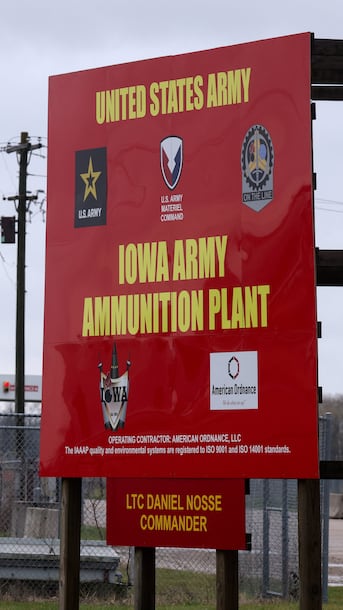
On Wednesday, the U.S. Army carried out a controlled explosion of its entire stockpile of lead azide at an ammunition facility in southeastern Iowa. Officials stated that the five tons of deteriorating bomb-making materials posed a risk of uncontrollable detonation as temperatures began to drop.
The detonation raised concerns regarding potential health and environmental effects due to lead dust, alongside frustration from the public over the lack of information provided.
Footage captured several miles from the site displayed two white clouds rising above the explosion area before quickly fading away. Reporters noted hearing a loud explosion at approximately 9 a.m.
Despite advisories to remain indoors, some local residents stopped along a nearby road to watch the explosion from a safe distance upwind of the Iowa Army Ammunition Plant located in Middletown.
Schools that were not already closed for the Thanksgiving break canceled classes, and a gas station close to the explosion site posted a notice on its door indicating it would reopen once it was safe. Several residents took precautions by sealing their windows and doors.
The detonation was initially scheduled for last Friday, but the Army rescheduled it three times in response to community concerns and to allow for additional safety measures and favorable wind conditions, as noted in court documents.
The U.S. army plans to detonate nearly 10,000 pounds of lead azide — an extremely volatile explosive used to trigger bombs — at a military base in Iowa. Andrew Chang breaks down why officials say this is the safest option despite the risks to the community.
Images provided by The Canadian Press, Reuters, Adobe Stock and Getty Images
The weather forecast at the time of the explosion predicted a mild breeze from the southwest and temperatures around freezing. One of the main concerns was that the stockpile could become unstable as temperatures decreased.
“Inaction is no longer an option,” stated Maj. Gen. Eric Shirley, the operational leader for the Army.
Authorities advised residents within a five-mile radius of the site to evacuate to prevent exposure to airborne lead dust, while reassuring them that barriers surrounding the blast zone would help contain much of the explosion’s plume.
Officials monitoring the detonation indicated that prevailing winds on Wednesday were expected to direct the plume southwest toward Missouri, away from Burlington, a nearby city with a population of nearly 25,000 located along the Mississippi River.
However, numerous homes and farms could still be affected by a potentially toxic cloud of lead dust — a metal known to be hazardous at any concentration, particularly for children and pregnant women.
Acting Secretary of the Army Adam Telle urged the public to remain calm.
The Army established additional “blast barriers” around the bunkers where the 68 barrels of lead azide were detonated. The materials were enclosed by two-story high concrete and sand barriers.
Ballistic gels and foams were designed to absorb the lead dust, and the Army intended to saturate the materials with over 100,000 gallons (379,000 liters) of water to minimize the plume.
An Army-released video depicted the bunker surrounded by an earthen berm and sand-filled blocks.
Concerns about spontaneous detonation
According to Robert Cekada, director of the Bureau of Alcohol, Tobacco, Firearms and Explosives, the nation’s stockpile of lead azide was transported to the Iowa facility from various bases across the country in 2009. The chemicals, utilized in munitions manufacturing, had been stored in barrels in case they were needed again by the military.
During a March inspection, personnel at the ammunition plant discovered that the lead azide had begun to crystallize, rendering it sensitive to friction and cold temperatures, thereby increasing the risk of spontaneous detonation.
The Army convened specialists to devise a plan, concluding that alternative methods like thermal treatment and neutralization of the barrels’ contents were not as safe as a controlled detonation.
Environmental organizations attempted to file a lawsuit to stop the detonation, but a court ruling on Monday allowed the plans to proceed. A federal appeals court determined that the U.S. Environmental Protection Agency had sufficiently incorporated safeguards to minimize lead dust dispersal.
Local residents expressed a combination of worry and acceptance. Some mentioned that the timing was less than ideal, occurring just before Thanksgiving, yet recognized the necessity of addressing the situation promptly. Others voiced concerns about the potential effects on water sources, agriculture, livestock, and their homes.
“I doubt the danger from lead will disappear anytime soon,” remarked Lucy Giehl, a nearby resident from West Burlington. “It seems like someone could have considered all these factors earlier instead of letting it escalate to this point.”