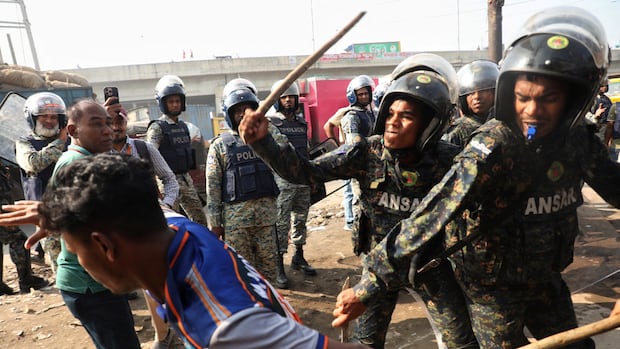


On Wednesday, Bangladesh, a key supplier for prominent retailers like H&M, Zara, Walmart, Target, and Gap, approved a 36 percent increase in the minimum wage for garment workers, marking the smallest rise in four decades.
This decision comes amid weeks of demonstrations and demands for the wage to be doubled, leading to renewed confrontations between police and workers on the fringes of Dhaka.
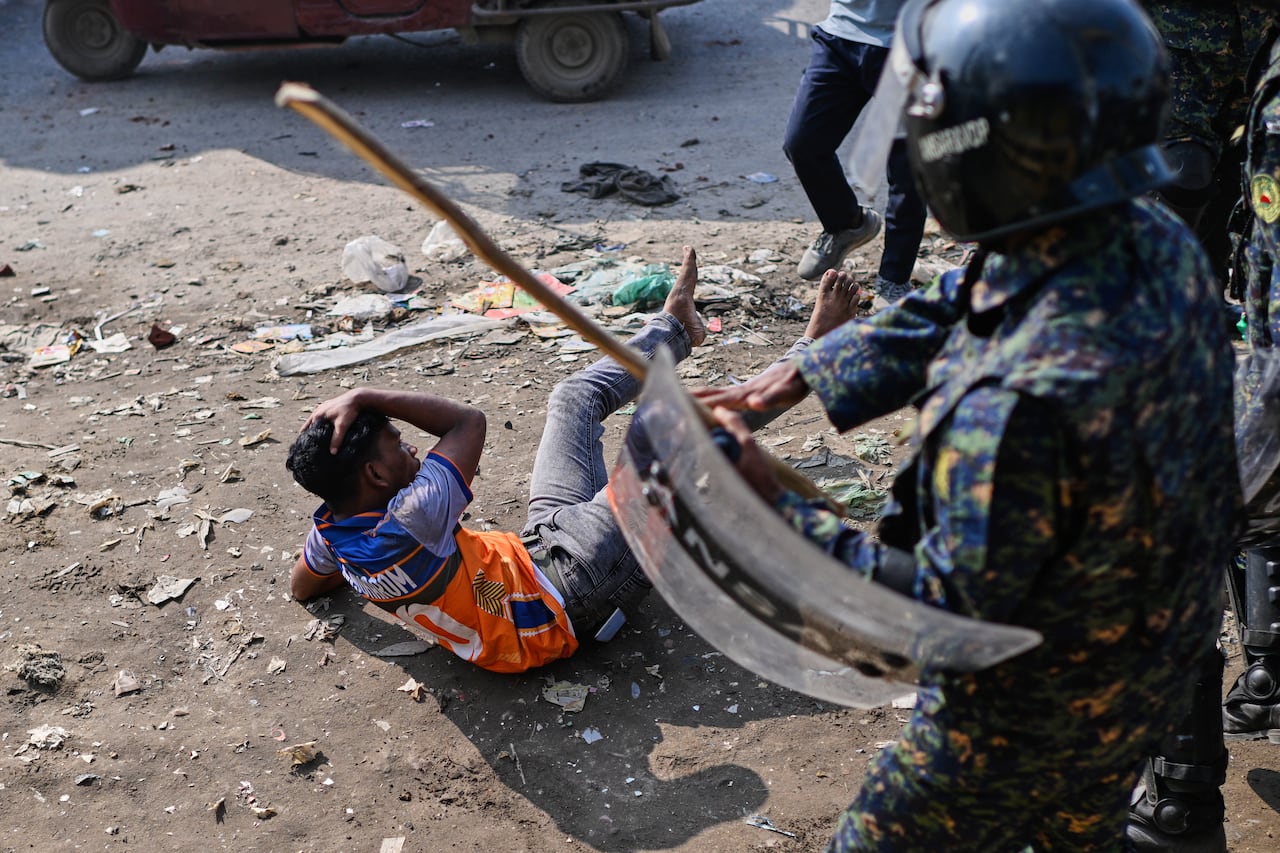
During a protest in Gazipur on Wednesday, police confront garment workers demanding increased wages. (Mahmud Hossain Opu/The Associated Press)
A six-member committee set the monthly wage at approximately $193 Cdn following weeks of protests that resulted in factory closures, blocked roads, property damage, and production interruptions in a sector employing over four million individuals and accounting for more than 80 percent of Bangladesh’s export revenue.
This increase represents the lowest percentage rise since the establishment of the sector’s first minimum wage in 1986. Previous increases included 56 percent in 2023, 51 percent in 2018, and 77 percent in 2013.
“These negotiations consistently yield poverty wages,” remarked Anne Bienias, living-wage coordinator for the Clean Clothes Campaign, noting that the new wage still falls significantly short of a living wage level.
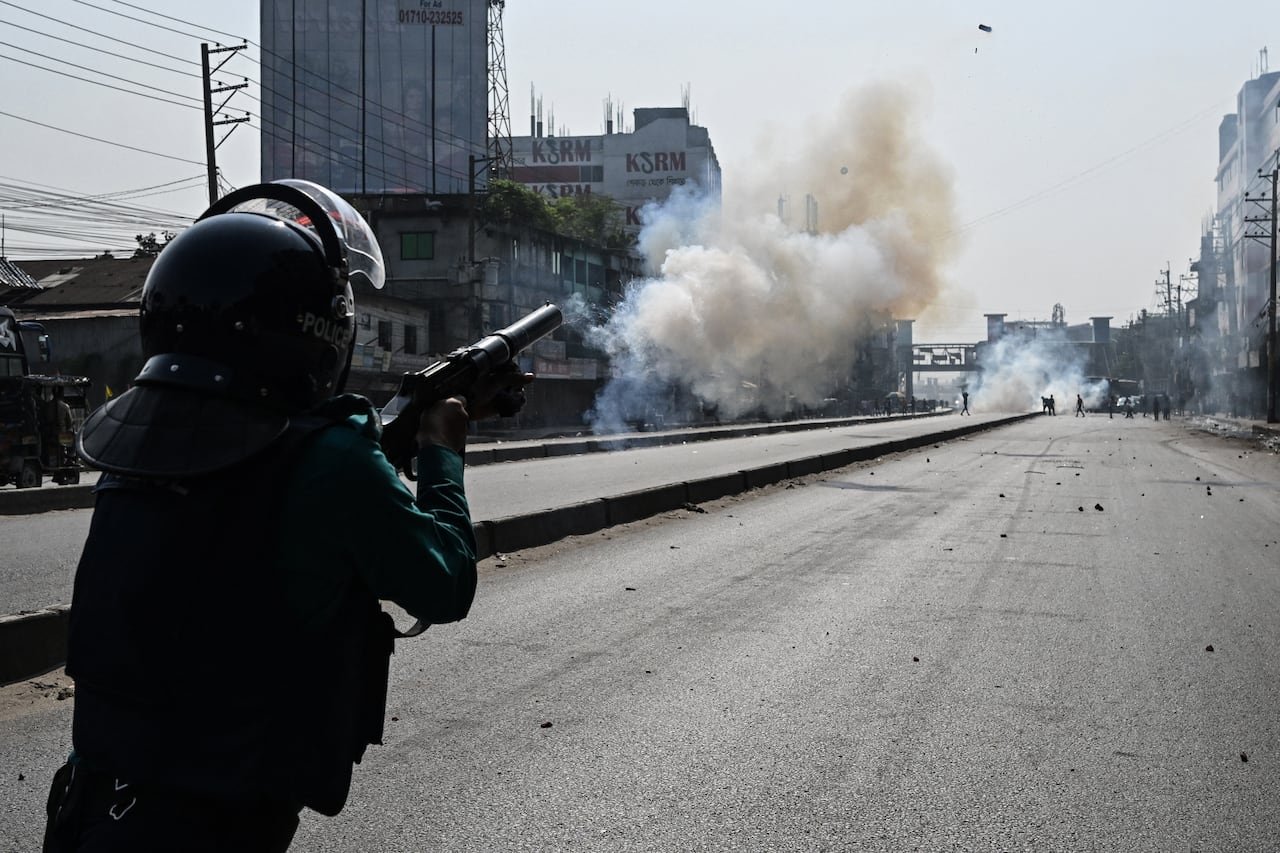
Police deploy tear gas as garment workers block a highway in Gazipur on Wednesday. (Abdul Goni/AFP/Getty Images)
The government-appointed wage board’s decision, made around 2 a.m. local time Wednesday after nearly 12 hours of discussions with representatives from both workers and employers, did little to alleviate the mounting tensions.
Workers blocked a major road in Gazipur, a garment manufacturing center located on the outskirts of Dhaka, on Wednesday, which prompted police to use tear gas and sound grenades to disperse the crowd, according to police reports.
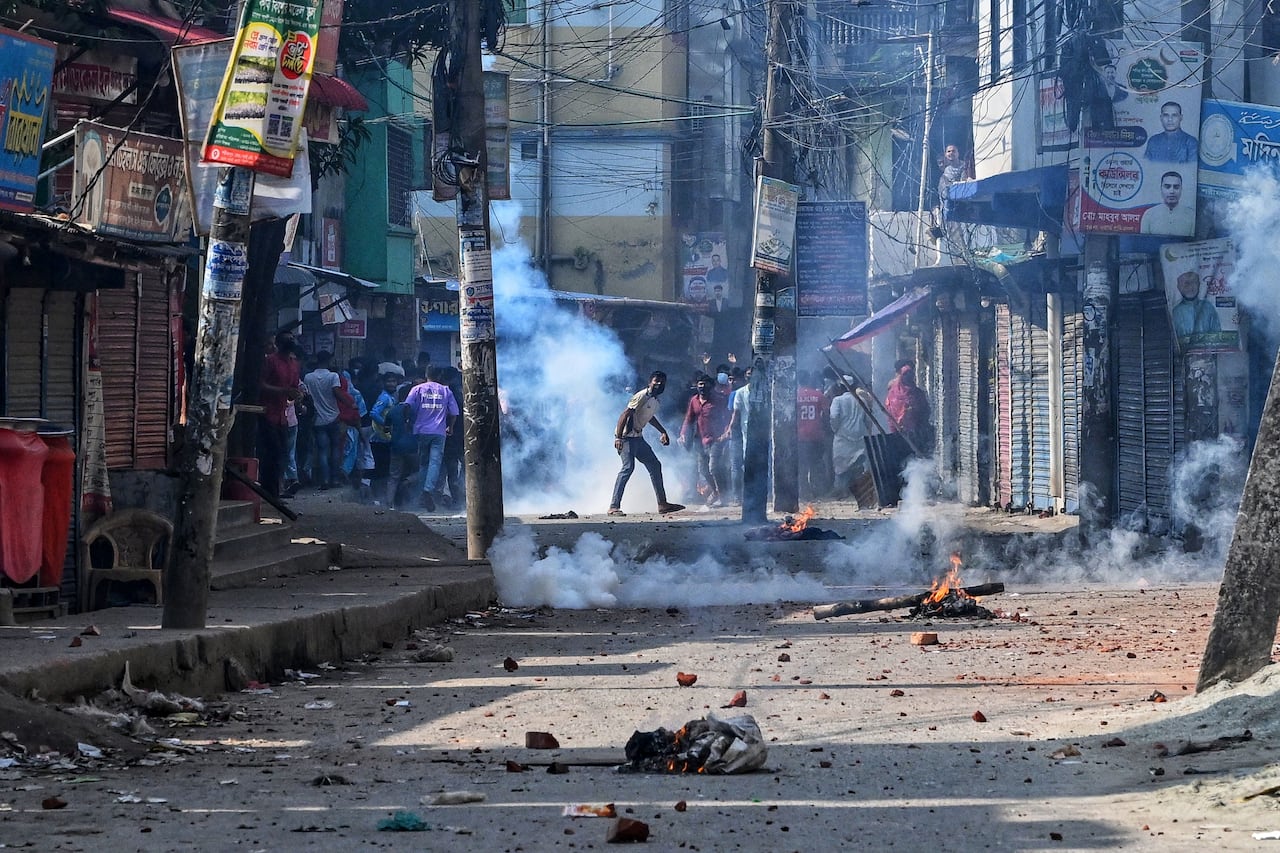
Scenes from Wednesday’s clashes between garment workers and police in Gazipur. (Abdul Goni/AFP/Getty Images)
The wage board approved the new minimum wage structure in a 4-2 vote, with four members supporting the final 17,000 taka ($193) minimum wage while two voted in favor of the 18,000 taka ($204) demand, according to workers’ representative Babul Akhter. The previous minimum wage was set at 12,500 taka ($142).
The revised wage structure will take effect on December 1, with workers expected to receive the updated wages starting in January.
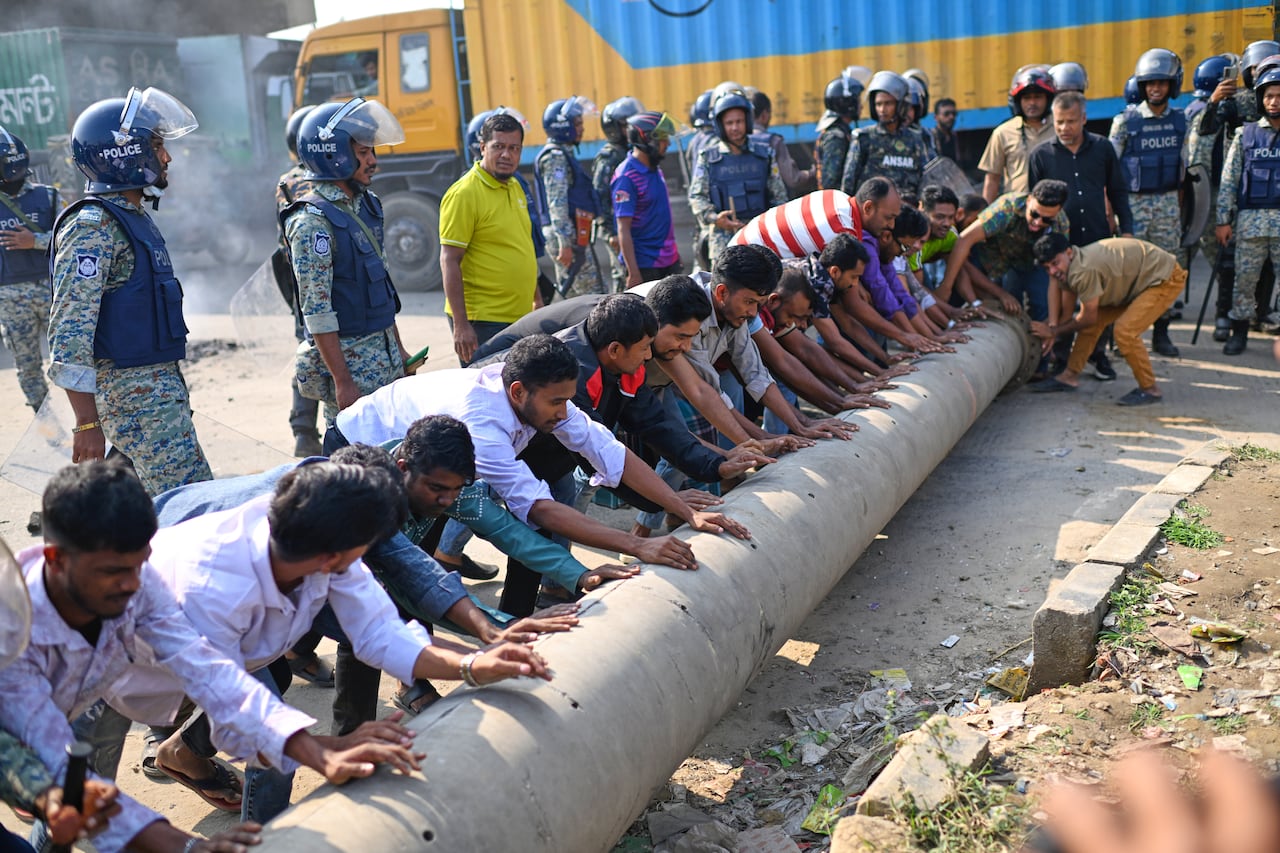
Police observe as locals remove a concrete pillar used as a roadblock by garment workers during protests in Gazipur on Wednesday. (Mahmud Hossain Opu/The Associated Press)
Advocates for labor rights have criticized the increase as insufficient to meet workers’ needs and pointed out that it will not provide a living wage.
The Clean Clothes Campaign also condemned brands for not explicitly endorsing a higher wage or committing to absorb the additional labor costs in their purchasing prices.
Before the wage revision, ACT—a coalition of brands and trade unions—called for respect for workers’ rights and requested salaries more aligned with living-wage standards. They noted that brand members, including Inditex, H&M, and Primark, had pledged to ensure that wage increases would be reflected in their purchasing prices.
-
‘They destroyed my life’: 2 Sask. men imprisoned for exploiting woman from Bangladesh
-
FRONT BURNER
Why fast-fashion garment workers’ lives are still at risk
As per wage data released on H&M’s website, Bangladesh has the lowest minimum wage among the retailer’s eight primary production nations. H&M sources from 142 factories in Bangladesh that collectively employ 510,704 individuals.
The company stated that workers’ wages are safeguarded and excluded from its pricing negotiations.
“We take our responsibility to ensure that our purchasing practices support improved wage levels very seriously,” an H&M representative mentioned in a statement.
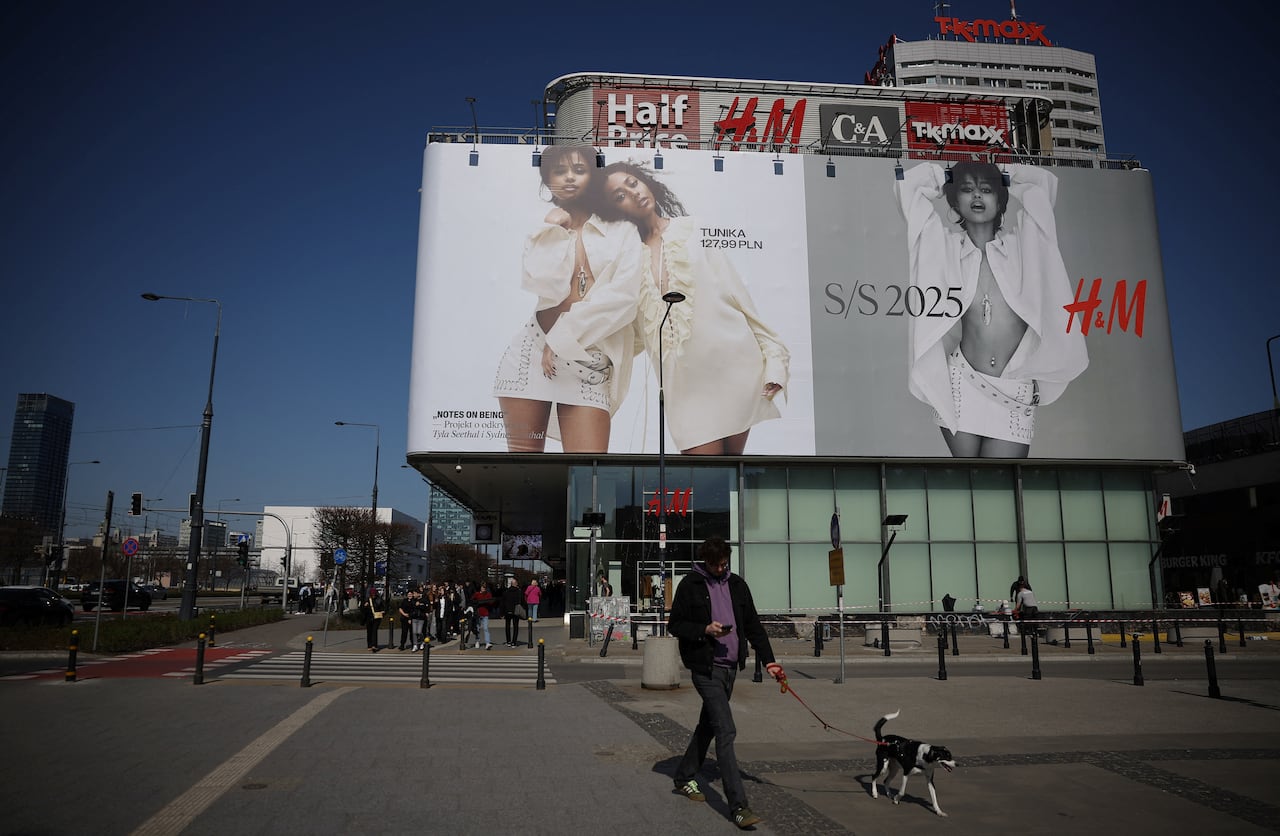
An H&M advertisement on a building in Warsaw, Poland, dated April 2, 2025. (Kacper Pempel/Reuters)
The Bangladesh Garment Manufacturers and Exporters Association (BGMEA) reported that 397 factories were unable to function on Tuesday, while another 84 remained closed due to the labor law’s “no work, no pay” provision.
A BGMEA survey suggested that 317 factories incurred losses of approximately $609 million in production over 18 days of disruption, as buyers shifted orders worth around $361 million to other countries.
Industry leaders cautioned that although the increased wage might raise workers’ earnings, it could also diminish Bangladesh’s market competitiveness.
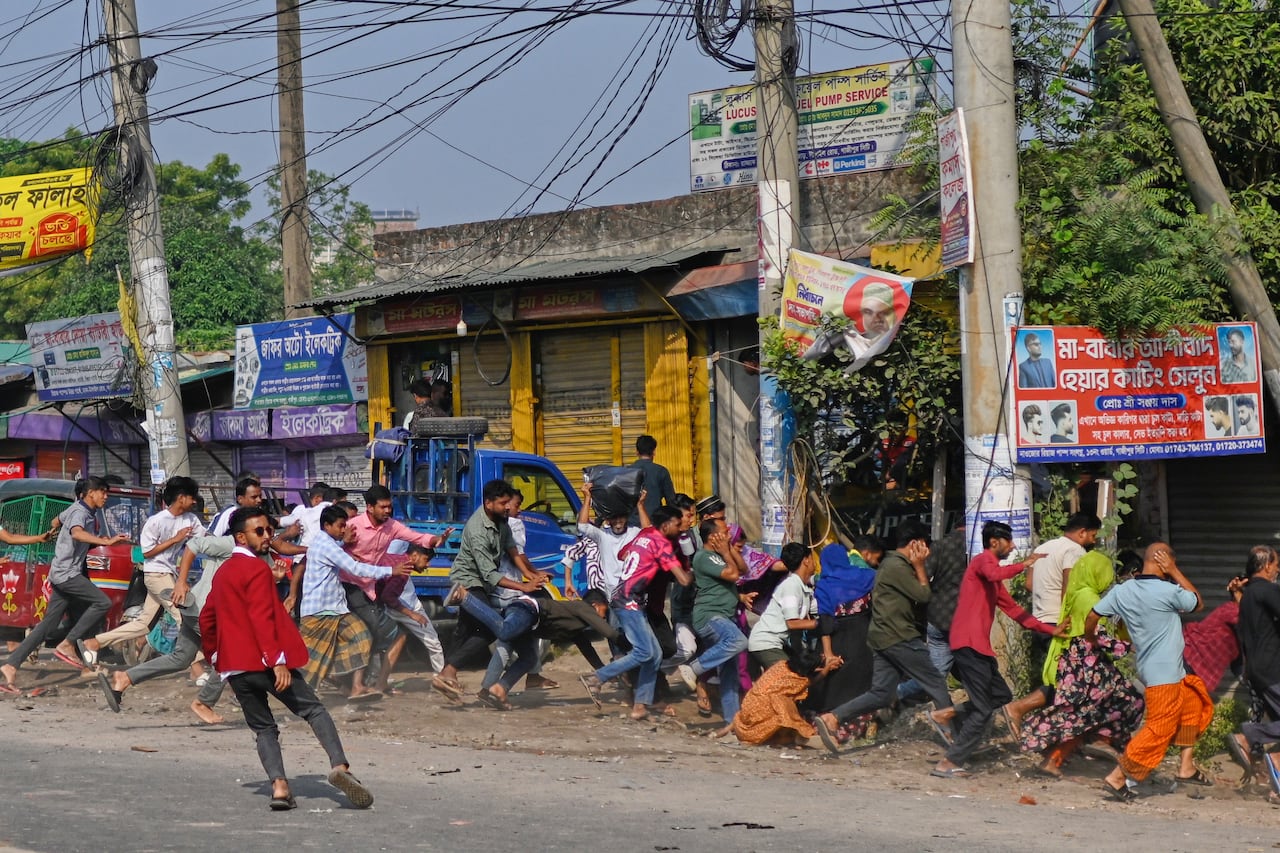
Garment workers flee for safety as police charge at them in Gazipur on Wednesday. (Mahmud Hossain Opu/The Associated Press)
“At the new minimum wage, we are now paying more than West Bengal in India and roughly the same as Vietnam, Indonesia, and Pakistan. Our primary advantage was low cost, and that is now lost,” stated Mohiuddin Rubel, additional managing director of Denim Expert Ltd, a supplier for brands including H&M.
“The capability gap, not the wage gap, now determines orders. Therefore, the government needs to assist us in enhancing our capabilities through affordable, long-term credit for manmade fiber, automation, skills development, and expedited port and customs clearance, allowing us to compete with our counterparts.”
He also implored international brands to share a portion of the increased labor costs.