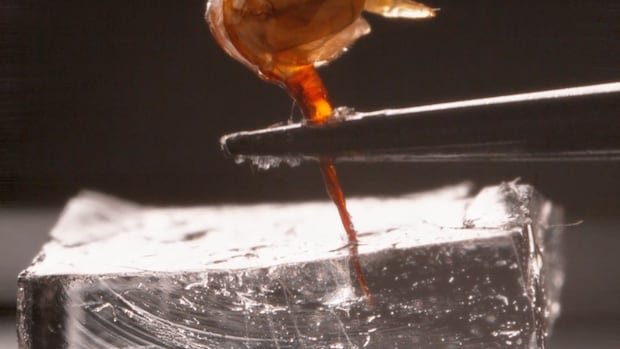


A western honey bee’s stinger is a last-resort weapon, designed to embed itself and deliver venom, often leading to the bee’s death. New research recently published in the Proceedings of the National Academy of Sciences is shedding light on the effectiveness of this defense mechanism.
Lead author Fiorella Ramirez Esquivel, a postdoctoral researcher at Macquarie University, Australia, mentioned that filming the bees in action was made possible by modern high-speed cameras. The experiments involved using cameras capable of capturing hundreds of frames per second to observe the rapid stinging process.
The study revealed a unique double-piston design in the bee’s stinger, where specialized valves work simultaneously to drive the stinger deeper and continuously pump venom. This intricate mechanism involves a complex dance between the valves to ensure the venom flows while propelling the stinger.
The research also highlighted the social nature of western honey bees, where worker bees sacrifice themselves in defense of the colony. This autotomy behavior, leaving part of the body behind, is crucial for protecting the larger hive. The stinging apparatus, including barbs that aid in penetration, serves as an evolutionary insurance policy for the colony’s defense.
Furthermore, the study found that honey bee stingers release pheromones to recruit other bees in warding off threats. While the defense mechanism may not always be effective against tougher skin, the continuous penetration and barbs enhance the chances of deterring attackers.
The insights gained from this research could have potential medical applications, as the unique pumping mechanism of the bee’s stinger differs from traditional syringes. The study’s findings open up new avenues for understanding bee behavior and could lead to advancements in various fields.
The study’s extensive use of high-speed videography has provided a deeper understanding of the complex bee stinging system. Researchers hope to continue exploring the intricacies of bee behavior and its potential implications in diverse areas of study.