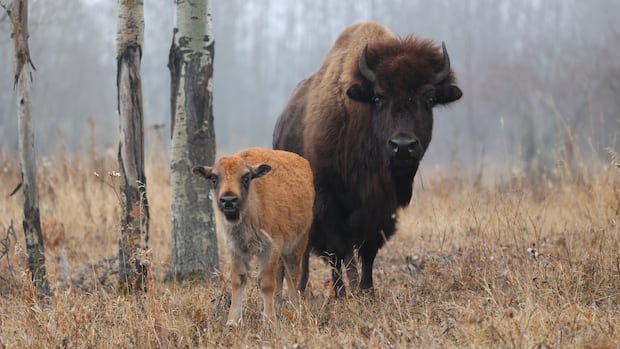


A vast number of bison once roamed North America in massive herds characterized by their rust and auburn fur before being nearly wiped out by hunting. New DNA research has unveiled insights into the decline and gradual recovery of bison populations, showcasing how the species has been forever altered by these events.
Published in the journal Science, the study involved sequencing 160 bison genomes, spanning a timeline of 20,000 years. Conducted by a team of almost 40 scientists, predominantly Canadians, the research was spearheaded by paleogeneticist Jonas Oppenheimer at the University of California, Santa Cruz’s Paleogenomics Lab. This lab specializes in studying ancient DNA extracted from fossil remains.
The primary aim of the study is to inform modern conservation strategies. By unraveling the intricate genetic history of bison, researchers hope to enhance the species’ resilience and ensure their sustainable future. The findings reveal that contemporary bison herds, once highly connected, are now fragmented into isolated populations, posing challenges to their adaptability.
Oppenheimer noted a significant shift in the genetic diversity of bison. Historically, bison populations were genetically uniform across North America, unlike the present scenario where each herd exhibits distinct genetic characteristics. This divergence is attributed to a severe bottleneck caused by human-driven near-extinction events.
Sequencing bison genomes allowed scientists to track how the species’ biological diversity has evolved over time. By analyzing DNA from ancient bison bones and living herds across Canada and the United States, researchers created a comprehensive genetic map. The study involved 115 ancient bison genomes and 45 modern genomes, supplemented by data from 52 previously sequenced genomes.
Chris Jass from the Royal Alberta Museum highlighted the importance of utilizing ancient fossils for modern conservation practices. The study emphasized the critical need to maintain the distinctness of wood bison and plains bison, as they are genetically separate entities. Efforts to preserve these subspecies are crucial, despite intermixing in the past.
The research also debunked the common belief that bison have significant cattle ancestry, with only a minimal presence in their genome. It showcased the substantial divergence between wood bison and plains bison, which adapted to different ecological niches over time.
Moving forward, the study’s findings offer conservationists a valuable tool for reconnecting isolated bison herds, mitigating inbreeding risks, and reviving lost genetic diversity. By incorporating ancient genomes into herd management practices, researchers aim to restore gene flow and enhance the overall genetic health of bison populations.
This study sheds light on the intricate genetic legacy of bison and underscores the importance of preserving their unique genetic heritage for future generations.