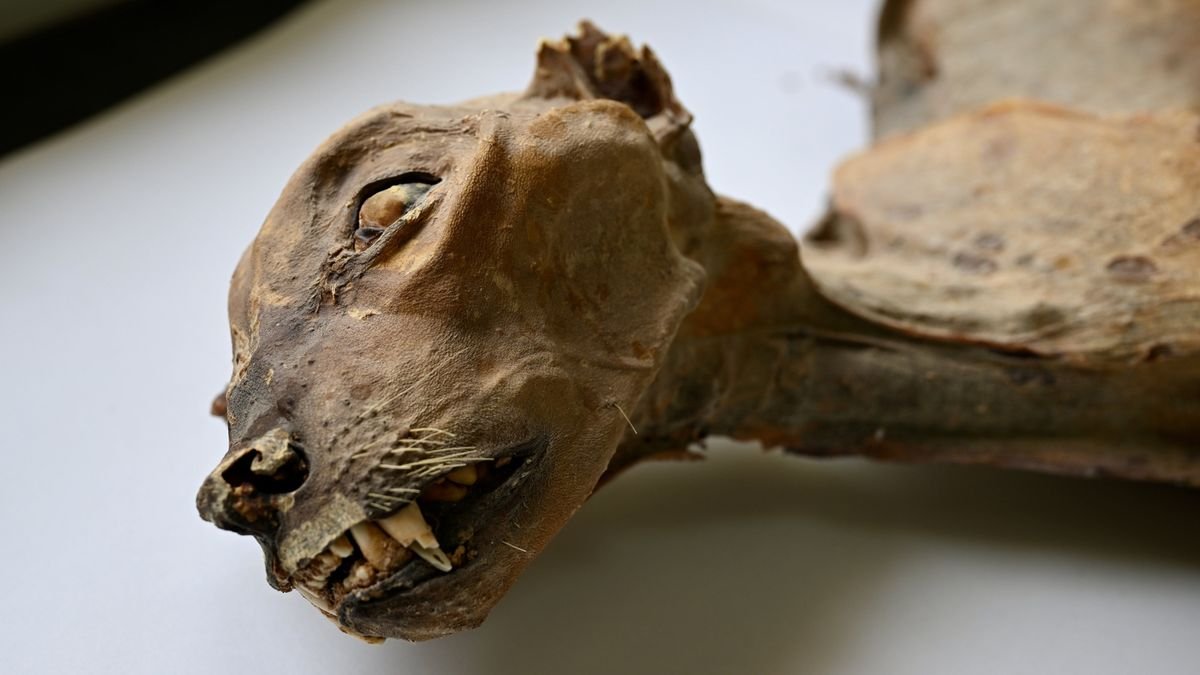


In a surprising find, ancient cheetah remains dating back up to 1,800 years were discovered in a cave. The mummified cheetahs, ranging from 130 to over 1,800 years old, were unearthed by researchers in Saudi Arabia near the city of Arar. The excavation revealed seven mummies and the bones of 54 other cheetahs, displaying cloudy eyes and shrunken limbs, resembling desiccated husks. Speculations suggest it might have been a denning site where cheetah mothers gave birth and raised their young.
Preservation through mummification has kept the bodies intact, a process not limited to Egypt but occurring naturally in various environments like glacier ice, desert sands, and bog sludge. The unusual discovery has left experts puzzled, with Joan Madurell-Malapeira from the University of Florence calling it unprecedented.
Further discoveries of well-preserved big cat mummies, including a saber-toothed cat cub in Russia, have been made. The preservation of large mammals to such a degree is rare, requiring a combination of suitable conditions and protection from scavengers.
Once widespread across Africa and parts of Asia, cheetahs now inhabit only a fraction of their former range, with their absence from the Arabian Peninsula for decades attributed to habitat loss, hunting, and dwindling prey. Scientists examining the genes of the mummified cheetahs found them most closely related to present-day cheetahs from Asia and northwest Africa, offering insights for potential reintroduction efforts.
In a separate archaeological discovery, evidence of a Roman industrial site has been found near the River Wear, close to the current location of the Nissan car plant. The site, identified by volunteers from the Vedra Hylton Community Association, features over 800 whetstones for blade sharpening and 11 stone anchors, confirming its Roman origins through sediment analysis by Durham University archaeologists.
This finding highlights the historical industrial significance of the north-east of England within Roman Britain, preceding later eras of coal mining, shipbuilding, and automobile manufacturing.