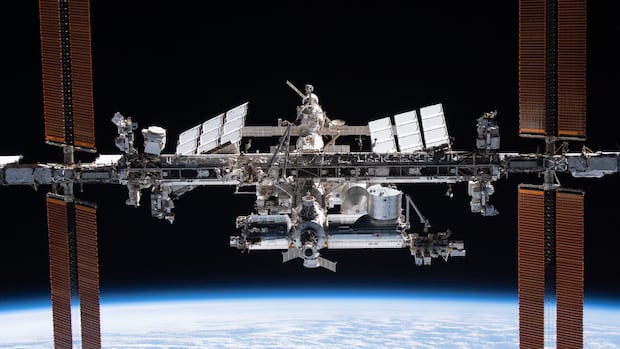


In the upcoming weeks, provided the skies are clear, you can catch a glimpse of the International Space Station (ISS) as it traverses the evening sky.
If you spot it, consider waving to Canadian Space Agency astronaut Joshua Kutryk, who is zooming past at an impressive speed of 7.66 kilometers per second.
Kutryk is among a team of seven astronauts residing and working aboard the ISS as part of Expedition 75.
Since his arrival at the ISS on October 1, Kutryk has been engaged in a variety of experiments and duties, including a recent cardiac research.
Unsurprisingly, he has also taken time to appreciate the stunning views.
Typically, the ISS is visible over Canada as it orbits our planet, but in the following weeks, it will be more apparent in the evening, as opposed to the early morning passes it has been making recently.
How to locate the ISS in the sky
In simple terms, it will appear as a very bright white dot against the backdrop of fainter stars and satellites, moving steadily across the sky without any blinking lights like those of airplanes.
-
Joshua Kutryk says he’s ‘having a blast’ on the International Space Station
-
Canadian astronaut Joshua Kutryk conducts his 1st spacewalk
Next, you’ll need to know when the ISS will be passing by your location. There are multiple methods to find this information.
One option is the website heavens-above.com, which independently tracks numerous satellites and spacecraft. You can register your location there and find the ISS among a list of other visible objects. It will provide a schedule of times similar to the chart displayed below.
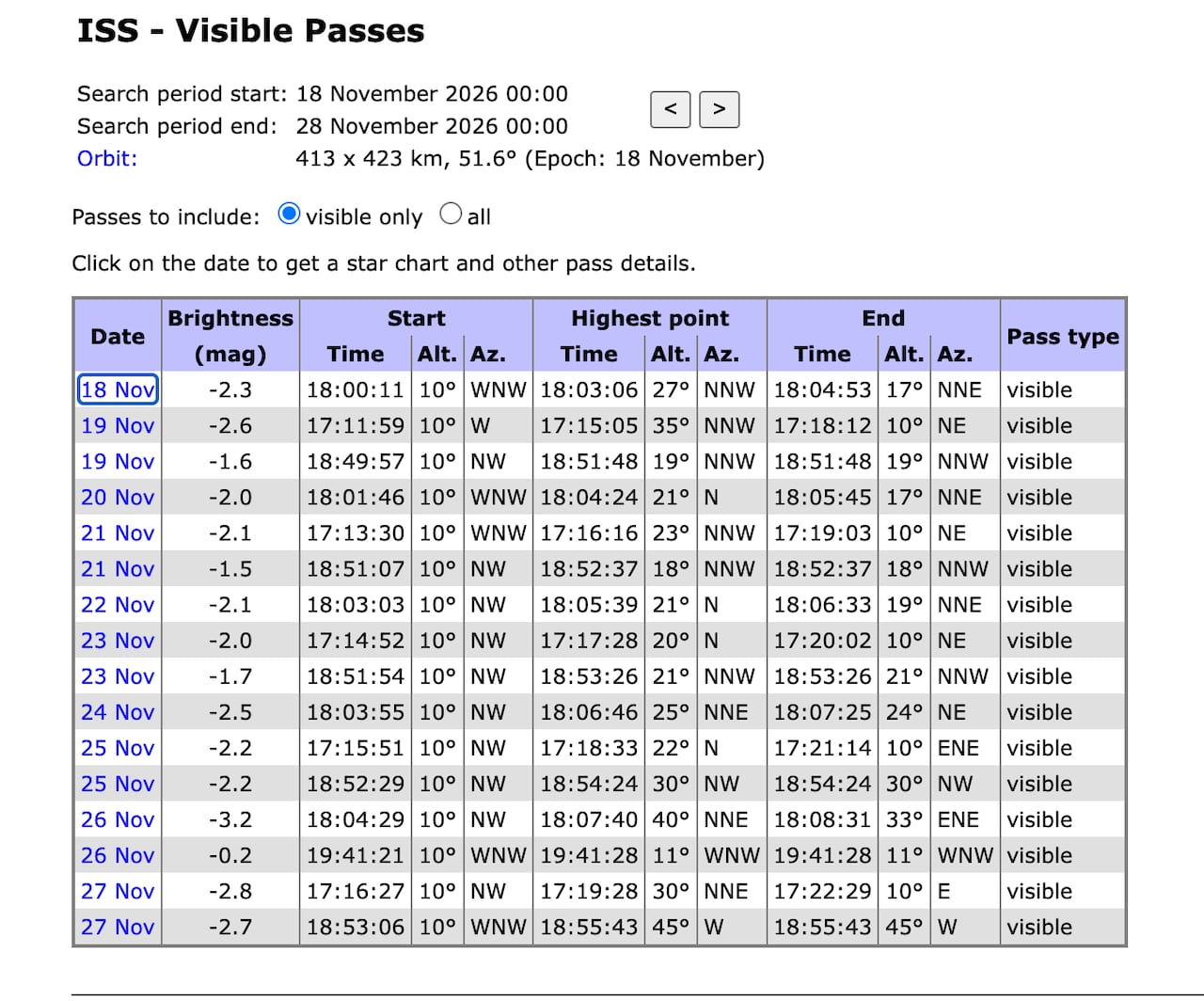
This chart shows the times the ISS will be visible over Toronto over the next couple of weeks. (Heavens-above.com)
Regarding brightness, a lower numerical value indicates a brighter appearance (which may seem counterintuitive, but that’s the nature of astronomy).
By clicking on a specific date, you can see a star map showing the ISS’s trajectory across various constellations.
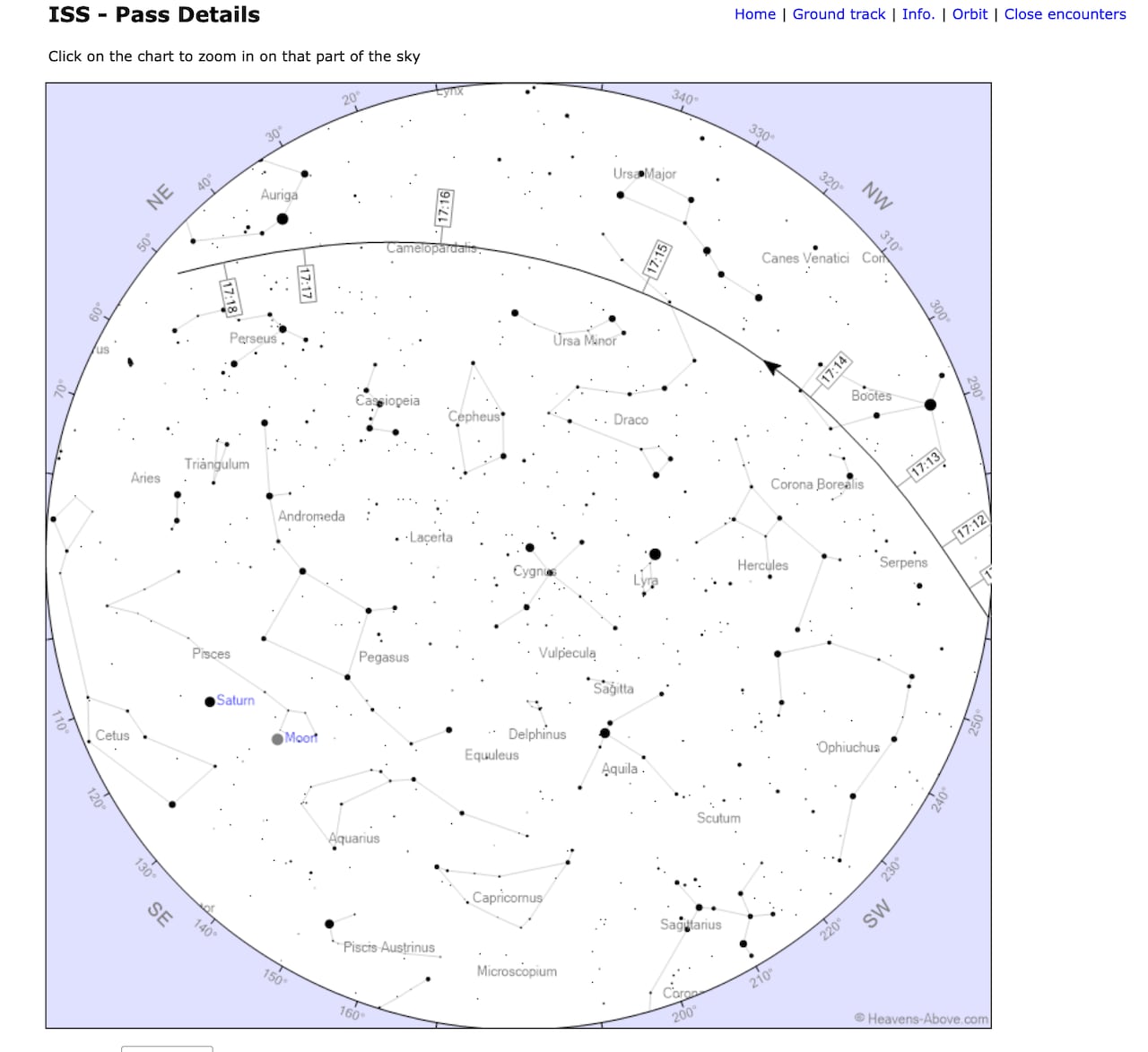
This map of the night sky shows the constellations and the path the ISS will take on this particular pass. (Heavens-above.com)
If the map indicates only a short line near the horizon, you might want to skip that date, as the ISS could be difficult to see.
Conversely, if a longer line is shown, it’s worth attempting to view, provided you have a clear sightline.
The constellation map will also detail the specific local times when the ISS will be visible, which is incredibly beneficial.
Another excellent resource is NASA’s Spot the Station app.
Upon opening the app, it will automatically detect your location. The main screen will countdown to the next ISS pass, and by clicking the “Sightings” button, you can access a list of upcoming passes.
Additionally, it features an AR View (augmented reality) that provides sky details when you hold your phone up, including a line indicating the ISS’s trajectory.
If you manage to spot the ISS as it crosses the sky, just think: perhaps Joshua Kutryk is looking back at you.