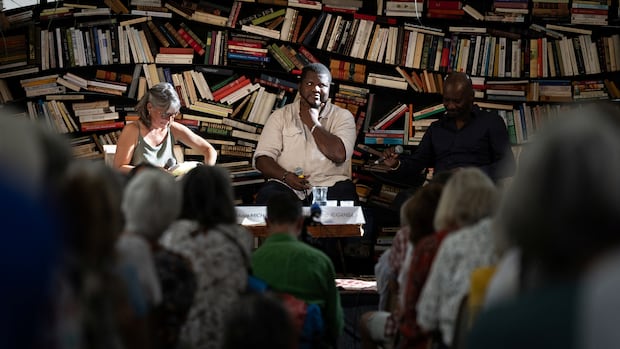


An author from Quebec has become embroiled in a scandal involving artificial intelligence that is causing turmoil in the French literary community, prompting discussions about the appropriate use of AI and its detection methods within the industry.
Thélyson Orélien, a rising Canadian-Haitian poet and novelist, faces allegations that he utilized generative AI to create his first novel, a claim he strongly refutes. This controversy arises as C’était ça ou mourir is being evaluated for several esteemed literary awards.
The accusations emerged on Monday, coinciding with Orélien’s receipt of the Prix du roman Fnac, through an anonymous account on X named “Balance ton Claude,” which purports to reveal instances of AI misuse.
According to this account, an analysis of various passages from the book was conducted using the AI-detection software Pangram, which concluded that the text was “100 per cent” AI-generated.
CBC News conducted its own experiment with Pangram on different sections of the novel and arrived at the same conclusion.
On Friday, the esteemed Goncourt literary prize in France announced the removal of Orélien’s work from its list of 16 contenders.
The Académie Goncourt stated that its decision was influenced by research and reports from several “credible” journalists and scholars, indicating that the book “is likely predominantly a product of artificial intelligence,” in a statement made to CBC.
“This sends a decisive message,” the academy remarked, adding: “A message that we do not support or endorse the creation of texts produced by AI in any form.”
David Leonard, the executive director of Writers’ Trust of Canada, stated that the reliability of AI detection tools is a concern the entire sector is currently facing. At this moment, the organization, which honors local authors, depends on the self-reported claims of the writers.
However, he noted that the organization is considering its alternatives.
“This is a rapidly evolving issue,” Leonard remarked. “We want to avoid situations where we encounter false positives, just as much as we wish to avoid using ineffective tools.”
On Thursday afternoon, Éditions du Boréal, Orélien’s Montreal-based publishing company, announced the suspension of his press tour while he is in France preparing for the awards season.
“We unequivocally condemn the hateful remarks and personal attacks of recent days and urge everyone to practice restraint,” the statement read.
It further emphasized that this decision was made to ensure Orélien’s well-being and confirmed that the book, released in the spring, remains available for purchase.
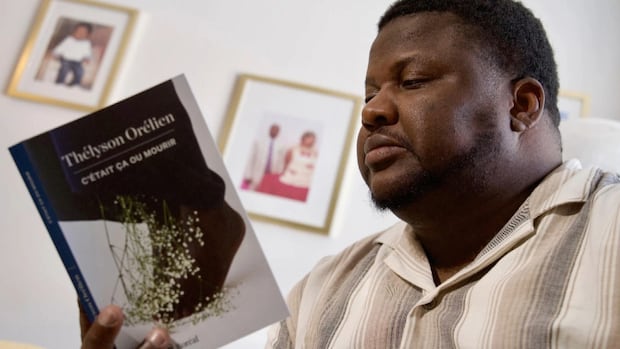
Thélyson Orélien has recently gained fame for his debut novel C’était ça ou mourir, which narrates the journey of a teacher fleeing gang violence in Port-au-Prince, Haiti. Following the book’s award win on Monday, an anonymous account on X alleged Orélien used AI for its creation, a claim he strongly denies. Since then, further plagiarism allegations have also emerged against him.
What occurred?
C’était ça ou mourir, translated as “It was either that or die,” recounts the tale of a man who embarks on a dangerous journey across the Americas to escape gang violence in Haiti’s Port-au-Prince.
Orélien has previously mentioned that his personal experiences of leaving Haiti after the 2010 earthquake, along with the narratives of other migrants he met in Montreal, influenced the development of the novel.
In a statement released on Tuesday evening, he sought to address the scrutiny surrounding his extensive use of metaphors and similes in the book, which many have suggested indicates AI involvement in the writing process.
“I hail from a Haitian and Caribbean literary tradition where poetry, imagery, repetition, and rhythm embody a living voice,” Orélien expressed in a statement written in French and disseminated by Éditions du Boréal.
“While one may critique my style, interpreting its techniques as evidence of artificial intelligence does not pertain to literary criticism,” he stated.
In the same statement, Éditions du Boréal reiterated its support for the author, asserting that Orélien’s manuscript was composed several years prior and had been refined through extensive dialogues with his editor.
Nevertheless, fresh allegations have raised doubts regarding Orélien’s credibility beyond his fiction writing.
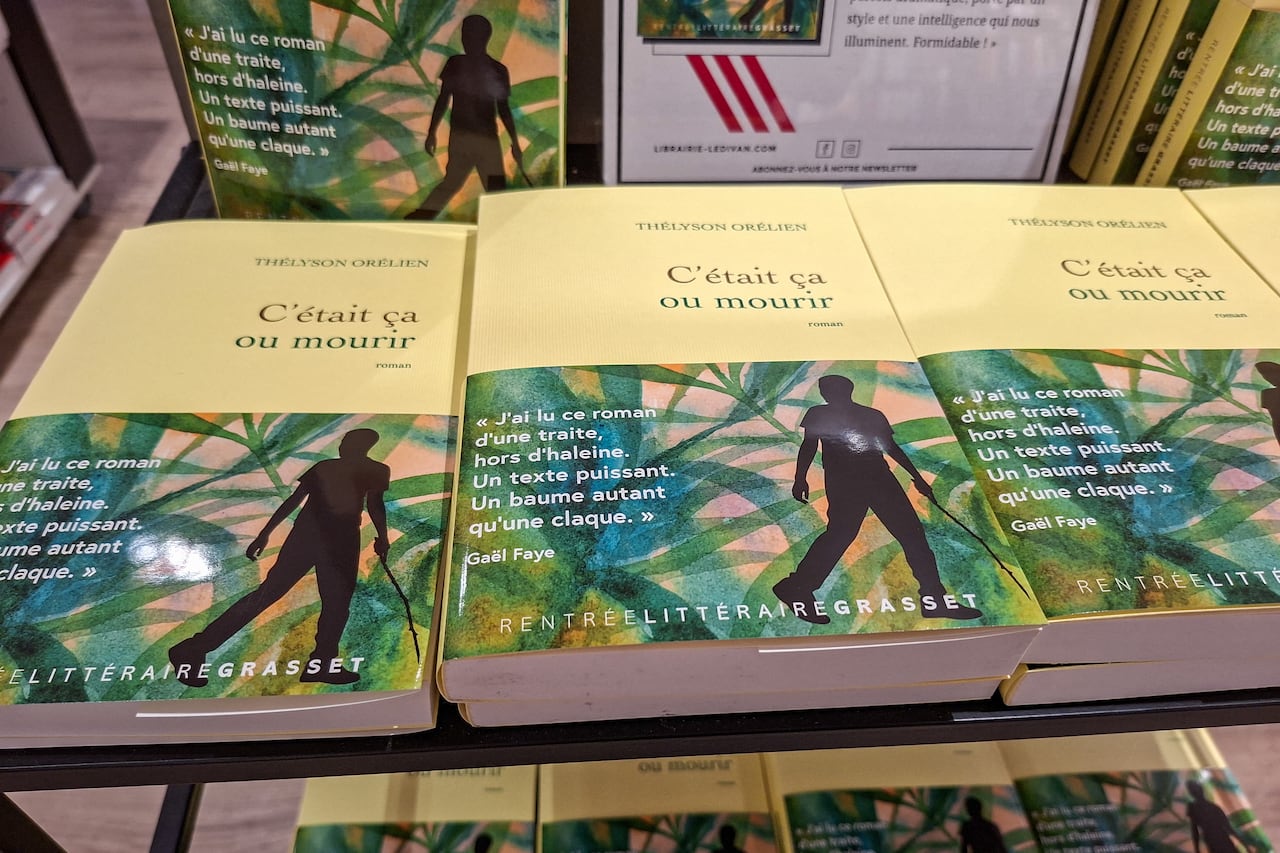
Copies of the novel C’était ça ou mourir, which translates to “It was either that or die,” by Thélyson Orélien are displayed on a bookstore table in Paris on Sept. 23, 2026. The quote highlighted on the cover emphasizes the power of the narrative. (Hans Lucas/AFP via Getty Images)
Plagiarism allegations
On Wednesday, the Quebec newspaper La Presse discovered numerous potential instances of plagiarism in Orélien’s articles across various publications dating back to 2012. The findings have since been corroborated by Radio-Canada’s Décrypteurs.
These new allegations also influenced the Académie Goncourt’s choice to exclude the book from contention for the Prix Goncourt on Friday.
Orélien has not publicly commented on the escalating scandal.
In an interview on Thursday morning with Radio-Canada’s Tout un matin, François Cardinal, La Presse’s vice-president of information, mentioned that he read the book – stopping short of labeling it “incredible” – and did not suspect AI involvement at any point.
“We’ll never reach a conclusive answer on AI one way or another. We cannot definitively prove that AI was utilized, nor can we prove that it wasn’t,” he stated.
However, given the plagiarism claims, he suggested that the publication is unlikely to consider Orélien for upcoming columns.
In a statement on Thursday morning, Éditions du Boréal expressed that it was assessing the new and “very serious” plagiarism allegations.
Later that afternoon, the literary festival Salon du livre in the Eastern Townships announced it would no longer feature Orélien as its guest of honor.
A few hours afterward, Éditions du Boréal revealed its decision to suspend Orélien’s press tour.
In its most recent statement, the publisher continued to defend its editorial process, asserting that despite its attempts to provide a “definitive answer” regarding whether AI authored the book, it is currently “impossible to confirm or deny the allegations.”
“What remains true is that the novel has reached tens of thousands of readers across the francophone world, as well as numerous international publishers,” the statement noted. “In the absence of credible, substantial evidence, it is not our place to determine its right to exist.”
Tools detect AI, not ideas
For Florent Michelot, a professor at Concordia University studying AI in education, Orélien’s situation raises a fundamental question: Have we entered a time where the final product is no longer sufficient for assessing someone’s work?
“I haven’t read the book, but perhaps [Orélien] created very intricate characters, or established a captivating atmosphere… and the AI merely assisted with the sentence construction,” he suggested.
Michelot mentioned that he has personally experimented with Pangram, the AI detection software, and like many other professionals who have spoken out since the controversy erupted, he regards the tool as “remarkable.”
Essentially, the tool identifies patterns based on probabilities, he elaborates. A 100 per cent rating on Pangram implies that either the entire text was produced by AI, or that the author consistently selected the exact words an AI would likely use — a scenario experts say is improbable.
A human author does not operate with probabilities in mind, Michelot argues.
“You are defying probabilities. You are crafting something creative, something that transcends conventional boundaries.”
As more individuals turn to AI for tasks such as research, spellchecking, and translation, Michelot wonders if the creative process will start to be valued more than the end result.
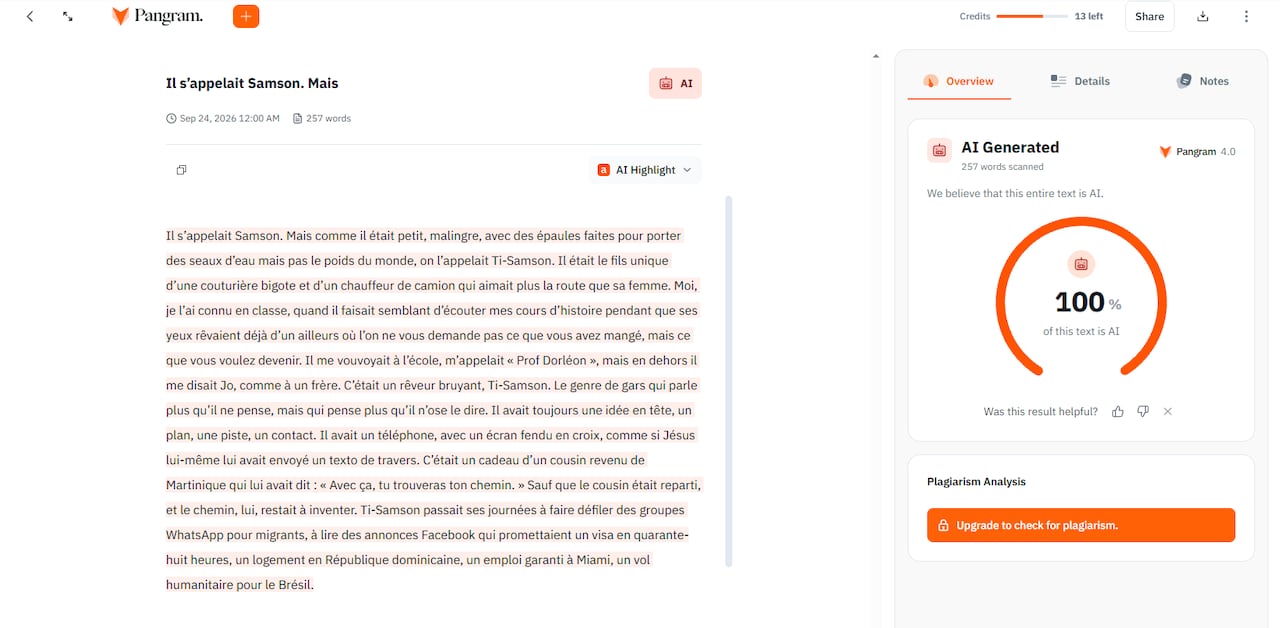
A screengrab of AI-detection tool Pangram’s analysis after CBC presented it with an excerpt from Thélyson Orélien’s novel C’était ça ou mourir. (Cassandra Yanez-Leyton/CBC)
Humans reading humans
Emeline Pierre, a professor of French literature at the Université de Montréal, expresses that the controversy has generated a sense of discomfort. The underlying questions of why Orélien was targeted and the timing of the allegations are crucial to her understanding of the matter.
Nonetheless, she questions the dependability of AI detection tools. Regarding the repetitions and metaphors present in Orélien’s writing, she notes that these are typical of Caribbean literary styles.
“Once again, we witness the journey of a Black individual making their mark. And when that person perhaps achieves too much recognition, it seems they become a source of unease,” she stated.
She draws parallels to the case of Jason Arday, a Cambridge professor who gained acclaim as the university’s youngest Black professor in 2023 at age 37.
He was later found deceased in his apartment after becoming embroiled in a plagiarism controversy.
Pierre is concerned about the implications the Orélien case may have on aspiring young Black authors, noting that the rapidity with which scandals seem to encircle Black figures is troubling.
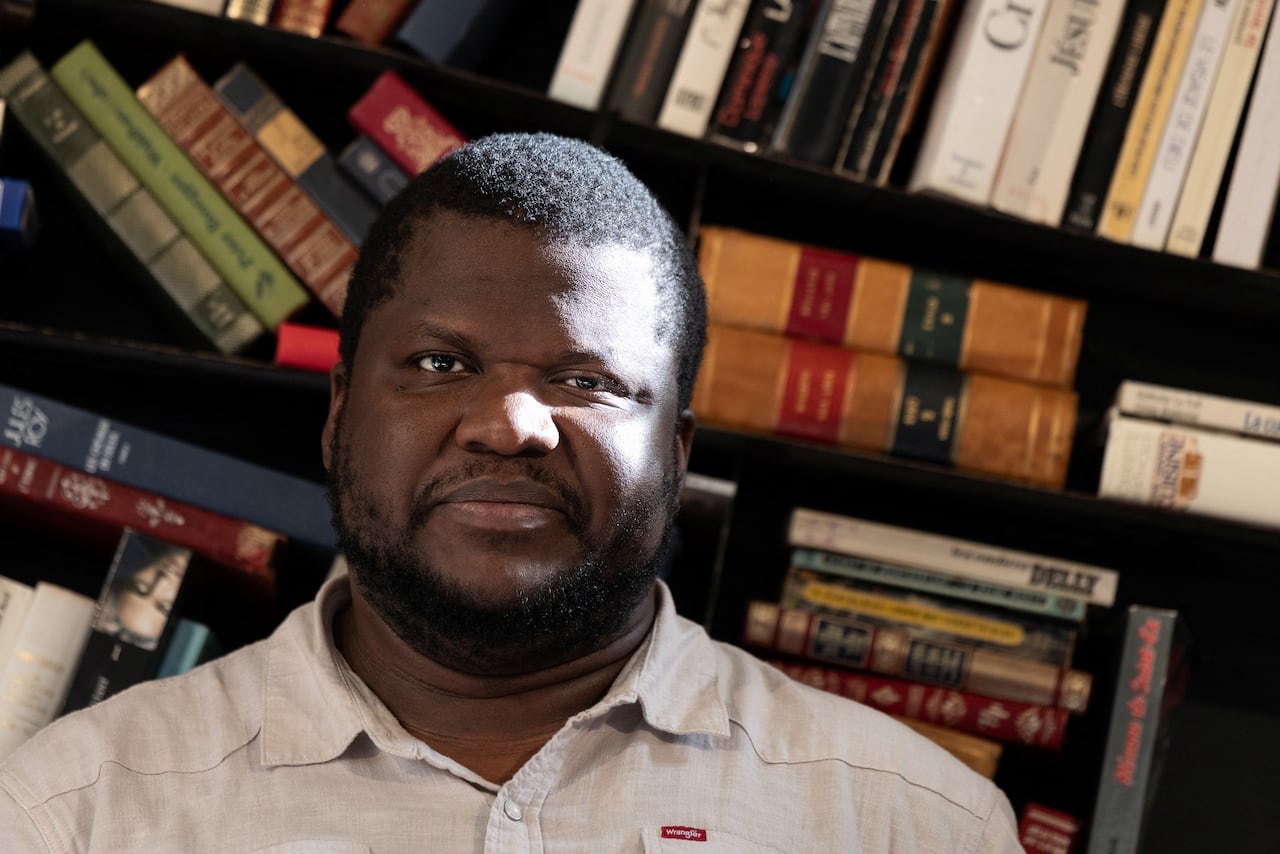
Orélien left Haiti for Quebec after the 2010 earthquake. According to La Presse, a Quebec-based publication for which he’s written a few columns, he resides between Montreal and Ottawa. (Joel Saget /AFP via Getty Images)
Despite the controversy and the increasing competence of AI in writing, the executive director of the Writers’ Trust of Canada expresses that he is less concerned about the future of literature itself and more about the sustainability of a writing career.
He notes that many authors sustain themselves through various writing jobs, which are increasingly being replaced by AI.
“Thus, these tools are making it significantly more challenging for writers to earn a living,” he stated.
“We will continue to produce literature, and those who wish to read works authored by humans will persist in their desire for human-created literature.”