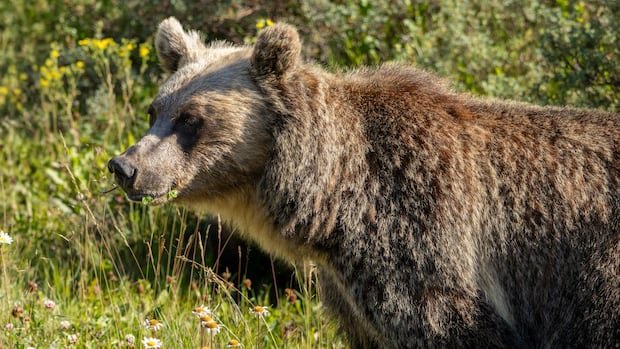


The Alberta government has reported a significant increase in the number of grizzly bears killed by authorized hunters in recent months. A total of 13 grizzly bears have been killed through Alberta’s Wildlife Management Responder Network this year, with 11 of them being taken down in the past three-and-a-half months, mainly due to livestock predation. Since its establishment in June 2024, the program has seen a total of 14 grizzly bears killed by hunters, with only one recorded in 2025.
The province’s pool of “problem wildlife” responders comprises qualified Albertan hunters selected for the program. These hunters are called upon by the province when a situation arises that warrants the killing of a grizzly bear. Alberta’s Ministry of Forestry and Parks emphasized that their wildlife management approach is grounded in science and expert advice, prioritizing public safety, conflict reduction, and grizzly bear population recovery.
Grizzly bears were classified as a threatened species by the Alberta government in 2010. The management of grizzly bears follows provincial guidelines, considering factors such as attacks on livestock, pets, or humans in determining the appropriate response to incidents. The province stated that an average of 11 grizzly bears were lethally removed annually from 2021 to 2025.
Although grizzly hunting has been banned in Alberta since 2006 except for Indigenous hunting, the removal of grizzlies through the Wildlife Management Responder Network is not categorized as hunting, as authorizations are granted case by case instead of through tags. The province highlighted that while the number of grizzlies killed through the wildlife responder program has increased, the overall human-caused bear mortality in 2026 is lower than in previous years, aligning with the recovery objectives for grizzly bear populations.
Most of the grizzly bear killings through the responder program have occurred in southwestern Alberta, an area known for its high grizzly bear population density. Wildlife biologist Andrea Morehouse mentioned that this region is part of a larger international bear population extending into British Columbia and Montana. Effective wildlife coexistence measures are essential in areas where grizzly bear ranges overlap with human-populated regions like ranches and livestock operations.
The provincial government has emphasized the need for various solutions to manage human-bear conflicts effectively, including coexistence programs, conflict mitigation strategies, population monitoring, and when necessary, lethal removals. In 2024, the government announced a $700,000 investment over five years to enhance measures to keep large carnivores away from rural properties in southwestern Alberta. While Alberta estimates approximately 1,000 grizzlies in the province, no recent provincial population study has been conducted since 2018.