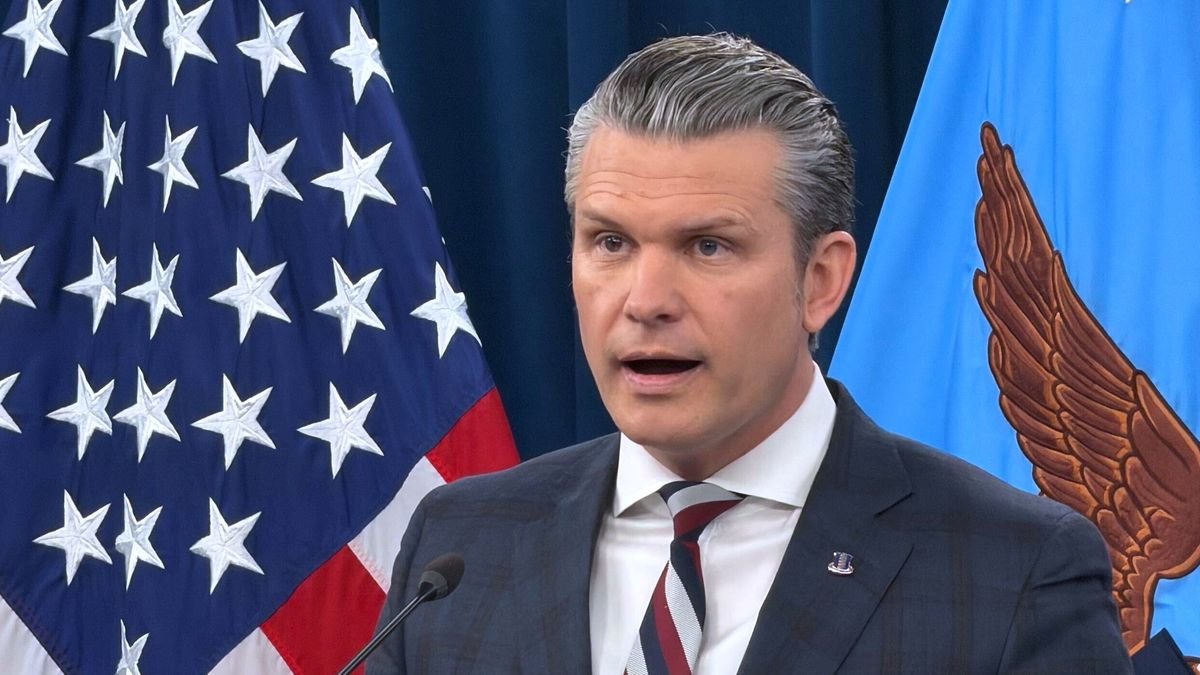


The United States is claimed to have eliminated the leader of an Iranian unit allegedly involved in planning an assassination targeting Donald Trump. This development adds another layer to the ongoing complexities surrounding a global conflict. Defense Secretary Pete Hegseth, known as “Pistol,” asserted that the targeted individual was a high-ranking Iranian figure connected to a purported scheme against the President. Hegseth stated, “The chief of the unit responsible for the attempted assassination of President Trump has been located and eliminated. Iran made an attempt on President Trump’s life, but he ultimately prevailed.”
This announcement, marked by Hegseth’s characteristic confidence, came amidst a US-led military campaign against Iran, now in its fifth day. The challenge for the authorities lies in the growing list of rationales offered for the initiation of the conflict, lacking a singular, consistent explanation.
Since the commencement of military actions, the White House and top officials have presented a shifting array of justifications, each differing from the previous one. The lack of a unified narrative raises questions about the coherence of the mission objectives. Initially centered on Iran’s nuclear aspirations and the imperative to counter a perceived threat to regional stability, additional motives have been introduced over time.
Among these include concerns of a potential preemptive strike by Iran, safeguarding US and Israeli interests, disrupting Tehran’s proxy networks, and reaffirming American influence in the Middle East. The latest reason cited is retaliation for an alleged plot to harm Trump, with the President himself emphasizing a personal element in the conflict.
Trump’s concise statement following the reported demise of Iran’s Supreme Leader, Ayatollah Ali Khamenei, encapsulates this personal dimension, as he remarked, “I got him before he got me,” with a smirk. While this sentiment may resonate with supporters who value strength and retribution in geopolitical matters, recent polls suggest even some US backers are beginning to question the true motives behind the war.
Official accounts continue to introduce varying justifications – from nuclear deterrence to leadership targeting and historical reprisal – creating a broad rationale that seems more like a selection of options rather than a cohesive strategy. The ongoing confusion extends to the campaign’s objectives, which have been described alternately as a limited military action, a bid to weaken Iran’s military capabilities, or a broader attempt to reshape regional power dynamics.
Hegseth’s recent appearance further highlighted the evolving narrative, as he announced the demise of the alleged assassination plot orchestrator and claimed the sinking of an Iranian naval vessel in the Persian Gulf, along with an alleged torpedo strike on an Iranian warship in the Indian Ocean. Nevertheless, the disjointed explanations and shifting objectives suggest a lack of clarity in the overall strategy.
As the conflict continues to reshape the Middle East geopolitically, fundamental questions persist unanswered, with shifting rationales and ambiguous goals characterizing the ongoing military campaign. The world navigates through a maze of explanations, with the assassination plot narrative being the latest addition to a series of justifications, leaving observers to piece together a rationale from a fragmented assortment of reasons.