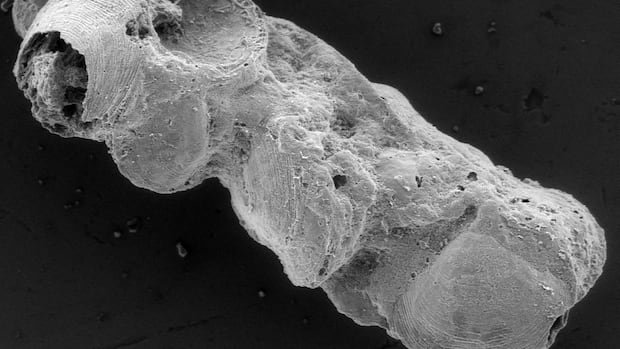


Long before the era of dinosaurs, a surge in biodiversity led to the appearance of early ancestors of modern animals, accompanied by an increase in fecal matter. While not a widely discussed topic in paleontology, a recent study sheds light on how analyzing coprolites, or fossilized feces, aids in unraveling Earth’s ancient ecosystems, nutrient cycles, and animal interactions.
The research, recently published in the journal Trends in Evolution & Ecology, delved into the examination of fecal fossils dating back to the Cambrian period, approximately 540 million years ago. By studying fecal records from primitive worms, invertebrates, and mollusk-like creatures, scientists discovered that fecal matter played a crucial role in enhancing deep-water ecosystems’ habitability and nutrient availability during that era, well before the existence of dinosaurs.
The study’s revelation that feces were abundant during the Cambrian period holds significance for comprehending the origins of present-day oceanic ecosystems. According to Julien Kimmig, one of the paper’s co-authors and head of the paleontology division at the Karlsruhe Natural History Museum in Germany, the presence of fecal matter in marine ecosystems is a vital factor often overlooked, crucial for sustaining both contemporary and ancient ecosystems and possibly influencing evolutionary processes.
Analyzing hundreds of coprolites from various global deposits, Kimmig and co-author Russell Bicknell explored fecal remnants from burrowing worms, arthropods, brachiopods, and hyoliths. Starting as microscopic traces, these fecal fossils gradually evolved over the Cambrian period, eventually becoming visible to the naked eye and containing fragments of shells or worms.
Apart from offering insights into evolutionary patterns and predator-prey dynamics, the study of coprolites aids in understanding Earth’s ecology and the transformative impact of the Cambrian Radiation, a period marked by the sudden diversification of modern animal groups. By unraveling the mysteries locked within these ancient fecal remnants, researchers can glean valuable information about past environments and potential future ecological transformations.
Paleontologists emphasize the importance of studying coprolites to gain a comprehensive understanding of significant geological epochs such as the Cambrian period, which laid the foundation for the marine ecosystems we recognize today. By examining fecal records alongside other paleontological evidence, researchers can decipher the intricate web of relationships between organisms and ecosystems, offering valuable insights into the past, present, and future of life on Earth.
Karen Chin, a prominent paleontologist specializing in coprolite research, underlines the significance of these fossilized feces in uncovering hidden aspects of ancient ecosystems. While coprolites may not enjoy the same level of attention as dinosaur bones, their study offers unique perspectives on the interactions between organisms, dietary habits, and ecological processes across different geological eras.
From shedding light on unexpected dietary preferences of ancient herbivores to tracing carbon cycles through fecal remains, coprolites provide a treasure trove of insights waiting to be explored. As researchers delve deeper into the world of fossilized feces, they aim to unearth more revelations that could reshape our understanding of Earth’s past and inform our predictions for the future.