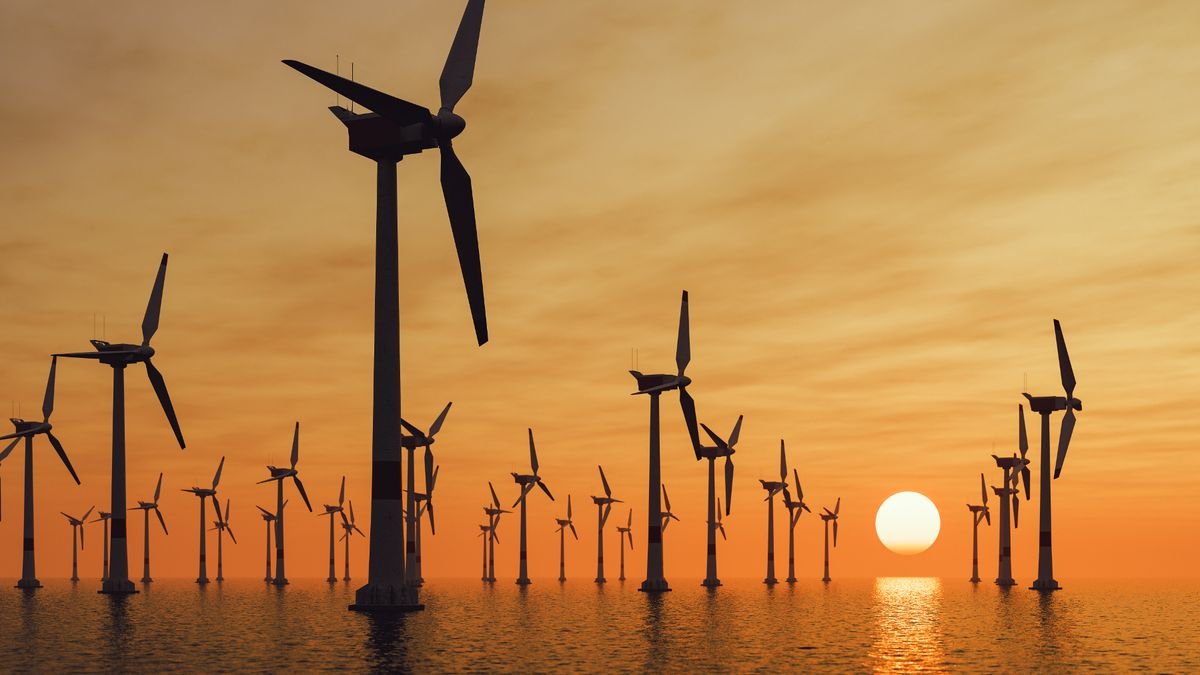


The UK government has unveiled its largest-ever expansion of offshore wind energy to help reduce household bills in the long run. Energy Secretary Ed Miliband praised the move, stating it will power the equivalent of 12 million homes and is a significant step towards achieving the country’s clean energy objectives.
Critics argue that the process, which involves wind farm operators benefiting from taxpayer-backed guarantees, could potentially lead to increased bills for households over the coming decades. The primary beneficiary of the recent funding round is expected to be the German energy company RWE.
Projections suggest that the levies on bills could reach nearly £1.8 billion annually by 2030 when the proposed wind farms become operational. Nevertheless, this additional cost is anticipated to be offset by lower wholesale prices.
The Labour Party has expressed support for wind farms as a means to reduce the UK’s dependence on imported energy sources, which have contributed to rising energy costs following Russia’s invasion of Ukraine. Officials argue that transitioning to wind power is essential for decarbonizing the UK and reducing the necessity for gas-powered stations.
Despite the government’s push for green energy, there are concerns regarding the upfront subsidies added to bills and potential challenges in integrating numerous new wind farms into the power grid, which could result in instances where operators are paid to halt operations.
The recent funding auction successfully secured 8.4 gigawatts of wind power capacity. Miliband highlighted the significance of this achievement, emphasizing that it signifies a shift towards greater energy independence for the UK and a move away from reliance on markets controlled by foreign entities.
Various stakeholders have weighed in on the outcomes of the auction. Simon Francis from the End Fuel Poverty Coalition welcomed the results but emphasized the importance of ensuring that cost reductions are passed on to consumers. Dr. Douglas Parr of Greenpeace UK commended the move towards wind energy, citing its potential to alleviate high energy prices caused by gas companies.
However, Sam Richards, CEO of Britain Remade, expressed disappointment over the increasing prices in renewable energy auctions and called for more radical planning reforms to streamline processes and expedite project delivery.
The recent auction secured offshore wind projects at an average price of £90.91 per megawatt hour, a figure claimed to be 40% lower than the cost of new gas projects. The government also anticipates that the funding process will unlock approximately £22 billion in private investments, supporting around 7,000 jobs.
Notable projects awarded in the auction include Dogger Bank South, Norfolk Vanguard, and Berwick Bank, among others, which are set to be significant contributors to the UK’s offshore wind energy capacity.