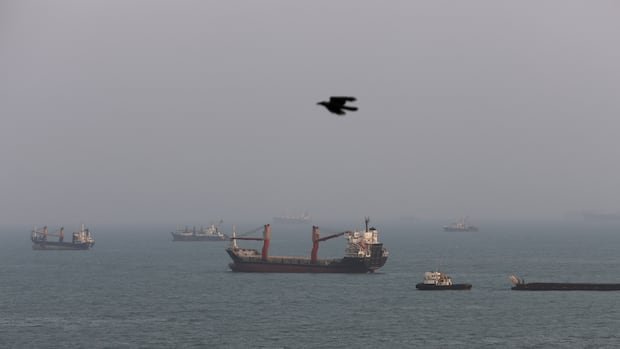


U.S. President Donald Trump stated on Tuesday that there were no ongoing discussions with Iran and affirmed that the Strait of Hormuz remained accessible, contradicting Iran’s claim that the crucial waterway was closed to shipping. The diminishing chances of a resolution to the nearly six-month conflict led to an increase in oil prices, a decline in stock markets, and escalating borrowing costs for major economies, including the U.S. A temporary ceasefire agreement had lapsed on Monday, prompting a senior Iranian official to announce a shift to a “fully offensive” military stance due to the diplomatic impasse.
Trump emphasized that there were no current or planned talks with Iran, confirming the continued enforcement of the Naval Blockade and the operational status of the Hormuz Strait. Meanwhile, Jared Kushner, Trump’s son-in-law and special envoy, had previously expressed optimism about the ongoing discussions with Iran, indicating more robust engagement than before.
The conflict, which originated from joint U.S.-Israeli attacks on Iran, had evolved into a standoff, with Iran threatening shipping in the strait while the U.S. warned of potential renewed attacks if negotiations failed to produce a lasting resolution. One of the primary U.S. objectives is to prevent Iran from obtaining a nuclear weapon, a task made challenging by the presence of enriched uranium at previously targeted sites.
Despite Trump’s optimism, reports continued to emerge of attempts to disrupt shipping in the Gulf region. The United Arab Emirates reported the detection of two ballistic missiles launched from Iran, the first such incident since a May 4 strike on the Fujairah port. The UAE’s Defense Ministry indicated that the missiles were aimed at maritime traffic, leading to their interception in the sea. In response, the UAE announced the suspension of all trade activities with Iran due to escalating tensions jeopardizing regional and international peace.
Furthermore, a vessel transiting the Strait of Hormuz reported being struck by an unidentified projectile, resulting in engine room damage and casualties among the crew. The Omani Coast Guard provided assistance to the affected vessel, with no immediate response from Tehran. Iranian negotiator Mohammad Baqer Qalibaf asserted that the strait would remain closed until the U.S. complied with the conditions outlined in the interim deal signed in June. The failure to reach a broader agreement by the deadline set in the memorandum of understanding further strained relations, particularly concerning control of the vital Strait of Hormuz.
Iran reiterated its willingness to engage in dialogue with the U.S. while emphasizing that negotiations should not be equated with capitulation. As the conflict persists, Iranian leaders are concerned that additional economic sanctions could exacerbate hardships, fuel unrest, and undermine the country’s legitimacy. The ongoing turmoil has resulted in significant casualties and disruptions, with Brent crude oil prices surging during the conflict. The U.S. administration hinted at potential escalation in economic measures against Iran in the coming months.