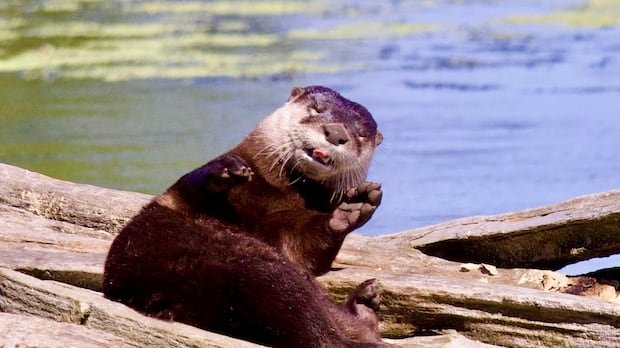


In early August at Grimsby Wetlands, wildlife photographer Terry Chettle had an unexpected encounter with a river otter while capturing images of a green heron. Chettle expressed his surprise at the otter’s presence in the area, as they are not commonly seen there. He managed to photograph the otter as it moved to a log and engaged in preening, even putting on a playful display for him.
During the same day, Bruce and Laurie Mackenzie, who were out for a walk at the wetland, crossed paths with Chettle, who pointed out the otter to them. Bruce Mackenzie acknowledged the rarity of the sighting, mentioning that it was the first otter sighting near the wetlands in recent memory. He added that no one else has reported seeing the otter since that weekend.
The wetland, previously used by the Niagara Region for sewage storage, is now under the management of the Hamilton Naturalists’ Club, covering approximately 12 hectares along Lake Ontario’s South Shore. Mackenzie, involved with the club as a project manager for the wetlands, highlighted the positive impact of habitat restoration and water quality, citing previous sightings of rare species like least bitterns, which are endangered in Ontario.
Otters making appearances in the region signify successful conservation efforts, according to Laura Timms, a program manager at Credit Valley Conservation. The authority, responsible for overseeing the Credit River watershed, published an article in 2025 detailing the resurgence of river otters in the area. Timms noted an increasing trend in documented otter sightings, including instances of otters giving birth to pups at conservation areas such as Rattray Marsh and Jim Tovey Lakeview.
Although the Niagara Peninsula Conservation Authority stated it does not monitor wildlife populations, Timms acknowledged the historical decline of river otters in the 1800s due to hunting, habitat destruction, and poor water quality. However, she highlighted recent positive trends in otter populations in North America, attributing the rebound to extensive environmental restoration efforts that benefit various species.
River otters, known for their length of up to 1.4 meters and weighing between five to 14 kilograms, thrive in aquatic environments where they feed on fish, clams, insects, and other aquatic creatures. Timms emphasized the importance of preserving biodiversity beyond otters, underscoring the critical need to protect and restore habitats like wetlands to support a diverse range of species, mitigate flooding, and store carbon effectively.