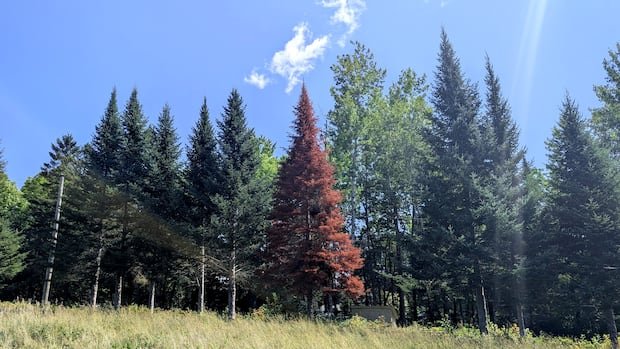


Balsam fir trees in New Brunswick are exhibiting a concerning phenomenon of turning red and perishing following the unprecedented drought experienced last summer. This situation has raised apprehensions regarding the survival of this significant provincial tree. Professor Anthony Taylor, a forestry researcher at the University of New Brunswick, has been actively engaging with woodlot owners to witness the distressing effects firsthand. The iconic evergreen trees, commonly sought after for Christmas decorations, are gradually transitioning to a red, desiccated state leading to their demise.
Professor Taylor, who has been dedicated to studying the impacts of climate change on New Brunswick’s forests for an extended period, notes that the current balsam fir decline mirrors observations made in the aftermath of previous hot, arid summers. He emphasizes that the warm and dry conditions, such as the previous year’s drought, adversely affect the growth capacity of balsam fir trees. The trees halt their photosynthesis process prematurely in response to drought, impeding their growth and energy production required for essential metabolic functions and defense mechanisms.
The shallow root system of balsam firs also exacerbates their vulnerability during dry spells by limiting their access to water. Peter McKeil, a woodlot owner in Burtt’s Corner, has noticed the visible damage to his balsam firs since June, with the trees progressively turning red from their lower branches upwards. With an estimated loss of approximately 100 trees to date, McKeil has adjusted his harvesting strategies to salvage value from the remaining fir trees before further losses occur.
McKeil’s concerns regarding the future of the balsam fir species in southern New Brunswick are echoed by fears of impending doom due to escalating climate change impacts. The necessity for immediate climate action is underscored by Professor Taylor, who views the red trees as a tangible indicator of the adverse effects of a changing climate on New Brunswick’s iconic tree. He emphasizes the urgency for society to transition away from fossil fuels and curb excessive deforestation practices to combat climate change effectively.
The ongoing plight of balsam fir trees in New Brunswick serves as a stark reminder of the urgent need for environmental conservation and sustainable practices to preserve the region’s diverse ecosystems.