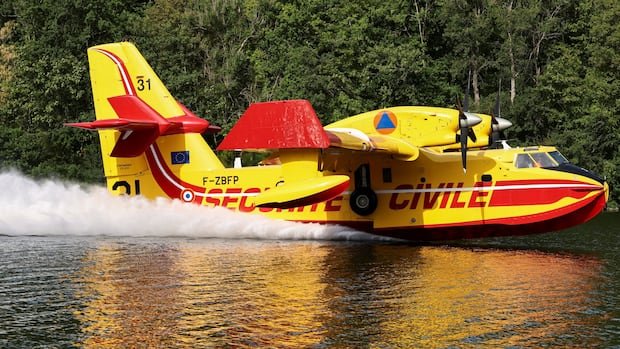


Amid a severe wildfire season in Canada, the United States, and Europe, there is mounting pressure on the manufacturer of Canadair “Super Scooper” water bombers to boost production. De Havilland, based in Calgary, is reviving the production of Canadair after taking over the program from Bombardier in 2015.
The world-renowned Canadair aircraft are meticulously hand-built in Calgary with components sourced nationwide. The revival of the production line was announced in 2022, with the first two aircraft on track for completion and delivery by early 2028.
Canadian and European leaders are eager to acquire these aircraft due to current shortages and aging fleets. Developed in the 1960s, Canadair was specifically designed for fighting large fires in the Canadian wilderness, featuring a unique ability to scoop water from various bodies of water rapidly.
The new Super Scooper model closely resembles its predecessors, boasting a 30-meter wingspan, a 6,100-liter water tank, and the iconic yellow and red exterior. Recent criticism from opposition politicians in France and Spain has highlighted the need for more operational Canadairs to combat wildfires effectively.
De Havilland is facing increasing demand and is contemplating establishing a second production line to meet the soaring interest. The company is currently capable of producing about 10 water bombers annually, with plans to double the output to 20 per year with an additional line.
To address the global demand for firefighting aircraft, experts suggest the necessity for multiple production lines for Canadairs. The urgency stems from the growing wildfire threats due to climate change, prompting nations worldwide to seek advanced firefighting capabilities.
Failure to meet the rising demand for water bombers may lead to potential competition from foreign companies developing rival aircraft. This poses a risk to Canadian manufacturing jobs, emphasizing the importance of domestic production and national economic strength.
In response to the wildfire crisis, a Senate report recommends establishing a national fleet of modern firefighting aircraft. While aircraft play a crucial role in wildfire management by containing and mitigating fires, they are just one component of a comprehensive firefighting strategy that includes prevention and mitigation efforts.
The Federal government, committed to enhancing wildfire response capabilities, has leased aircraft to support provincial wildfire crews. Collaborative efforts are underway to bolster national capacity and combat the escalating impacts of wildfires effectively.