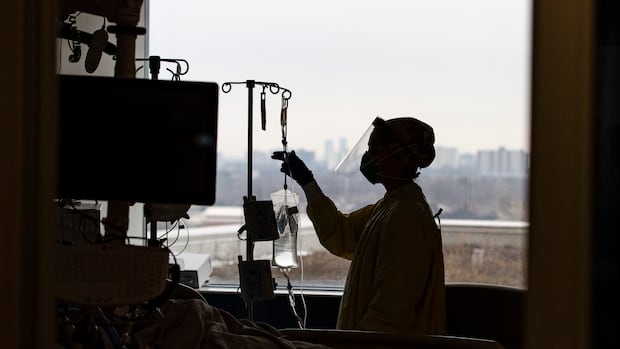


While navigating a hectic shift, an Ontario nurse found herself torn by competing priorities: “Will I be able to make the palliative patient comfortable? Should I attempt to save the drug user? Or do I need to assist the naked and disoriented woman on the floor? What should I do?”
These dilemmas were expressed by a medical-surgical nurse referred to as Jane — a pseudonym employed to safeguard her identity — in a recent report detailing the nursing landscape in Ontario.
She depicted an atmosphere filled with urgency and confusion as she juggled the needs of five patients requiring significant attention. Jane indicated that she sought assistance, yet her colleagues were also swamped with their own patient loads.
During her shift, one of her palliative patients passed away, leaving her grappling with feelings of frustration and anxiety, questioning, “Will I truly witness someone’s last breath, or will I face legal repercussions for leaving a patient alone in the restroom?”
The report, co-written by James Brophy and Margaret Keith, both adjunct professors in the sociology department at the University of Windsor, was published on Monday by the Ontario Council of Hospital Unions (OCHU), the hospital division of the Canadian Union of Public Employees (CUPE). It compiles interviews and narratives from 14 nurses in Ontario hospitals who describe their experiences in environments they perceive as understaffed and lacking resources.
-
Ontario to spend $56.8M to increase nursing enrolment
-
Ontario will need tens of thousands of new nurses, PSWs by 2032
A nurse using the name Sumaia recounted a lack of functioning equipment and computers necessary for her duties. Another nurse, identified as Kim, reported an uptick in violence against healthcare workers, including an incident where a fellow nurse was knocked unconscious by an emergency room patient.
Brophy noted that nurses are experiencing a form of burnout and moral injury—psychological distress stemming from the inability to provide essential care—becoming an all too common reality. He indicated that the situation is approaching a critical threshold.

The Saskatchewan government is focused on recruiting nurses, but many in health care say the priority needs to shift from hiring to retaining the trained nurses the province already has. Sonia Udod is an associate professor with the College of Nursing at the University of Manitoba. She has roots in Saskatchewan and is eager to support nurses here.
“We are seeing nurses with 15, 20, even 30 years of experience who simply can’t endure it any longer,” Brophy remarked. “They’re contemplating leaving the field.”
A recent survey by Nanos Research involving 551 nurses in Ontario revealed that approximately 80 percent of respondents feared that one of their patients could be harmed due to overwhelming demands and their inability to provide timely care.
Among the surveyed nurses, 88 percent reported feeling exhausted from their work, 73 percent experienced anxiety, and around half stated they were considering resigning within the next year due to the conditions at work.
Other research indicates that these feelings resonate with nurses nationwide, particularly among younger cohorts.
A report from the Montreal Economic Institute illustrates that for every 100 nurses under 35 who registered to practice in Canada, 34 did not renew their registration in 2024.
The situation is particularly severe in Newfoundland and Labrador, where 61 nurses under 35 leave for every 100 who enter the field.
According to a 2018 study cited by the Canadian Federation of Nursing, Canada is expected to face a shortage of 117,600 nurses by 2030.
Brophy pointed out that while the extreme pressures faced by nurses are well-documented in surveys, their personal accounts often remain unheard as healthcare workers frequently refrain from speaking out due to fears of repercussions.
“Their voices are suppressed,” Brophy stated.

James Brophy, adjunct professors in the department of sociology at the University of Windsor, is the co-author of a report titled We are in Survival Mode about the state of nursing in Ontario. (Jonathan Pinto/CBC)
“The goal of a qualitative study like this is to add depth to the data,” he explained. “We aim to illustrate the real-life experiences of these nurses.”
A frequent concern voiced by nurses is their inability to deliver high-quality care to patients, beyond mere clinical tasks.
For instance, he noted that nurses who work in adequately staffed environments can identify and report instances of domestic violence. They also serve as vital sources of comfort for patients facing difficult diagnoses or end-of-life decisions.
He emphasized the need for public awareness regarding these nurses who are raising alarms. “I sincerely hope that … the general public is appalled by what they are learning.”
The health of health-care workers
Kelsey Toney from Milton, Ontario, shared with CBC News that her aspiration to become an emergency nurse turned into reality, but after spending six years as a registered nurse in the Peel region, she left hospital work primarily due to inadequate staffing.
“I felt overwhelmed by the number of patients I had to care for simultaneously,” she remarked. “I wasn’t willing to jeopardize my license.”
During her tenure in hospitals, Toney encountered “close calls” that endangered her safety and experienced burnout, particularly during the pandemic.
“I believe my career in healthcare was partly at the expense of my own health,” she stated.
Now self-employed in medical aesthetics, Toney reports a notable improvement in her work-life balance.
Toney mentioned that she does not envision a return to hospital work due to low salaries and the structure of the current healthcare system.
“I lack the necessary support to ensure patients receive adequate care,” she added.
Safer nurse to patient ratio
Angela Hodgson, a registered practical nurse (RPN) based in Kingston, Ontario, and chair of the RPN Committee of OCHU-CUPE, stated that nurses in Ontario’s hospitals are struggling and are advocating for the establishment of minimum nurse-to-patient ratios.
In certain regions where minimum nurse-to-patient ratios of 1:5 in medical and surgical units have been mandated, studies have shown a decrease in rates of occupational injuries and illnesses in California.

Nurses from across British Columbia rally for better working conditions and other requests in downtown Vancouver in February 2025. In 2024, B.C. became the first province in Canada to implement a mandatory minimum of one nurse for every four patients in medical and surgical units. (Ben Nelms/CBC)
British Columbia has set a precedent as the first province in Canada to mandate a minimum of one nurse for every four patients in medical and surgical settings. Additionally, Manitoba passed legislation in June to establish minimum nurse-to-patient ratios, although it has not yet been put into practice.
Hodgson believes that a more appropriate nurse-to-patient ratio would enable care providers to better assess and prioritize patient needs, reducing stress on nurses and enhancing the quality of patient care.
“Caring for four patients is manageable. However, when faced with six, seven, or eight patients, the number of tasks required of a nurse becomes overwhelming,” she explained.
“While everyone calls nurses ‘angels’ and ‘heroes,’ putting us on a pedestal, we are human and can only handle so much.”
Valerie Grdisa, CEO of the Canadian Nurses Association, noted that stories of moral distress and burnout are prevalent among nurses across Canada, indicating a need for a redesign of the Canadian healthcare system.
She acknowledged that while there are no simple solutions to nursing burnout in Canada, necessary changes include increased investment in primary and home care, preventive health initiatives, and enhanced staffing.
“We take pride in our healthcare system,” she stated. “However, we can certainly improve.”