


In the autumn of 2022, a brochure arrived at Christian Heckle’s home, marking a significant change for her family.
This was how the fifth-generation farmer discovered that the land they had been leasing adjacent to their residence for years, where they cultivated wheat, barley, and canola, had been sold.
The new proprietors are De Havilland Canada. The 600 hectares of farmland that the Heckles once tended is now destined to become a site for aircraft manufacturing and commercial activities, where a new fleet of highly sought-after water bombers for wildfire suppression will be produced, supported by $2.5 billion in federal funding.
Heckle, whose family has resided on the same land west of Strathmore, Alta., since 1913, recalls the shock of the news.
“It just suddenly happened without warning,” she stated. “We never got the chance to contest it.”
She realizes she is going against the prevailing sentiment. From her discussions within the community and various Facebook groups, it appears that many residents of Strathmore support the development, anticipating it will enhance the local economy.
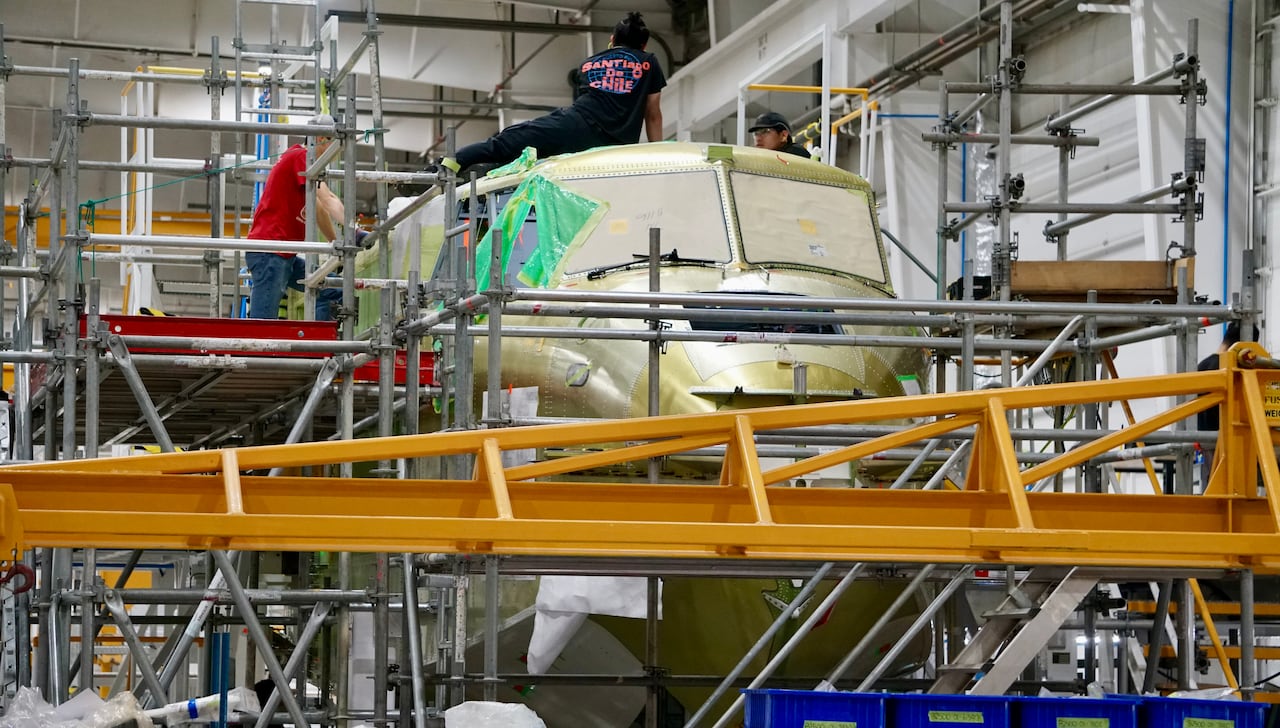
The cockpit is being assembled on the first Canadair aircraft constructed by De Havilland, as the company resumes production of water bombers at its current assembly site in Calgary. (Kyle Bakx/CBC)
The Alberta government indicates that the facility is projected to generate 3,000 permanent positions upon completion. The company commenced construction on the project in May, with initial operations set to begin in the spring of 2028.
Shannon Laprise, the reeve of Wheatland County, noted that there has been excitement in the community since the construction kicked off earlier this year.
“We refer to it as a generational investment. It’s impressive.”
-
Rancher says Alberta well cleanup fund a positive step, but litany of concerns remain
-
Alberta government proposing more restrictions on upcoming data centre projects
However, Heckle’s concerns about the project extend beyond the aircraft operations in her vicinity. She asserts that the farmland where the De Havilland facility is being constructed is among the most fertile in the region. According to her, the last year they farmed it, they achieved higher yields than any of their neighbors.
“In a good year, that land could yield around nine million loaves of bread,” Heckle explained.
“I’m not entirely opposed to progress… I just believe there are countless acres across this country that are not suitable for farming where this development could have taken place.”
The trade-offs
According to Thomas Jensen, an agronomist and soil scientist who teaches part-time at the University of Lethbridge, the productivity of the land in that region is largely due to its soil.
Spanning from Cardston County and moving north along the Foothills, through Calgary to Red Deer, and northeastward to Edmonton and Lloydminster, lies a stretch of rich, black soil known as chernozemic soil, recognized as the most fertile type in the province, Jensen noted.
A small segment of this fertile band extends across the western part of Wheatland County, the area where Heckle farms and where the De Havilland facility is being established.
“While it’s not as optimal as the soil around Edmonton, where there is more moisture, it is still good, productive soil,” Jensen remarked.
As one moves further east across Wheatland County towards the Saskatchewan border, the soil shifts from black to dark brown to brown, according to Jensen—soils that remain suitable for cultivation, but are generally less productive and may require irrigation depending on the area.
Given the ongoing water scarcity in the Prairies and the increasing costs associated with irrigation, dryland farms like the one Heckle previously operated have certain advantages, Jensen stated.
However, maintaining these lands as farmland presents a separate challenge.
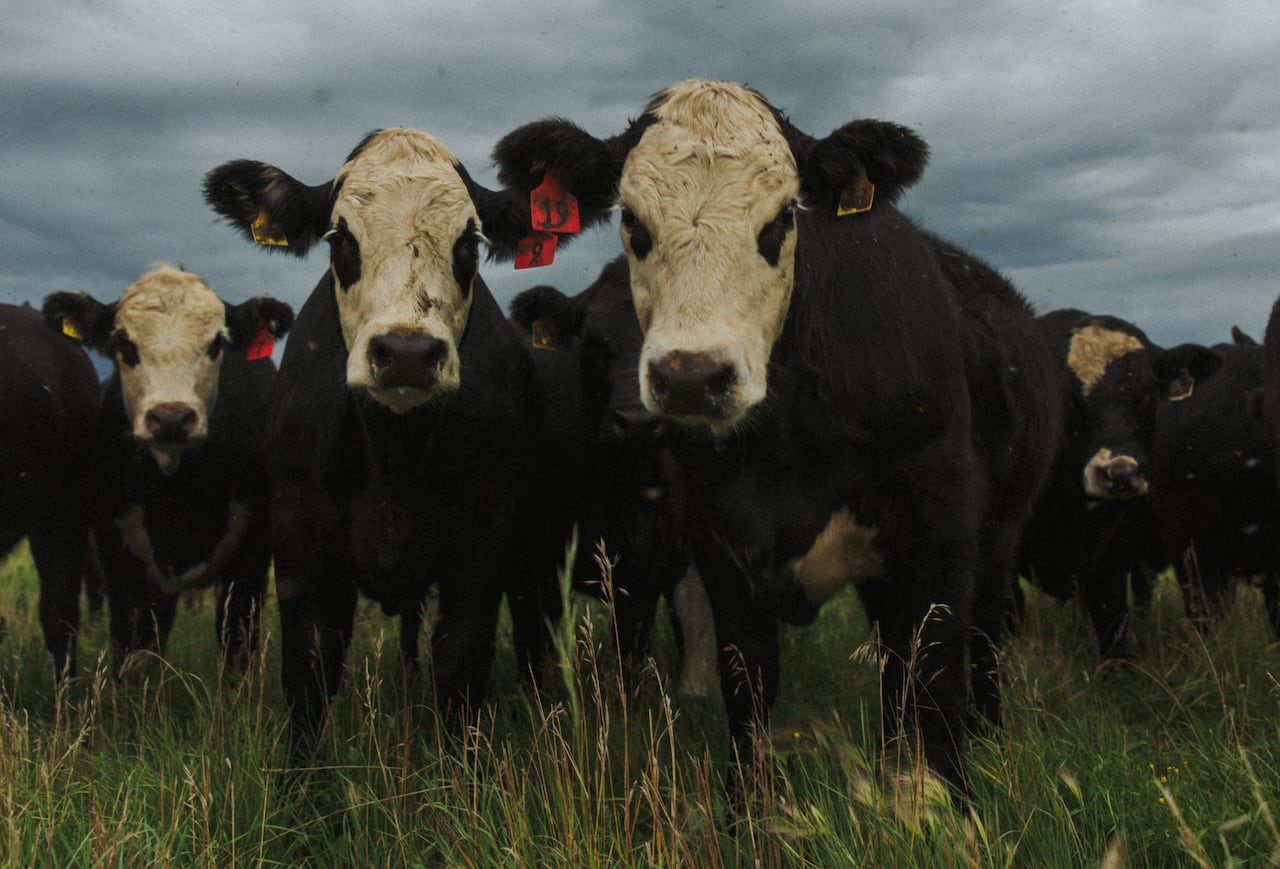
After losing the land she rented for crop cultivation to the new De Havilland airfield, Christian Heckle has shifted her focus to cattle farming. (Christian Heckle)
Historically, settlers were drawn to establish towns and eventually cities in regions around Calgary and Edmonton due to the exceptional quality of farmland, Jensen noted, which implies that as these urban centers expand, they will inevitably consume productive agricultural land.
“Can we prevent that? I would argue no, we cannot. Should we be worried? Absolutely. Once we convert that land to industrial or suburban uses, it seldom returns to agricultural use,” he added.
When considering relocating projects like the De Havilland field to areas with less fertile soil, often situated farther from major urban centers, factors such as access to skilled labor and transport costs become significant, Jensen explained.
“In many cases, industrial development can yield greater financial returns than maintaining the land for agriculture,” he stated.
Nevertheless, he observed that certain counties in the province do take soil quality into account when evaluating large-scale developments.
For instance, while collaborating with Foothills County to assess potential sites for solar farms, Jensen noted that its planning department avoided areas recognized for their agricultural productivity.
-
Vulcan County man proposing to build AI centre to revive local economy
-
Canadair water-bomber builder feels heat of demand as wildfires rage around the world
Laprise mentioned that Wheatland County also considered both sides of the debate regarding the De Havilland facility.
“We evaluated the advantages and disadvantages of removing this amount of land from agricultural use. However, the benefits surpass the potential agricultural use,” stated Laprise.
“It is crucial for Wheatland County to diversify our economy to create jobs for local residents.”

Christian Heckle is a fifth-generation farmer whose family has resided in Wheatland County, west of Strathmore, Alta., since 1913. (Submitted by Christian Heckle)
What’s a farmer to do?
Heckle shared that since their rental of the land that De Havilland is developing has ended, her family has shifted their focus from crops to cattle farming.
“There were other influencing factors, but I would definitely say this played a significant role in that decision,” she admitted.
She expressed feelings of regret when observing the De Havilland structures rising, particularly since her family was given the opportunity to purchase the land before it was bought by the aerospace company.
“The cost to buy the land was going to be $12 million, and obviously, my small family farm couldn’t afford that.”