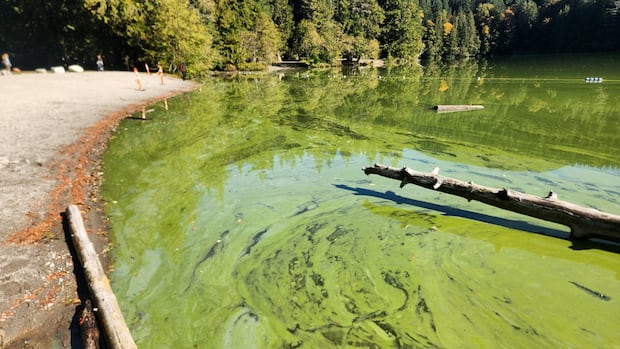


An aerator is currently being set up at a lake within a well-frequented provincial campground in Squamish, B.C., which may lead to the elimination of a blue-green algae bloom.
For the past three years, authorities have had to close Alice Lake intermittently due to cyanobacteria blooms.
Ken Ashley, a limnologist, environmental engineer, and fisheries biologist, has installed over 20 similar devices across B.C. The one at Alice Lake will be the first of its kind for the Sea-to-Sky area.
Ashley expressed his surprise at observing the bloom in the lake.
“I’ve never encountered this in a coastal lake in the Sea-to-Sky region in November,” Ashley remarked.
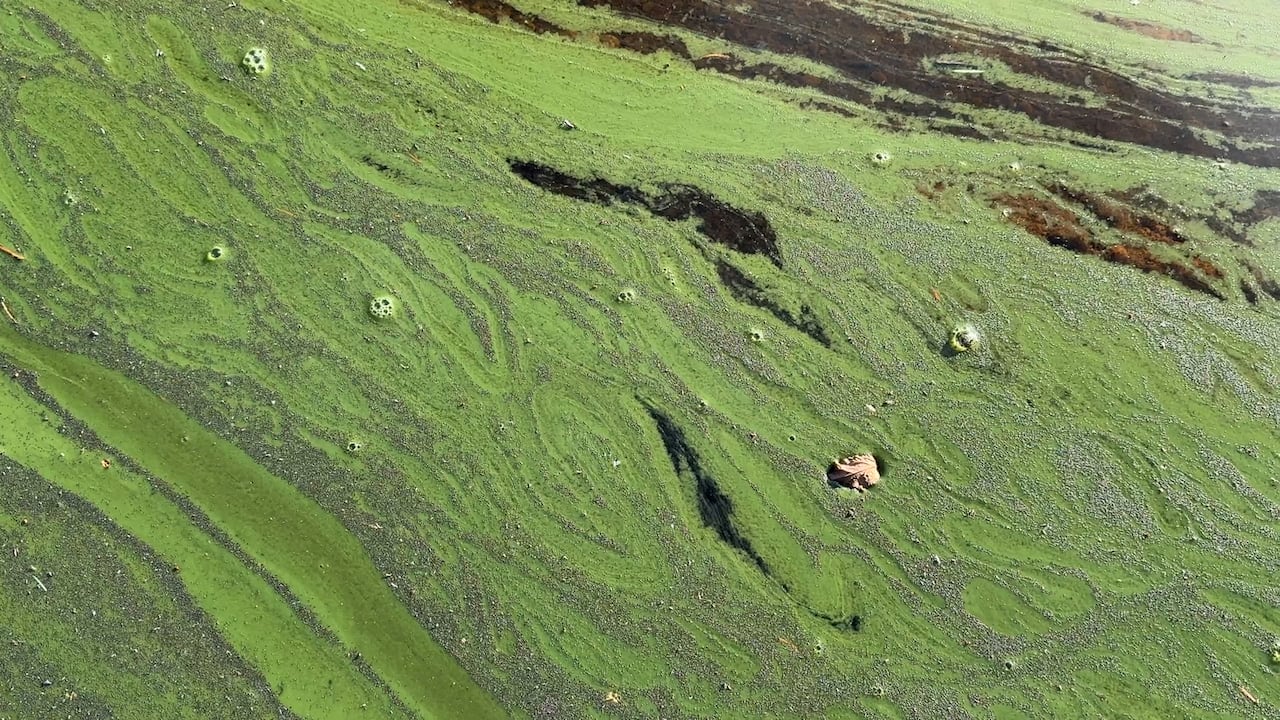
Blue-green algae blooms, also known as cyanobacteria, are appearing in lakes located in southern B.C., particularly around Vancouver and Victoria. Environmental engineer Ken Ashley notes this signifies that a lake is not in optimal condition. (Alanna Kelly/CBC)
Blue-green algae, or cyanobacteria, are microscopic organisms found globally. They flourish in warm, shallow, and slow-moving waters, and can produce various toxins harmful to both humans and animals, as reported by Vancouver Coastal Health.
Contact with blue-green algae toxins may lead to symptoms such as vomiting, diarrhea, or fever in both people and pets. Other effects can include skin rashes, irritation of the ears and eyes, dizziness, and abdominal cramps.
“Dogs can swim in there and perish,” Ashley warned.
Mechanism of Action
The aeration system at Alice Lake will facilitate water circulation by releasing compressed air into the lake.
“You can think of it like a pacemaker for a human with an irregular heartbeat,” Ashley explained. “It moves enough water so that, theoretically, it will circulate the entire lake approximately every three days.”
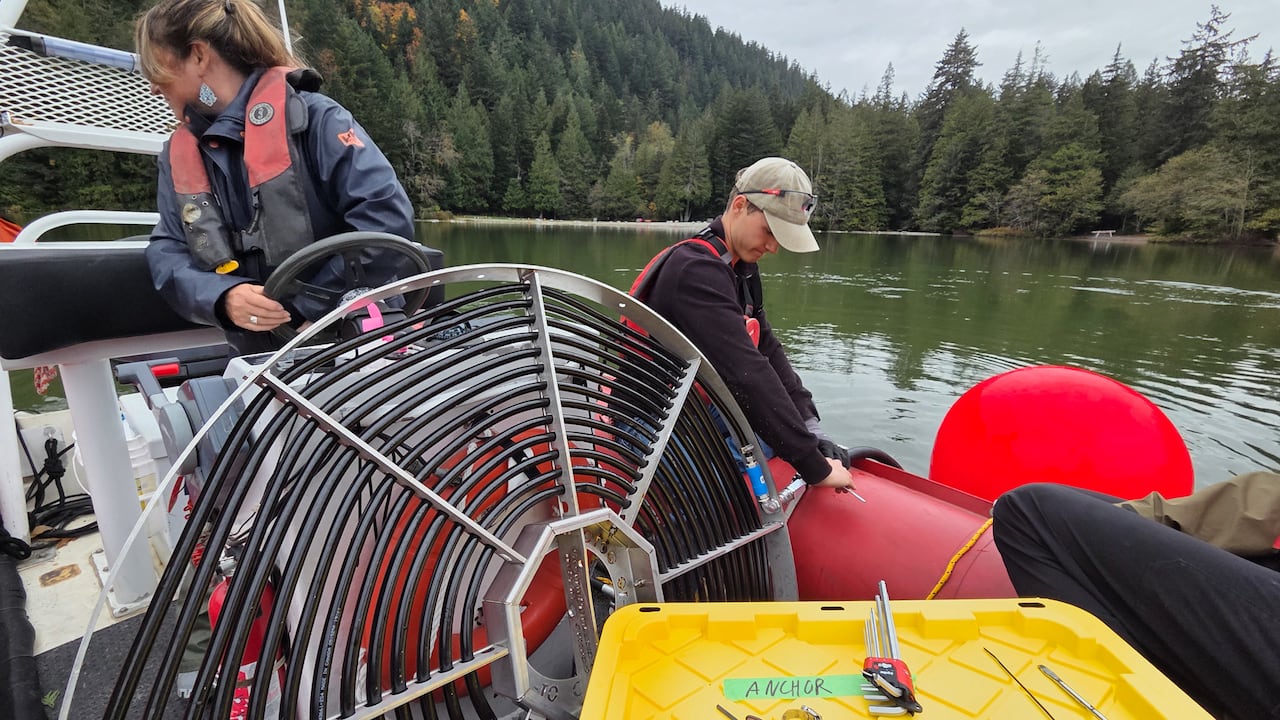
This large circular apparatus, referred to as the ‘bubble diffuser’ by environmental engineer Ken Ashley, will be submerged in the lake. (Shannon Harris)
Ashley described the device, resembling a bed spring, as being dropped roughly 14 meters deep on a chain and secured to an orange buoy on the lake’s surface.
“There’s no noise from the ascending bubbles. They simply rise to the surface… all you’ll notice is the radial movement of water extending about 20 meters from that orange float,” Ashley stated.
Roger Pieters, a research associate at the University of British Columbia, is monitoring the lake’s temperature.
“At this moment, the surface of the lake is warmer than the deeper water, creating what is referred to as temperature stratification,” Pieters noted.
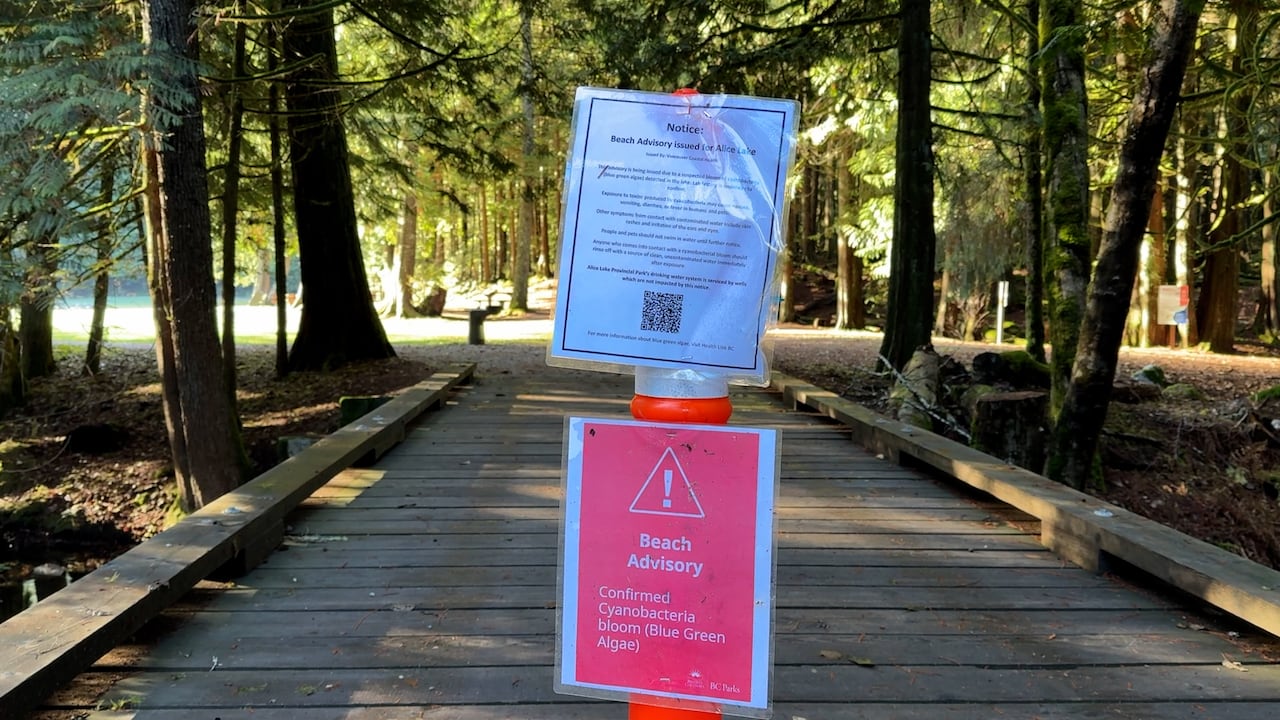
A cyanobacteria bloom was first identified at Alice Lake in 2024 and has recurred annually since, leading to temporary closures of the popular swimming area. (Alanna Kelly/CBC)
Once the lake’s temperature reaches 7°C, the device will be activated via a satellite internet connection, which Ashley anticipates will occur on Monday.
Once operational, the aerator will blend the lake from top to bottom, ideally preventing any blooms from re-emerging during the winter.
Reasons Behind the Issue
Though the aeration device may seem straightforward, Ashley emphasized that considerable research has been conducted to make it feasible.
“I was assigned to begin this work in the 1970s, and I have been engaged in it for over 40 years now,” Ashley shared.
He learned about the bloom at Alice Lake from longtime Squamish resident Dave Dunkley, who noticed the color change during a walk.
“It raised my concern,” Dunkley remarked. “I recreate here… and my kids swam in this lake as they grew up.”
According to B.C. Parks, more than 500,000 individuals visited Alice Lake last year.
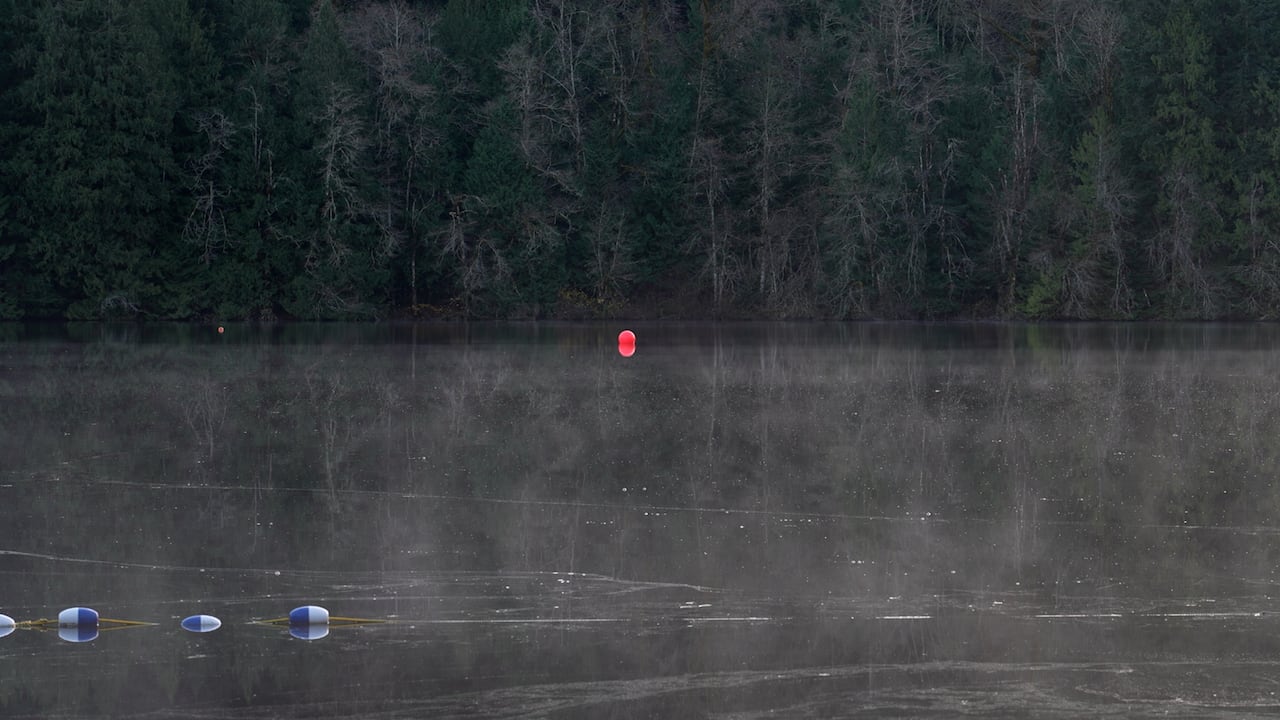
Researchers hope that visitors will refrain from disturbing the buoy, which is situated in the lake’s center, enabling them to continue gathering data and aerating the lake. (Alanna Kelly/CBC)
“It’s one of the treasures in the Squamish area for recreational activities. It’s free and set in a stunning environment,” Dunkley concluded.
Ashley noted that Alice Lake is warming at a rate of one degree per decade, with the issue intensifying due to climate change.
“Climate change has reached a point where it is significantly impacting the lake,” Ashley stated.
The Ministry of Environment indicated that the Alice Lake water-quality initiative combines expertise from various organizations, including the Ministry of Water, Land and Resource Stewardship, B.C. Parks, Vancouver Coastal Health, and the University of British Columbia.
While the aeration system is not a guaranteed solution to prevent future blooms,
“B.C. Parks will continue to monitor water quality and modify the system’s operation based on lake conditions and scientific recommendations,” as stated on their website.
Funding for the device and project came from the B.C. Parks license plate program.