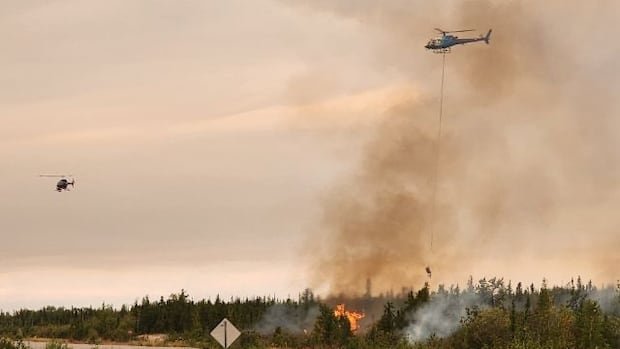


Data released by the Northwest Territories (N.W.T.) government reveals a significant increase in evacuation orders over the past six years compared to the previous three decades combined. The information, obtained by CBC News through a request to the N.W.T. Department of Municipal and Community Affairs (MACA), shows that between 1990 and 2019, there were approximately 32 evacuation orders, a number mirrored between 2020 and 2026. These evacuations were predominantly prompted by wildfires, with additional causes including floods and sporadic emergencies like the 2019 high-rise apartment fire in Hay River.
Notably, the evacuation orders were not solely confined to specific communities but also encompassed residences along highway segments. The dataset accounts for partial evacuations, where sections of a neighborhood were relocated within the same town. Mike Flannigan, a wildland fire expert at Thompson Rivers University in Kamloops, British Columbia, expressed surprise at the surge in evacuations and raised concerns about the comprehensiveness of the historical wildfire evacuation records, which were typically not as meticulously documented.
Further inquiries by CBC News into wildfire evacuations specifically from the federal government’s archives, which commence in 1980 without a decade-wise breakdown, did not yield additional insights. Despite this, Flannigan emphasized the clear trend depicted in the N.W.T. government’s data, emphasizing the correlation between the escalating evacuations and the rising incidence of fires.
The escalation in evacuations primarily stems from wildfires, with Flannigan attributing this surge to several factors fueling these specific evacuation events. He underscored the escalating fire incidences driven by human-induced climate change, leading to an extended warm season that heightens the likelihood of lightning strikes, a primary ignition source for Northwest Territories fires. Flannigan highlighted the changing fire behavior in contemporary times, exemplified by the 2023 Enterprise fire, which has necessitated reevaluating safety assumptions due to the heightened intensity and speed of modern wildfires.
The data showcased a recurring need for many communities to evacuate multiple times, with Hay River and Kátł’odeeche First Nation experiencing the highest frequency of evacuations, totaling 12 instances since 1990. The evolving landscape of emergency management in response to this surge in evacuations was underscored through insights gleaned from Kevin Brezinski, the former N.W.T. director of public safety, who acknowledged the intensification and increased frequency of fires, floods, and their cumulative impact on the region’s emergency response infrastructure.
Reflecting on past emergency events, such as the near-devastating 1995 Tulita fire, community members like Tulita’s Mayor Douglas Yallee and Norman Wells resident Shelley Melto recounted their evacuation experiences, underscoring the enduring impact of such traumatic events on individuals and communities. Melto’s firsthand encounters with evacuations in 1995 and the early 2000s underscore the evolving reality of recurrent evacuations in the Northwest Territories, shedding light on the pressing need for robust emergency preparedness and response mechanisms in the face of escalating natural disasters.
The surge in evacuations underscored by the N.W.T. government’s data underscores the imperative for proactive and adaptive emergency management strategies to navigate the evolving landscape of natural disasters in the region.