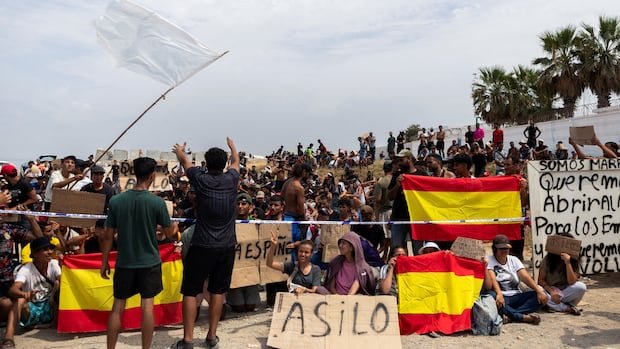


Hundreds of migrants in Ceuta, Spain’s North African enclave, gathered for a demonstration on a popular urban beach, demanding asylum from Spanish authorities instead of being sent back to Morocco. These migrants were part of the 5,000 to 8,000 individuals who remained in Ceuta after a large influx two weeks ago, which saw over 72,000 people enter the territory briefly. Most of the migrants were living in challenging conditions on El Trampolin beach or the city’s outskirts while hoping to continue their journey to mainland Europe.
Ayoub Elarroud from Tetouan, Morocco, expressed their distress, highlighting the difficulties of sleeping near the sea in cold and unsanitary conditions, with limited access to the city center due to police restrictions. The protesters displayed Spanish flags and signs stating their desire to stay in Spain, emphasizing their humanity and the need for a solution.
Amid the strained resources in the city, some migrants were seen washing clothes or fishing on the rocky shores. Interior Minister Fernando Grande-Marlaska stated that irregular migrants would not be permitted to stay in Ceuta, travel to mainland Spain, or obtain legal status, except in extreme vulnerability cases. Ceuta’s medical board head, Enrique Roviralta, noted the overwhelmed healthcare system, with diseases and injuries on the rise among the migrant population.
Health Minister Monica Garcia addressed concerns about the healthcare system’s pressure, refuting claims of a collapse and emphasizing the need to avoid associating migration with illness. Moroccan migrants cited poor working conditions in their home country as the driving force behind their migration. Many, like Mohammed Ouanzar and Emmanuel, shared their struggles and aspirations for a better life in Europe.
The migrants’ stories reflected diverse backgrounds and motivations, with individuals like Mohammad Ismail Hossain and Ousmane undertaking perilous journeys for various reasons, including political unrest and personal safety concerns. Despite facing challenges and uncertainties, these migrants sought hope for a better future in Ceuta.