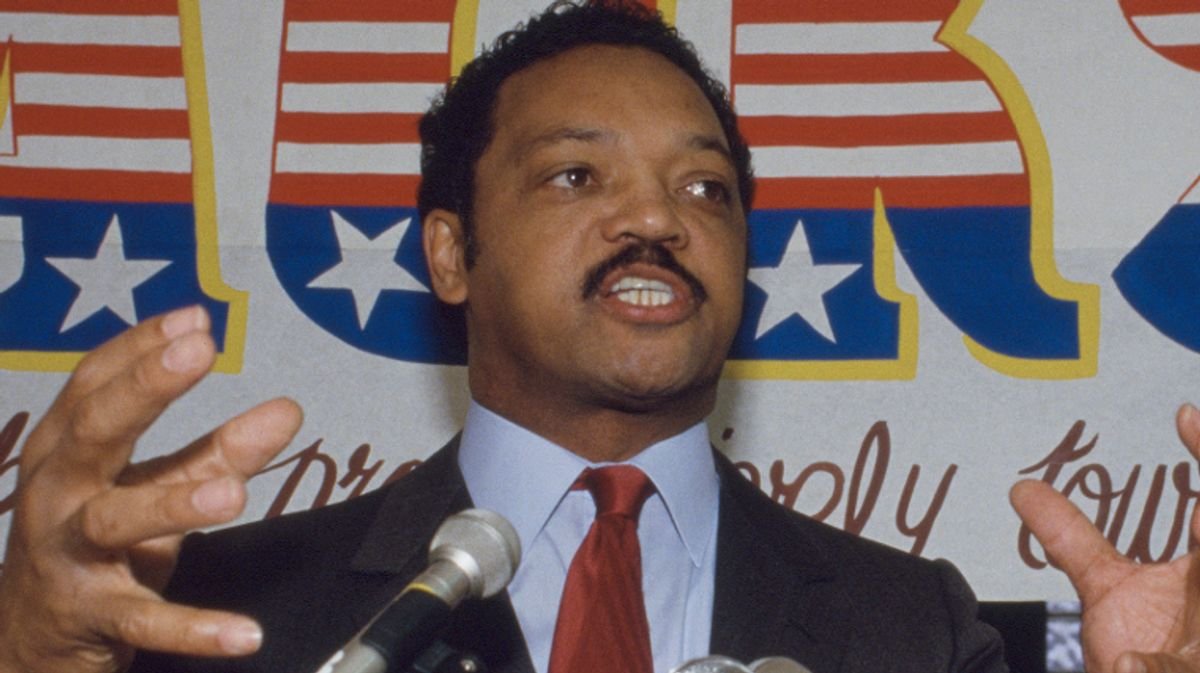


When Jesse Jackson passed away, the United States not only lost a man but also a crucial link between different periods.
Reflecting back to 2015, I had a conversation with him upon his arrival in Charleston, South Carolina, shortly after the tragic shooting at Mother Emanuel AME Church, where nine Black worshippers were killed during a Bible study session. The city was engulfed in sorrow, and the atmosphere was laden with historical significance.
On that day, Jackson moved slowly, appearing older than the vibrant image most people held of him from the 1980s. His voice had softened compared to the powerful oratory that once resonated through convention halls. Nevertheless, his message remained unwavering, if not more focused.
His words went beyond mere mourning, delving into the importance of building coalitions and embracing responsibility. He reframed the Charleston tragedy not as an isolated incident of hatred but as part of a longstanding American struggle between exclusion and inclusion, always advocating for broadening the circle.
Throughout his lifetime, Jackson captivated the nation with his call for a bold “rainbow coalition” comprising the marginalized and impoverished. Hailing from the impoverished areas of South Carolina and deeply impacted by Martin Luther King Jr.’s assassination, his journey spanned from the darkest times of the civil rights movement to the historic moment when Barack Obama assumed the presidency.
Few individuals have bridged as many chapters of modern American history as Jackson did. His passing at the age of 84 prompts the vital question of who will now carry forward that coalition-building legacy. Jackson did not merely replicate King’s role after his assassination but emerged as a more explicitly political successor.
Acknowledging that speeches alone couldn’t secure jobs, contracts, or votes, Jackson took to the streets, engaged in negotiations, led boycotts, and confronted corporate boardrooms. For years, he stood out as one of the most dynamic forces in American political circles.
While some admired his moral urgency, others criticized his ambition. Yet, what remains undeniable is his transformative impact on the political landscape.
Though his presidential bids in the 1980s did not secure him the nomination, they did something perhaps even more significant. They demonstrated that a Black candidate could forge a viable, multiethnic national coalition. At one juncture in 1988, he even led in delegates, paving the way for Barack Obama’s future path.
In Charleston in 2015, it was evident that Jackson’s most significant contribution transcended mere electoral achievements; it was about fostering connections. He rejected narrow nationalism and advocated for the unity of the disenfranchised – regardless of race, ethnicity, or background. His warnings in 2018 about the resurgence of reactionary forces in response to Trump’s rhetoric underscored his deep understanding of American history.
In Charleston, his once booming voice had softened with age and illness, yet his resolve remained unshaken. He spoke as someone who had witnessed the cyclical nature of violence, grief, backlash, and resurgence, believing that persistence was the only answer.
With his voice now silent, the nation faces the challenge of whether it still possesses the collective will to uphold the ideals he championed.
American society finds itself more divided today than in previous years, with the cross-racial harmony Jackson espoused giving way to cultural skirmishes and tribal politics. Although the Democratic Party houses many of his ideological successors, it struggles to maintain the broad coalition he envisioned.
Right-wing populism has redirected economic grievances into identity conflicts, diverging from Jackson’s vision of expanding the circle. Since King’s assassination and Obama’s rise, no single civil rights figure has commanded the same level of influence over arenas and party conventions.
Jackson, despite his imperfections, embodied the bridge between street activism and institutional politics. He navigated both realms adeptly, even as controversy surrounded him due to his occasional excesses and self-promotion.
He played a pivotal role in voter registration, securing corporate concessions, and compelling America to confront its entrenched inequalities long before it became a mainstream issue. His emotional reaction to Obama’s 2008 victory symbolized the breaking of a barrier he had long fought against. Nevertheless, history has a way of bending and rebounding.
The election of a Black president did not eliminate racial divides, and economic disparities persist. While multiracial coalitions exist, they remain fragile. With Jackson’s passing, America doesn’t just lose a voice but also a steadfast belief that individuals of diverse backgrounds could find common ground.
In Charleston, Jackson’s voice resonated with a newfound calmness, the fire within him tempered but his convictions unwavering. His message was clear: do not lose hope, keep pushing forward.
Now that his voice is no more, the question lingers: does the nation he strived to unify still possess the determination to uphold his legacy?