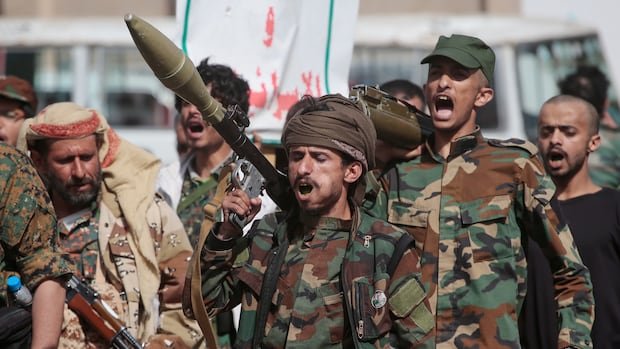


Almost three years after making headlines for their attacks on commercial ships near Yemen, the Houthis have expanded their influence with escalating violence in the Middle East. This group has posed challenges for Israel, Saudi Arabia, the U.S., and global shipping routes, potentially impacting the price of oil worldwide.
The Houthis are a faction involved in the Yemeni civil war that resulted in over 100,000 fatalities before a fragile ceasefire in 2022. Originating in the 1990s, the Houthi movement, led by the Houthi family in northern Yemen, aimed to revive the Zaydi sect of Shia Islam. The conflict in Yemen intensified in 2014 when the Houthis seized control of the capital city, Sanaa, leading to intervention from Saudi Arabia and its allies, supported by the U.S.
The ongoing proxy war has taken a severe toll on Yemen, with casualties surpassing 150,000 and triggering a humanitarian crisis, as per the United Nations. Recent hostilities have targeted Israel and Red Sea shipping lanes following Hamas’s attack on Israel in October 2023. Despite occasional ceasefires, Houthi attacks on Red Sea vessels have resulted in casualties and disruptions.
The ceasefire in 2022 is unraveling, raising concerns about a resurgence of conflict in Yemen and potential impacts on global commodity prices. Renewed attacks by the Houthis on Saudi Arabia have escalated tensions, prompting fears of further instability in the region. The strategic control sought by the Houthis over key locations like the Bab al-Mandab Strait poses risks to international shipping routes and energy security.
The Houthis aspire to establish a Shia theocracy across Yemen, aligning with Iran but maintaining some independence in their objectives. Both Iran and the Houthis aim to challenge U.S. influence in the region, potentially reshaping regional dynamics. The economic consequences of the conflict, including disruptions to oil shipping routes and increased tanker rates, are already being felt globally.
With the situation evolving rapidly, key stakeholders like Saudi Arabia seek support from international allies like the U.S. to counter the Houthi threat. While tensions remain high, the potential closure of critical maritime chokepoints like the Bab al-Mandab Strait could further escalate the situation. As the region braces for potential developments, the impact on global trade and energy markets remains a significant concern.