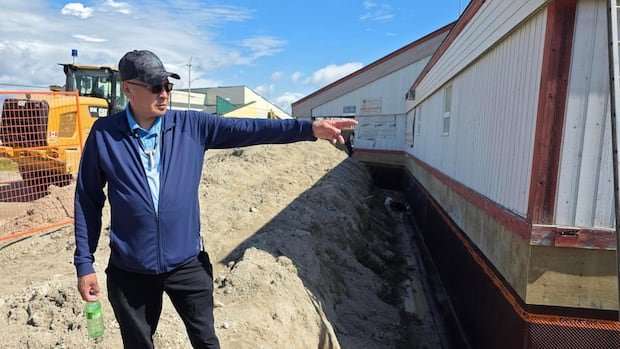


Neskantaga First Nation leaders are urging for provincial and federal assistance to build a new health-care facility as vulnerable community members face their second evacuation this summer. The remote Ojibway community, located approximately 440 kilometers northeast of Thunder Bay, Ontario, declared a state of emergency on August 4 due to a sewage leak at the community’s sole nursing station. With fewer than 400 residents, Neskantaga has been grappling with challenges, including a recent evacuation after wildfires and a longstanding 31-year boil water advisory.
Chief Gary Quisses mentioned that the community had previously requested support for a new health-care facility during a flood and fuel smell incident last year, but has yet to receive a definite response. The current situation has added immense stress to the community, with over 250 evacuees sent to Toronto for safety. Quisses highlighted the urgent need to replace the nursing station’s foundation due to sewage seepage into the ground, requiring manual removal.
At a news conference held at Queen’s Park, Neskantaga leaders, supported by Kiiwetinoong NDP MPP Sol Mamakwa, emphasized the critical need for improved health care in the region. Mamakwa pointed out the disparities in health care standards in First Nations territories and criticized the neglect of the community’s essential needs while resource extraction activities continue in traditional lands.
Neskantaga’s nursing station, constructed in 1994, faces challenges in providing adequate medical services following the recent sewage leak. While a temporary facility has been set up, it can only offer basic care. Efforts are ongoing to assess and address the situation, with Indigenous Services Canada working closely with the community to plan the restoration of the nursing station.
Nishnawbe Aski Nation representatives visited Neskantaga to assess the situation and express support for the community during this challenging period. The lack of clean drinking water for decades, coupled with the current health-care crisis, has drawn attention to the urgent need for sustainable solutions and long-term funding directly allocated to First Nations. Kerry Black, a researcher specializing in water issues in Indigenous communities, emphasized the importance of listening to community members and tribal councils for effective solutions.
Charla Moonias, a child and family services worker, highlighted the ongoing struggles faced by Neskantaga residents and the impact on mental health, especially among youth. The community’s infrastructure challenges have led to long-standing issues that continue to affect the well-being of its residents. Despite the difficulties, Chief Quisses emphasized the hope that the current situation will shed light on the community’s plight and prompt necessary action to address the inadequate health care and infrastructure in Neskantaga.