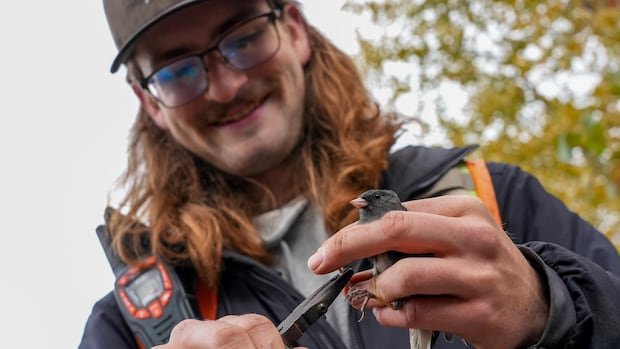


In the boreal forest near a series of nets, Ethan Denton, a Calgary-based ornithologist working in Fort McMurray, Alberta, carefully retrieves a small dark-eyed junco from a cloth bag. Denton uses pliers to attach a lightweight aluminum band with an identification number to the junco’s right leg, noting its gender and measurements before releasing it. This data aids researchers in tracking the bird’s migration patterns.
Ken Foster, a co-founder of the Wood Buffalo Wildlife Research Institute (WBWRI), observes as Denton demonstrates the process to volunteers. Established as a unique non-profit organization in Fort McMurray, the WBWRI focuses on long-term bird monitoring in the oilsands region to understand population trends and potential conservation efforts.
Studying bird populations in the oilsands area is not new, with various organizations like the Oil Sands Monitoring Program and the Alberta Biodiversity Monitoring Institute conducting extensive research. Foster, along with his wife Christine Godwin, established WBWRI in 2024 to facilitate ongoing wildlife research and engage volunteers in citizen science initiatives.
Foster’s research through Owl Moon Environmental Inc. indicates significant declines in certain bird species, such as the least flycatcher and northern waterthrush, by up to 90% over 15 years due to habitat changes from wildfires and industrial activities. On the other hand, adaptable species like clay-colored sparrows are thriving in reclaimed or regrown areas of the forest.
The WBWRI aims to not only conduct research but also to enhance outreach and education opportunities. Volunteers like Ryan Campbell, who participated in WBWRI’s programs, have developed a newfound appreciation for birds and wildlife conservation efforts.
The collaboration between local studies and national databases, as emphasized by experts like Erin Bayne from the University of Alberta, is crucial for identifying local conservation issues and informing relevant stakeholders. WBWRI’s future plans include tracking animals with radio transmitters and monitoring bat populations, reflecting a broader commitment to wildlife conservation in the Fort McMurray region.
Foster believes that initiatives like WBWRI play a vital role in quantifying environmental changes and addressing the decline in bird populations that many people have observed.