


A new law in Alberta mandating that oil and gas companies pay upfront for the eventual decommissioning of each well appears beneficial initially, yet its success largely hinges on the details of its execution and enforcement, according to a rancher and advocate for landowners.
“It seems promising in theory,” remarked Bill Heidecker, president of the Alberta Surface Rights Federation, on Thursday. “We have numerous inquiries about its practical application.”
This legislation, introduced as part of a more extensive bill on Wednesday, mandates that companies make an initial payment of up to $50,000, followed by annual incremental payments over a decade, with the funds linked to each well irrespective of ownership transfers.
The updated regulations are anticipated to apply to wells drilled after April 1, 2027. The existing backlog of numerous wells that have not been properly closed remains a significant concern.
Heidecker operates a cattle ranch near Coronation, Alberta, in the eastern region of the province, and claims there are “a couple dozen” wells on his property — some active and others inactive. Interacting with the industry has been a “constant headache,” he stated.
He seeks guarantees that companies will fulfill their responsibilities.
“Numerous laws and regulations exist that have not been enforced adequately,” he commented.

Bill Heidecker is a rancher and serves as the President of the Alberta Surface Rights Federation. We spoke to him regarding a new proposal aimed at holding oil and gas companies more accountable for cleaning up orphaned wells on agricultural land.
Heidecker also noted the ambiguity surrounding regulations for energy infrastructure beyond wells, like pipelines. He is eager for more information on the formula used to determine cleanup costs. Is it calculated based on current expenses or projected future costs? What happens if multiple well bores originate from a single pad? How will priorities be established for cleanup efforts?
“In past cleanups, companies have tended to address the simpler, easier sites first, neglecting the more challenging, costly ones,” he observed.
“While we welcome this initiative, we’re holding off on our judgment until we see the actual outcomes.”
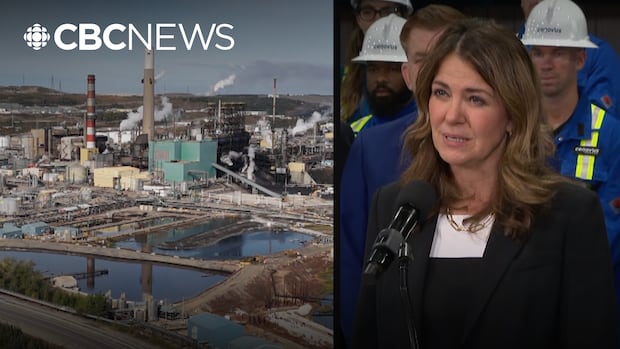
Alberta is introducing new financial incentives to encourage oil companies to increase crude production. The Premier states this is essential for supporting the proposed new pipeline to the West Coast. However, critics question the necessity of government assistance given that oil companies are generating billions in profits. Ina Sidhu reports.
Last week, Heidecker’s organization sent a letter to Alberta Premier Danielle Smith expressing “deep dissatisfaction” with the government’s approach to energy policies and landowner rights, highlighting various concerns regarding both active development and inactive infrastructure. They urged landowners to deny consent for oil and gas operations on their properties and refrain from voluntarily signing new leases.
Despite the province taking a “step in the right direction” with the proposed upfront closure funding, Heidecker emphasized that the call for resistance remains.
“There are numerous other issues that require attention,” he stated. These include the absence of strict cleanup deadlines, outstanding municipal taxes, and insufficient enforcement.
At the same time, an environmental think tank has offered conditional praise for this initiative.
The new regulations could represent “a significant and positive advancement towards ensuring that the industry fulfills its legal obligations to manage its own cleanup,” remarked Amanda Bryant, manager of the oil and gas program at the Pembina Institute.
However, she noted that for these new regulations to be effective, they should establish minimum requirements for the amount of financial security reserved for cleanup operations.
“Further actions are necessary to tackle the existing inactive and orphan wells, such as enforcing strict timelines for well closures, instituting an inactive well fee, or raising the orphan well levy imposed on the industry to align with the scope of the cleanup challenges ahead,” Bryant added.
- Alberta bill would require oil and gas companies to allocate funds for the cleanup of each new well drilled
- Alberta landowners initiate legal action regarding the funds collected for orphan well cleanup
Wells are classified as orphans when no party is legally accountable for their cleanup, such as when the owner declares bankruptcy. These wells then fall under the jurisdiction of the non-profit Orphan Well Association, which is financed through an industry fee.
The Orphan Well Levy for the fiscal year 2026-27 is set at $154.56 million. The association estimates the total cleanup costs for its inventory to be around $1.66 billion. Advocates for landowners argue that the current levy is insufficient to manage the extent of the backlog, and some have voiced concerns regarding the health and environmental implications from poorly managed wells.
Heidecker’s organization is part of a lawsuit initiated in September by landowners contesting what they describe as the Alberta Energy Regulator’s “chronic underfunding” of the Orphan Well Levy, with the amount being determined by the Alberta government based on the regulator’s suggestions.
Recent figures from the Orphan Well Association indicate that there are 7,328 wells awaiting decommissioning, a process that includes permanently dismantling equipment to ensure site safety. Additionally, another 9,258 locations require reclamation, which involves restoring the land to its original condition.
During the 2025-26 fiscal year, the total expenses for decommissioning and restoring a well exceeded $56,000.
Brian Jean, Alberta’s energy and minerals minister, stated that the financial contributions to the new Resource Asset Closure Assurance and Stewardship Fund should not adversely affect the industry. He estimates that the contributions would initially represent about one percent of well drilling costs, plus another one percent from the incremental payments over the subsequent ten years.
He informed reporters on Thursday that as companies enhance their efficiency and reduce expenses, “there are actually good opportunities to profit.” Under the new legislation, companies will be able to access the funds — which would have accumulated compound interest over time — once the reclamation is finalized.
Jean mentioned that if companies fail to make the required deposit, they will not be eligible for a drilling license.
“It’s a cost of doing business,” he asserted.
“In reality, this is a highly innovative strategy. It’s a unique approach — the first of its kind globally — and it is destined to succeed.”
Tag: rewrite-pending