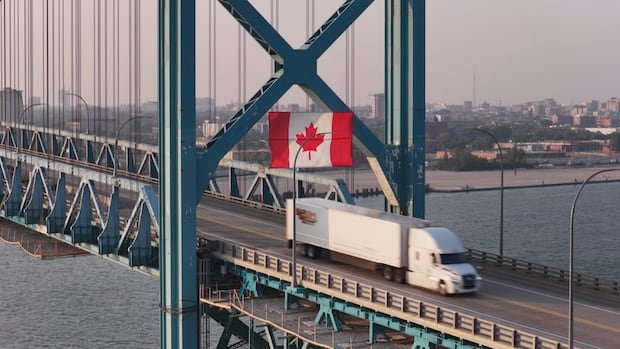


In recent times, as doubts grew over the much-anticipated inauguration of the Gordie Howe International Bridge, the privately-owned Ambassador Bridge over the Detroit River has been actively approaching trucking companies to secure their business, as per an industry representative.
Lak Shoan, the director of policy at the Ontario Trucking Association, mentioned that they began receiving reports from a few of their members about the Ambassador Bridge’s outreach efforts during the spring. He noted that this information came up casually in conversations and indicated a shift in the bridge’s approach towards companies.
Despite attempts to reach out to Canadian trucking companies with cross-border operations regarding toll rate offers from the Ambassador Bridge, responses were either declined due to confidentiality or were unanswered. However, a deleted post from a U.S. trucking union official in late July revealed an existing contract between the union and the Ambassador Bridge, saving them $240,000 monthly on tolls.
Toll rates and revenue played a crucial role in the prolonged political drama surrounding the opening of the $6.4 billion Gordie Howe bridge, fully funded by the Canadian government. The agreement for the bridge’s opening includes a provision allowing the U.S. government to prevent the new bridge from lowering tolls below the average of similar regional crossings.
The influential Moroun family, owners of the Ambassador Bridge since 1979, intensified their political activities leading up to U.S. President Donald Trump’s sudden opposition to the new crossing’s opening. While the Gordie Howe bridge eventually opened on July 27 after a previous delay, the U.S. government had requested the postponement of the June inauguration.
Allegations have been made against Trump for attempting to block the new bridge’s opening to favor the Morouns, although representatives for the Ambassador Bridge did not respond to inquiries. Nevertheless, their website indicates the availability of a cost-effective toll program for certain trucking companies.
Shoan expressed the trucking association’s support for healthy competition between the bridges, potentially resulting in reduced toll expenses for trucking firms. He mentioned that while the specifics of the Ambassador Bridge’s offers were unclear, they seemed focused on retaining or attracting fleets to utilize their services.
A Facebook post by Barrett provided insight into the financial details of the contract between the union and the Ambassador Bridge, highlighting significant savings compared to their previous payment structure. Stellantis, the parent company of FCA Transport, declined to confirm the exclusive toll contract status of their drivers with the Ambassador Bridge.
Stellantis emphasized the importance of the Gordie Howe International Bridge in enhancing border crossings and logistics for the automotive industry across North America. The company refrained from commenting on proprietary information as part of its policy.
Shoan emphasized that amidst the uncertainty surrounding the Gordie Howe bridge’s opening, the offers presented by the Ambassador Bridge would have been attractive to trucking companies seeking stability and cost certainty in the current economic climate.