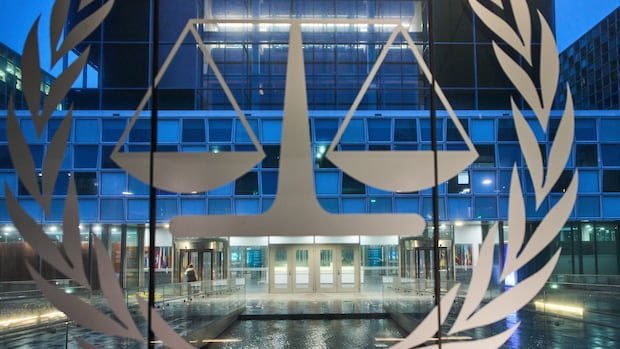


The Trump administration has enforced extensive new penalties on the International Criminal Court (ICC) in a bid to break down the tribunal’s investigations into the United States and its allies, including Israel.
U.S. Secretary of State Marco Rubio declared the sanctions on Friday following the awarding of the Nobel Peace Prize to South African prosecutor Navi Pillay, a former judge at the ICC and other global courts.
President Donald Trump, who has desired the Nobel Prize, had initiated this action well before the Nobel Prize announcement.
Rubio stated in a social media video that they would prohibit dealings with the “rogue court,” disrupting its resources and hindering its operations against the U.S. He emphasized that the U.S. and its citizens are not under the jurisdiction of the “fake ICC.”
These sanctions will sever the court’s access to U.S.-based financial services, technology firms, and the use of U.S. dollars. U.S. entities conducting business with the court have six months to wind down their operations.
The ICC criticized the move as an assault on the rule of law and the fundamental principles of international order, which Rubio had seemingly supported just two days prior in a speech at the Acropolis in Athens. The court urged its 125 member states to take a stand in its defense.
ICC President Tomoko Akane, a Japanese national from a U.S. ally, pledged that the court would continue fulfilling its mandate with independence and impartiality, serving the victims of serious crimes.
The Trump administration has a history of hostility towards the ICC, which was established in 2002 to prosecute war crimes, crimes against humanity, and genocide. Previous sanctions targeted the court’s prosecutors and judges, but these latest measures extend the reach to potentially penalizing companies aiding the court.
Human rights organizations condemned the sanctions, calling them an “existential attack” that must be resisted. The Netherlands, where the ICC is located, has been making preparations to counter the sanctions, including possibly invoking the EU blocking statute to shield European staff from compliance.
A coalition of countries, including Canada, Denmark, Germany, France, Italy, Japan, the Netherlands, and the United Kingdom, expressed strong disagreement with the U.S. sanctions, vowing to continue backing the court’s crucial work and the pursuit of accountability.
Rubio urged U.S. allies to support the sanctions and warned of further dismantling of the ICC if they do not cooperate. Several nations have withdrawn from the court this year, with Rubio noting bipartisan concerns about the court’s operations, signaling Trump’s unique resolve in confronting the ICC.
The U.S. actions are part of a broader strategy to undermine the ICC, with Rubio emphasizing that either the threats from the court cease, or the U.S. will dismantle it completely.