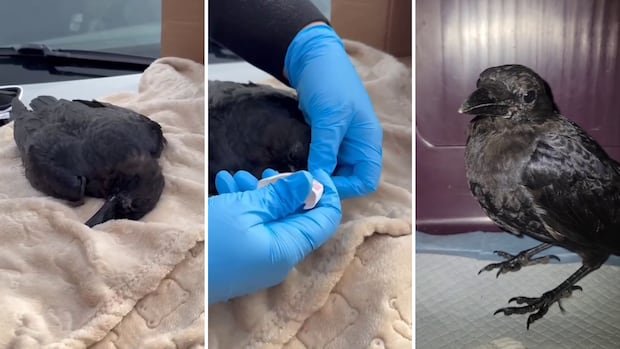


An organization focused on animal wellbeing has been providing nasal naloxone to crows suspected of ingesting harmful substances left in public areas in downtown Prince George, B.C. The Good Caws Crow Rescue Society (GCCRS) has shared several videos demonstrating their volunteers administering nasal naloxone to unresponsive crows, subsequently showing the birds alert and able to fly again.
Naloxone is a medication commonly used to counteract opioid overdoses in humans, and Dayna Slater of GCCRS mentioned that the affected crows are concentrated in an area where illicit drug activities are prevalent. Slater expressed concern over the situation, highlighting a concerning increase in suspected drug overdoses among the crows this year compared to previous years.
Describing the symptoms observed in the affected crows, Slater mentioned that they exhibit signs like closed eyes, outstretched wings, slowed heartbeat, and brown liquid foam from their beaks. While some crows have unfortunately perished, most have been successfully released after recovering within a day.
Dr. Kaitlyn Liukaitis from Birchwood Veterinary Clinic, involved in treating the crows, confirmed that the symptoms align with toxic drug overdose effects. She noted that the use of naloxone to reverse the symptoms is a common veterinary practice for treating various animal species.
The rise in drug toxicity in British Columbia has led to multiple warnings, with Prince George witnessing a surge in overdose incidents, coinciding with the discovery of affected crows downtown. Amid increased challenges accessing prescribed alternatives due to political resistance against harm reduction strategies, outreach groups advocate for safe indoor drug consumption spaces to prevent incidents like the crows’ exposure to toxic substances.
Slater emphasized collaboration with harm reduction groups in identifying and providing care to affected crows, highlighting the role of expired naloxone kits in their efforts. Despite suspicions of unintentional harm, she stressed that the crows’ ordeal reflects broader societal issues and suggested solutions like covered garbage cans to prevent bird access to potentially harmful substances left in public areas.