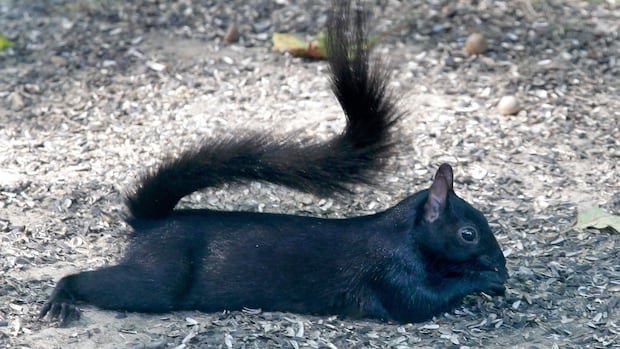


Francis Quang-Hai Dinh’s inaugural summer at McGill University was dedicated to exploring Montreal’s parks on his bicycle in search of squirrels. He visited nearly 200 green spaces spanning from Mirabel to Saint-Bruno, meticulously observing and documenting over 800 grey and black squirrels. What began as an undergraduate assignment evolved into a personal project delving into how the city’s layout and meandering waterways influence evolution discreetly.
Expressing his growing fondness for the animals, Dinh shared, “I developed a deep admiration for them after studying and contemplating their existence. Squirrels are often overlooked as mere pests, but they are indeed part of the wildlife.” Due to the absence of a car and limited public transport in suburban regions, Dinh heavily relied on his bicycle to travel extensively, becoming the sole researcher known to manually survey squirrels park by park throughout the area.
The investigation unveiled that approximately 12% of Montreal’s squirrels are black on average. As Dinh ventured further north, the prevalence of black squirrels increased. In locations just north of Laval, he discovered that up to 40% of squirrels possessed black fur. Conversely, on the island of Laval, around 20% were black, while on the island of Montreal, the figure stood at approximately 15%. Moving to the south shore of Montreal, the percentage dropped significantly to only two or three percent.
The study attributed these findings to three primary factors, with temperature being the leading cause. The cooler climate in northern regions favors the presence of black squirrels as their darker fur absorbs heat more efficiently than grey squirrels. Additionally, the density of forest cover plays a role; a thicker tree canopy provides a darker backdrop where black squirrels can blend in better.
Allison Roth, the study’s senior author and an assistant professor at the University of Missouri, highlighted that the research focuses not solely on squirrels but serves as a model to analyze how urban environments prompt evolutionary shifts. She emphasized the unique environmental intricacies of cities like Montreal, characterized by diverse neighborhoods, varying tree coverage levels, and natural boundaries such as waterways that contribute to genetic and physical adaptations within animal populations.
Roth noted, “Montreal stands out due to its intricate segmentation by the St. Lawrence River and tributaries, creating distinct pockets that may influence squirrel melanism patterns.” This understanding is crucial for unraveling the mechanisms of evolution in urban settings.
The study, titled “Fine-scale spatial variation in eastern grey squirrel melanism across a complex urban landscape,” emphasizes the importance of examining wildlife changes at a neighborhood-specific level rather than broadly comparing urban areas to rural settings. Contrary to past beliefs linking human development as the primary driver of these changes, the study underscores that urbanization is just one piece of the puzzle. Urban expansion alters local temperatures, reduces tree cover, and introduces natural barriers like rivers, indirectly influencing wildlife adaptations.
The research, part of a special ecological feature across five journals, showcases collaborative efforts to address significant ecological queries. Dinh reflected on his transformed perspective towards wildlife, acknowledging the coexistence of nature and urban environments. He stated, “The dichotomy between city life and nature is a misconception. Wildlife persists despite our alterations to the environment, emphasizing the interconnectedness of all living beings.”