

Montreal law enforcement in a discreet manner is expanding its array of AI-driven tools for monitoring vehicles and individuals throughout the city, sparking concerns regarding transparency and privacy protections.
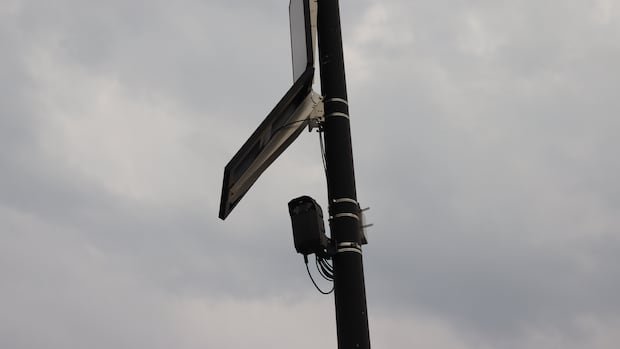
A state-of-the-art camera capable of scanning and recognizing vehicles was recently sighted by a Radio-Canada journalist on a lamppost along Henri-Bourassa Boulevard in Montreal’s Rivière-des-Prairies area. The camera, identified as a Cloudrunner CR-H2 produced by local company Genetec, was swiftly removed following a report by Radio-Canada.
Unlike the contentious Flock Safety cameras prevalent in the United States, the Genetec system not only reads license plates but also captures and retains detailed vehicle attributes such as color, make, and model. The collected data is managed by the specific operator rather than being shared in a central database accessible by multiple police entities.
According to SPVM spokesperson Marc-Antoine Bélanger, access to the captured images is restricted solely to the investigators handling the relevant cases. Bélanger emphasized that the secrecy surrounding the SPVM’s technological tools is maintained to safeguard ongoing investigative strategies.
However, critics argue that the introduction of new technology has lacked transparency. Dominique Peschard, a representative of the Ligue des droits et libertés, emphasized the importance of informing the public about the tools being utilized by law enforcement without compromising operational effectiveness.
The deployment of Cloudrunner cameras is part of the SPVM’s broader integration of AI technologies. The SPVM acknowledged its use of iMotion ROC AI software, developed by Rank One Computing, to assist investigators in analyzing extensive video footage. The SPVM clarified that the software does not employ facial recognition or biometric functionalities and operates on an isolated offline network.
An internal privacy impact assessment by the SPVM highlighted civil liberties risks associated with the technology, including the potential for unwarranted scrutiny of innocent individuals and the risk of discrimination based on visible social characteristics.
The acknowledgment of the Cloudrunner camera by SPVM officials on Wednesday followed a period of initial confusion. Montreal Police Chief Fady Dagher initially claimed ignorance about the device but later confirmed its use in targeting armed violence and vehicle theft. Criticism arose regarding the chief’s apparent lack of awareness of the technology being utilized by the SPVM.
Public records revealed that Montreal had awarded a contract with Genetec for Cloudrunner units, with plans to potentially add more cameras based on investigative requirements. Genetec’s vice-president, Andrew Elvish, assured that privacy considerations were paramount in the technology’s design and stressed the importance of balancing safety with privacy concerns.
In response to inquiries, a City of Montreal spokesperson indicated that they had not installed the Cloudrunner camera and redirected questions regarding its deployment to the SPVM. The use of AI tools like these is under scrutiny by legal experts, emphasizing the necessity of stringent controls to prevent privacy infringements in public spaces.