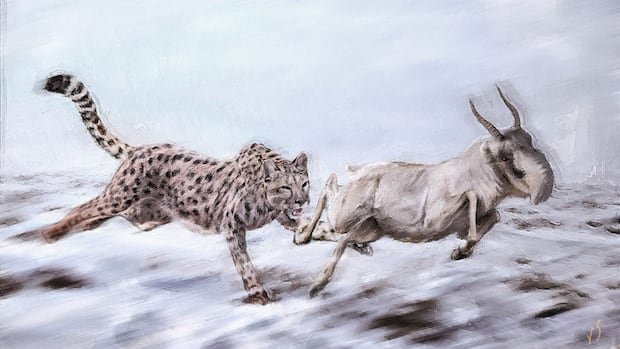


A recent discovery in the Bluefish Caves and a mine site in northern Yukon initially led researchers to believe they had uncovered bones belonging to an ice-age puma or cougar. However, DNA analysis conducted by Molly Cassatt-Johnstone from the University of California revealed a surprising twist. Cassatt-Johnstone, a lab technician fresh out of her undergraduate studies, was astonished when her preliminary analyses showed that the Yukon bones did not match those of pumas.
Yukon paleontologist Grant Zazula vividly recalls the moment he received the unexpected news that the supposed cougars were, in fact, cheetahs. This revelation marked a significant advancement in genetic analysis, a process that was once considered science fiction but has now become a routine practice for studying permafrost-preserved bones from the Yukon.
Cassatt-Johnstone’s groundbreaking identification of a Yukon Miracinonyx, also known as the extinct American cheetah, led to her becoming the primary author of a paper published in Current Biology. This publication sheds new light on the ice-age cat’s dietary habits and geographic range.
The American cheetah was traditionally thought to have evolved to hunt pronghorns on grassy plains, given its resemblance to modern cheetahs. However, the discovery of these creatures in the Arctic tundra puzzled paleontologists, as pronghorns were never present in the Beringia region where they were found.
To unravel the mystery of how Miracinonyx survived in such an environment, researchers utilized stable isotope analysis, a technique commonly used in forensics. This method allowed them to investigate the ancient cheetahs’ diet, climate conditions, and potential travel patterns. The analysis of bone samples from the cheetahs’ paws and legs revealed a surprising dietary preference for fish, a behavior rarely observed in felines past or present.
These findings challenged previous assumptions about the American cheetah’s behavior and ecological niche. Despite facing competition from larger predators like Beringian lions and giant bears, the Yukon cheetahs likely thrived on the abundant salmon runs in the region, providing them with a readily available food source.
The study also highlighted the genetic closeness of Miracinonyx to North American pumas and emphasized the low genetic diversity within the cheetah population, which may have contributed to their eventual extinction. Zazula suggests renaming this unique northern population from ‘American Cheetah’ to ‘Yukon Cheetah’ in recognition of their distinct habitat and dietary habits.
The discovery of these arctic fishing felines underscores the ongoing potential for new revelations in paleontology and the importance of continuously reevaluating our understanding of prehistoric species.