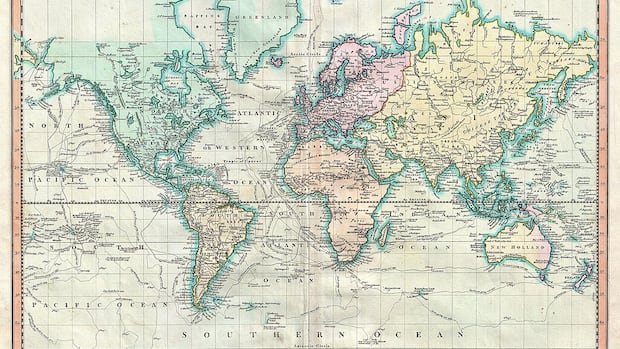


The United Nations has agreed to transition from the traditional Mercator global map to a more accurate representation of countries’ true sizes, following a resolution put forth by African nations to challenge the perception of Africa being marginalized. Togo took the lead in advocating for this change, aligning with the African Union’s initiative to reduce the use of the Mercator map, which distorts the sizes of land masses by exaggerating those closer to the poles. This distortion results in Greenland appearing similar in size to Africa, despite Africa being approximately 14 times larger.
Togo’s Foreign Minister, Robert Dussey, emphasized the importance of a just world starting with a fair map. The resolution endorses the Equal Earth projection as a more precise depiction of continents’ sizes. Although not legally binding, the resolution does not undermine the utility of the Mercator projection for maritime and aerial navigation, for which it remains suitable, according to the Togolese ministry.
The resolution overwhelmingly passed in the UN General Assembly with 164 votes in favor, one against (the United States), and six abstentions. The U.S. criticized the resolution for promoting an ideological agenda, arguing that it diverts attention from genuine international peace, prosperity, and diplomacy issues.
Togo is aiming to update its school geography materials by the end of the year, becoming the first country to do so. Dussey expressed the intention to set an example for other nations by making this change in classrooms worldwide. Togo plans to urge other governments, educational institutions, international bodies, and tech companies to shift away from the outdated Mercator projection and embrace the Equal Earth projection for a more accurate world view.
Dussey highlighted the importance of broader adoption of the Equal Earth projection, emphasizing that it offers the most accurate representation of the world. Togo intends to convene meetings with African Union members and supporters from various regions in the coming months to facilitate wider acceptance of the new projection. Dussey emphasized that discussions on the next steps should involve companies working in mapping, GPS, and location-based technologies.
The campaign to switch to the Equal Earth map aligns with broader African efforts to address the legacies of colonialism, without being a direct attack on any specific civilization. Dussey underscored that the global landscape is evolving, with Africa also undergoing significant transformations.