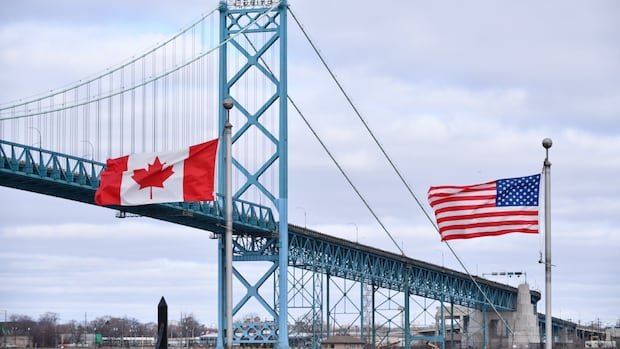


Cocaine has been identified as the most commonly confiscated substance at the Canada-U.S. border in southwestern Ontario, based on data from both countries. In the initial half of this year, the Canada Border Services Agency (CBSA) seized over 827,000 grams of cocaine at various border entry points, including the Ambassador Bridge, Detroit-Windsor Tunnel, Blue Water Bridge, Peace Bridge, Queenston Bridge, Rainbow Bridge, and Walpole Island. The total street value of the seized cocaine amounted to more than $82 million during this period.
For the previous year, the CBSA confiscated a total of 1,631,981 grams of cocaine, and in 2024, the seizure amounted to 1,515,369 grams, each with a value exceeding $150 million. Justin Morgan, the chief of operations at the CBSA’s Ambassador Bridge location, noted that the majority of narcotics intercepted originate from the United States.
Similarly, U.S. Customs and Border Protection (CBP) officials reported that cocaine was the most seized substance at the same border crossings in southwestern Ontario. Data from the CBP indicated that 927,142 grams of cocaine were seized in 2024, increasing to 2,092,875 grams in 2025. According to Lavarah Miller, a Customs and Border Protection watch commander, a significant portion of the intercepted substances moving through Detroit are destined for Canada rather than originating from within the country.
In the current year, marijuana seizures by the CBP have surpassed cocaine seizures by a large margin, with 1,797,133 grams of marijuana seized compared to 242,218 grams of cocaine between October 1, 2025, and July 6, 2026.
Benoît Gomis, a lecturer at the Munk School of Global Affairs and Public Policy in Toronto, highlighted that data on illegal substance seizures by law enforcement may not provide a comprehensive overview of the situation, leaving uncertainties about undetected border crossings. Gomis emphasized that drug seizure patterns require careful interpretation, suggesting they could result from various factors such as chance, enforcement priorities, or an actual increase in drug circulation.
Cocaine remains attractive to criminal networks due to the consistent supply of the plant used in its production, primarily sourced from Colombia and Peru. Gomis explained that the drug’s longstanding presence, coupled with established distribution networks and ease of concealment, makes it an appealing option for smuggling. Research also indicates a rising trend in cocaine consumption, with an increasing purity level posing health risks due to potential adulteration with substances like fentanyl.
The United Nations Office on Drugs and Crime has identified global drug trafficking, particularly cocaine trafficking, as a significant threat. The organization has pointed out the detrimental impact of cocaine abuse in Canada, citing statistics showing its prevalence among individuals seeking treatment for substance use disorder.
To enhance drug detection at the U.S. border, the CBSA employs various strategies, including intelligence-based targeting, inspection technologies, and trained officers capable of identifying suspicious indicators. At the newly opened Gordie Howe International Bridge, advanced detection technologies such as X-ray systems facilitate efficient commercial truck inspections, reducing offloading times and enhancing security measures. Additionally, specialized facilities at the Gordie Howe bridge enable the safe examination of packages containing hazardous substances like fentanyl and methamphetamine.