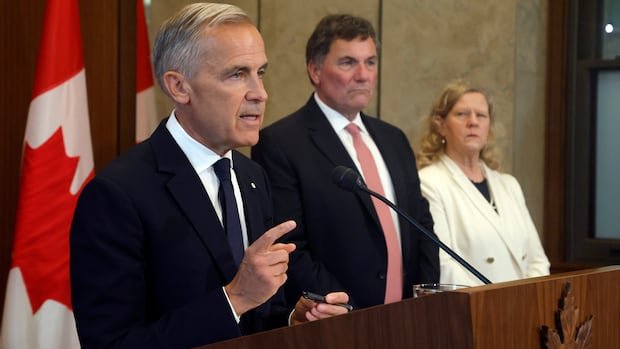


After a tumultuous week filled with tension and uncertainty, Prime Minister Mark Carney addressed the public on Saturday morning to discuss the reasons behind the decision to walk away from a trade deal deemed unfavorable and what the next steps would entail.
Carney emphasized the year-long efforts of Canada to negotiate a new trade agreement with the United States, highlighting their pragmatic, patient, and persistent approach. However, a statement released just before midnight on Friday revealed that last-minute changes proposed by American negotiators were deemed unfair, uneconomic, and raised doubts about the reliability of the deal.
Subsequently, U.S. Trade Representative Jamieson Greer disclosed that Canada had declined to finalize the agreement, shifting the narrative from anticipated acceptance to skepticism among Canadians regarding the deal’s value.
Concerns were raised by key figures like Canada’s former chief negotiator, Steve Verheul, who reportedly believed Canada had conceded too much, and former Foreign Affairs Minister Chrystia Freeland, who expressed worries about potential implications of accepting U.S. tariffs on Canadian sovereignty.
The imposition of new tariffs by the Trump administration is expected to have significant economic implications, with economist Trevor Tombe estimating that up to 90,000 Canadian jobs could be at risk. Janice Charette, Canada’s current chief negotiator, cautioned that the introduction of new tariffs could create obstacles to the negotiation process, hinting at potential challenges ahead.
The uncertainty surrounding the failed negotiations leaves both Canadian and American officials in a precarious position, reminiscent of a looming crisis with unpredictable outcomes.
In a recent statement, a senior official in the Trump administration emphasized a shift in American foreign policy, indicating that the U.S. can no longer be taken for granted in international dealings. This shift reflects a reevaluation of partnerships and relationships, highlighting a new era where traditional alliances and agreements may no longer hold the same weight.
As the aftermath of the failed trade talks unfolds, questions linger about the future of Canada-U.S. relations. Carney acknowledged the changing landscape of American policies and emphasized the need for a fair economic partnership, echoing the sentiment that the U.S. commitment to such a partnership was now in question.
Moving forward, the focus will be on how both countries navigate the aftermath of collapsed negotiations and the implementation of tariffs. The potential for retaliatory actions and counter-tariffs raises concerns about escalating tensions and the path towards reinitiating negotiations.
Despite the challenges ahead, leaders on both sides have reiterated the importance of ensuring that any deal reached is fair and beneficial for all parties involved, underscoring the complexities and uncertainties that lie ahead.