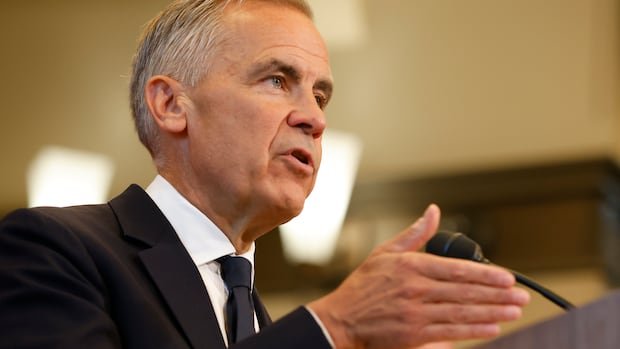


Prime Minister Mark Carney instructed his negotiators to cease discussions as the Trump administration presented unacceptable demands regarding culture, autos, and sovereignty. Carney emphasized that the U.S. did not seem genuinely interested in a meaningful economic partnership with Canada. He criticized the U.S. for proposing unfavorable terms and not demonstrating a collaborative approach to negotiations.
Carney highlighted specific issues raised by the U.S., such as objections to Canada’s support for French culture, the presence of French-language media online, and the requirement for bilingual product labels in Canada. He expressed firm opposition to these demands, stating they were never up for negotiation and would not have been acceptable to Canadians.
Regarding the automotive sector, Carney revealed that the U.S. sought unfair treatment for Canadian-made parts and wanted to impose tariffs on certain vehicles without clear justification. These late demands, if accepted, would have negatively impacted vehicle production in Canada over time.
Ontario Premier Doug Ford endorsed Carney’s decision to walk away from the negotiations, asserting that Canada is prepared to withstand a trade dispute with the U.S. Ford criticized the proposed deal as detrimental to Ontario’s industries and supported Carney’s stance against it.
Carney also highlighted the U.S.’s attempts to undermine Canada’s sovereignty by restricting its ability to engage in other trade agreements. He emphasized that such measures were unacceptable as Canada values free trade and aims to be a preferred partner for countries worldwide.
The breakdown in negotiations was attributed to the last-minute introduction of contentious issues that deviated from the progress previously made. Carney emphasized the importance of unity within the Canadian team compared to the fragmented approach of the U.S. administration during the talks.
Conservative Leader Pierre Poilievre expressed disappointment over the U.S.’s imposition of tariffs on Canada and pledged to support actions to protect Canadian industries. Poilievre advocated for fair and tariff-free trade, emphasizing the need to safeguard Canadian workers and businesses.
Economist Trevor Tombe warned that the potential tariffs could lead to significant job losses across Canada, particularly in provinces heavily reliant on exports. The federal government estimated the impact on Canadian goods and employment, stressing the need to support affected businesses in the face of escalating trade tensions.
Carney reassured that measures would be taken to assist businesses impacted by the tariffs and pledged ongoing support beyond the current administration. He underscored the government’s commitment to safeguarding Canada’s sovereignty and key industries amidst the challenging trade environment.