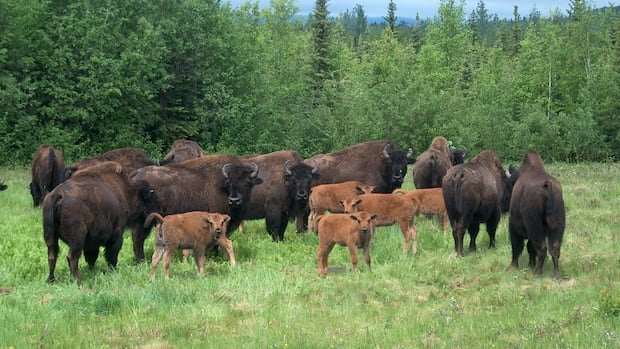


The number of bison road collisions in the N.W.T. seems to be decreasing. The N.W.T. Department of Environment and Climate Change (ECC) reported 60 collisions with bison from 2021 to 2025, but only one has been recorded in 2026 so far.
Terry Armstrong, a bison ecologist at ECC, attributes this decline to wildfires. He explains that fires cause bison to change their habitat, as they are drawn to recently burned areas for new vegetation growth.
With extensive areas burned in recent years, more bison are opting for recovering wildfire zones over roadsides, leading to a reduction in collisions.
Wood bison, considered a threatened species both locally and nationally, are benefitting from this trend. The ECC estimates the current wood bison population to be several thousand, with their numbers hovering just above 2,500.
Toyeke Adedipe, an ECC spokesperson, mentioned that between 2021 and 2025, at least 76 bison died in collisions, with some incidents involving multiple animals. Highway 3 saw the highest number of collisions and bison fatalities, with 45 collisions resulting in 56 deaths.
Armstrong highlights that August to September marks the rutting season when bison are more likely to exhibit aggressive behavior towards vehicles due to mating and dominance struggles within the herd.
As daylight decreases, visibility worsens, especially during dawn and dusk, making collisions more likely. Armstrong advises drivers to be cautious, maintain distance from bison, and avoid actions that may provoke them, especially during rutting season.
Additionally, drivers are warned against trying to interact with bison as they are powerful animals and should be respected from a safe distance. Armstrong emphasizes the uniqueness and significance of bison as a species that has thrived in North America for thousands of years.