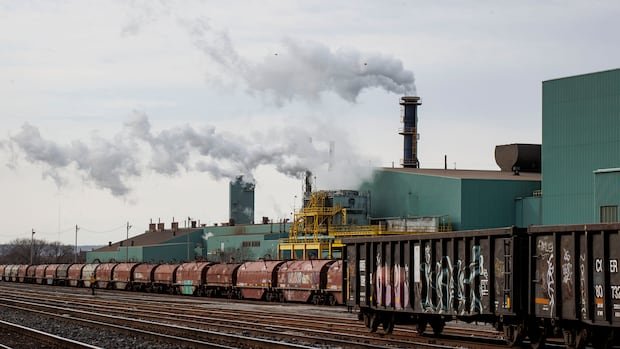


As the threat of new 50 percent tariffs on Canadian products looms from U.S. President Donald Trump, the president of a steelworkers union in Hamilton expresses concern for the industry. According to Ron Wells, president of United Steelworkers (USW) Local 1005, tariffs have already impacted Canadian steel sales to the U.S., potentially leading to increased costs of living and affecting sales for businesses supplied by steel producers.
While 50 percent tariffs on steel have been in effect since last year, the exact implications of Trump’s recent announcement regarding increased levies on steel, automobiles, and auto parts starting January 1 remain unclear. Hamilton is home to two major primary steel producers in Canada, ArcelorMittal Dofasco and Stelco, along with numerous fabricators. Wells noted a significant slowdown in business since the tariffs were implemented.
In response to the escalating trade tensions, Hamilton Mayor Andrea Horwath emphasized the challenges faced by the city, known for its steel and manufacturing industry, as well as its agricultural sector. Greg Dunnett, CEO of the Hamilton Chamber of Commerce, highlighted the adverse impact on the community, calling for support and investment to address the situation.
Amidst these developments, concerns have been raised by industry leaders about the implications of the tariffs on operations. Cleveland-Cliffs, the owner of Stelco since July 2024, has expressed apprehension about the impact of current and potential tariffs on its Canadian operations. Additionally, Cleveland-Cliffs CEO Lourenco Goncalves raised concerns about the competitiveness of their galvanizing lines in Hamilton without further measures to safeguard fair trade.
Political figures like Premier Doug Ford have strongly criticized Trump’s trade policies, advocating for retaliatory measures and increased support for affected workers and industries. Ford emphasized the need for unity and resilience in the face of economic challenges, pledging support to workers and proposing measures to bolster the province’s economy.
Furthermore, calls have been made by opposition leaders for urgent legislative action to address the impact of tariffs, while industry representatives stress the importance of protecting jobs and supporting affected communities. The ongoing trade dispute continues to pose challenges for various sectors, necessitating proactive measures to mitigate economic repercussions.
In conclusion, the evolving trade dynamics between Canada and the U.S. underscore the significance of strategic responses and collaborative efforts to navigate the uncertainties and safeguard the interests of workers and industries in the affected regions.