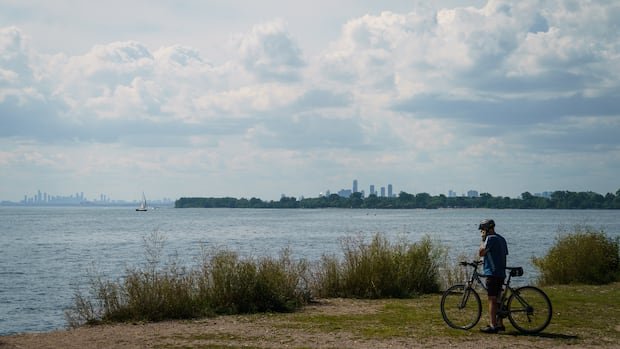


The Great Lakes, a significant reservoir of freshwater and a key water source for about 40 million individuals, have historically represented the close bond between Canada and the U.S. President Donald Trump recently made a controversial move in the ongoing trade dispute with Canada by issuing an executive order to rename Lake Ontario as Lake America.
Although the legality of Trump’s decision to rename the lake is uncertain given its longstanding name and international recognition, this action aligns with the broader policies of the Trump administration, which have impeded collaborative efforts between the U.S. and Canada on scientific research and environmental restoration in the Great Lakes region.
Aaron Fisk, a professor at the University of Windsor’s Great Lakes Institute for Environmental Research, expressed concerns over the administration’s departure from evidence-based environmental decision-making. The significant budget cuts imposed by the Trump administration on key scientific agencies like the National Oceanic and Atmospheric Administration and the Environmental Protection Agency have had adverse effects on monitoring and research activities in the Great Lakes.
Joel Brammeier, the president and CEO of the Alliance for the Great Lakes, emphasized the necessity of U.S.-Canada collaboration for the preservation and restoration of the shared waters of the Great Lakes. He stressed that effective management of the lakes requires a transboundary approach that transcends political divisions.
Despite the financial cutbacks, bipartisan support has emerged for crucial programs like the Great Lakes Restoration Initiative, aimed at ecosystem restoration and pollution cleanup. The U.S. House of Representatives recently approved the reauthorization of the initiative, securing substantial federal funding for local communities in the region, with backing from both Democratic and Republican representatives.
The industrial development in the Great Lakes region, which includes major sectors like steel, chemical, and aluminum manufacturing, has left a legacy of widespread pollution. The urgent need for cleanup and restoration has garnered widespread support from decision-makers and community members across the region.
Looking ahead, climate change poses new challenges for the Great Lakes, with shifting weather patterns and increased water demand creating complex issues that demand close attention from authorities on both sides of the border. Experts like Mike Shriberg from the University of Michigan’s Water Center highlight the evolving threats posed by climate change and growing water demands, necessitating proactive measures to safeguard the Great Lakes’ future sustainability.
Efforts to safeguard the Great Lakes’ water resources for future generations are underway, as stakeholders work to fortify agreements like the Great Lakes compact to manage water usage effectively. With mounting pressure on the region’s water resources from various sectors, including agriculture and industry, a coordinated and forward-thinking approach is crucial to ensure the long-term health and sustainability of the Great Lakes.