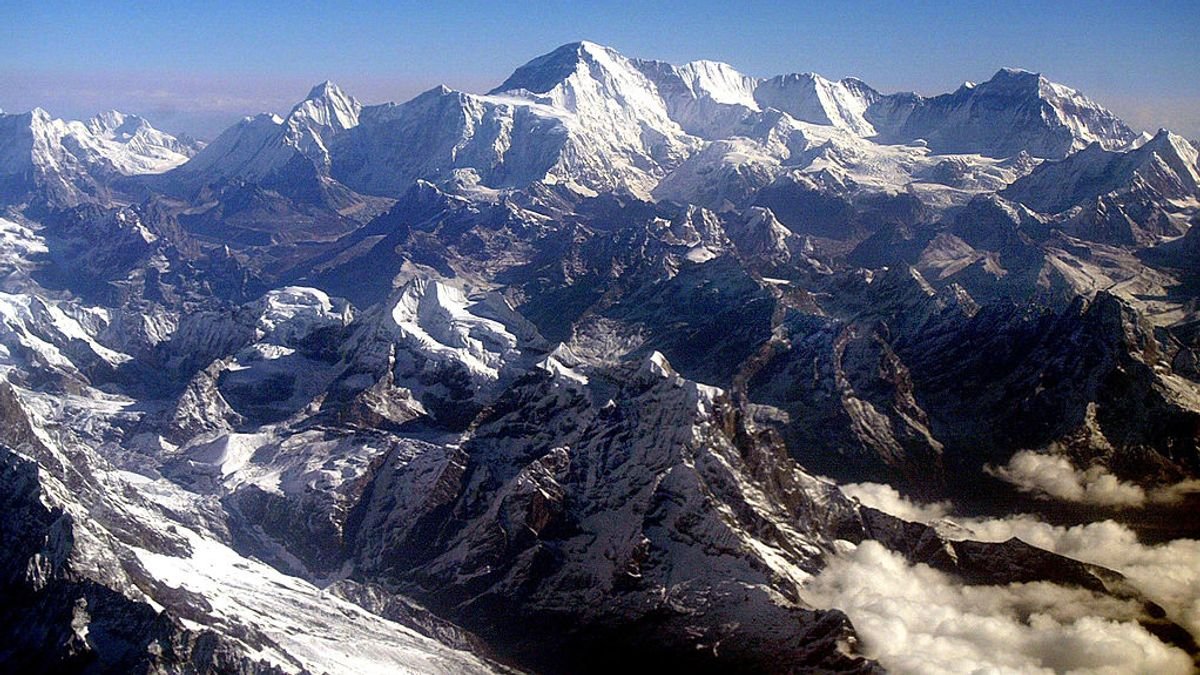


Tragic tales unfold on the unforgiving slopes of Mount Everest, where the unforgiving elements preserve the bodies of those who meet their end in a frozen stasis. Among the notable figures is Peter Boardman, whose poignant discovery sitting upright against a rock, overlooking the majestic Himalayas, captivated many.
Boardman and his climbing partner Joe Tasker vanished during an expedition on Everest’s North-East Ridge in May 1982, a challenging route known as the “death zone” due to its extreme altitude and lack of oxygen. Despite their experience and determination, the climbers faced perilous conditions without supplemental oxygen, leading to their disappearance.
It wasn’t until nearly a decade later that a joint Japanese-Kazakh expedition located Boardman’s body at around 8,200 meters, revealing his fate. Boardman, aged 31, had succumbed to exhaustion, sitting calmly against the rock, a silent witness to the vastness of the mountains. Tasker, aged 33, remains missing, leaving behind a legacy of daring climbs and a void in the climbing community.
The loss of Boardman and Tasker, renowned for their bold and minimalist climbing style, reverberated throughout the mountaineering world, underscoring the risks and sacrifices inherent in pursuing such extreme feats.