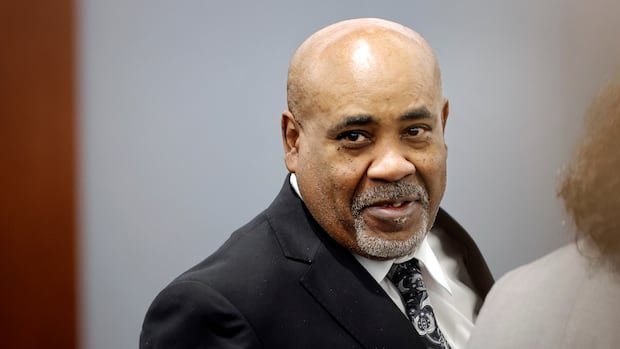


In a 2008 police interview recording played for jurors on Thursday, Duane (Keffe D) Davis implicated his nephew Orlando (Baby Lane) Anderson as the shooter responsible for the death of rapper Tupac Shakur in 1996. Davis, currently facing charges related to the alleged orchestration of Shakur’s killing, disclosed to Los Angeles police during the interview that he was present in the car with Anderson when the fatal shots were fired.
During the interview, Davis recounted that he and Anderson, along with two other individuals, were in a white Cadillac that pulled up next to Shakur and Marion (Suge) Knight’s vehicle in Las Vegas. Davis mentioned that if their positioning had been different, he would have taken action, but as Knight’s car was on the other side, he passed his gun to Deandre “Big Dre” Smith, who declined it. Subsequently, Anderson, who was also in the back seat, seized the weapon and initiated the gunfire, as per Davis’s account.
This marked the first instance of Davis openly discussing his role in the shooting with law enforcement. Prosecutors highlighted the significance of Davis’s admissions in police interviews, podcasts, and his co-authored memoir, “Compton Street Legend,” as key evidence in the case against him. Notably, in a previous interaction with the FBI, Davis had implicated others, including Knight and Sean (Diddy) Combs, in Shakur’s murder, contradicting his recent statements.
Despite pleading not guilty, Davis’s defense attorney dismissed the prosecution’s version of events as fictitious and criticized the lack of corroborating evidence for Davis’s claims. The police initially brought Davis in for questioning regarding the 1997 shooting death of Shakur’s rival, the Notorious B.I.G., before ruling him out as a suspect.
The court also heard recordings where detectives assured Davis of confidentiality, but prosecutors argued that Davis voided this agreement by later publicly discussing the shooting. Allegations suggest that Shakur’s killing was motivated by retaliation for an earlier altercation between Shakur’s entourage and Anderson at the MGM Grand, where Davis was present but not involved.
Decades after his tragic death, Tupac Shakur remains an enduring cultural icon and one of the most influential and multifaceted rappers of all time, his legacy continuing to resonate across generations.