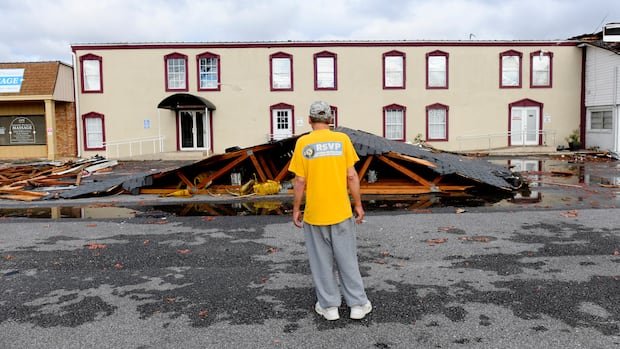


Isaias caused extensive damage to roofs, power lines, and roads as it transitioned from a hurricane. The storm resulted in at least four fatalities, with two individuals losing their lives due to trees falling on their homes in Florida and Alabama. Nearly 700,000 customers were left without electricity by midday, with concerns of prolonged flooding in the southern Appalachians.
After making landfall near Destin, Florida, a popular Gulf Coast region characterized by sandy beaches and vacation properties, Isaias weakened to a post-tropical cyclone. As it moved inland through Alabama, forecasters warned of flash floods and potential tornadoes, leaving hundreds of thousands without power.
While the risk of life-threatening storm surges persisted in parts of the Florida Panhandle, areas like southern Alabama, the Florida Panhandle, and Big Bend faced the threat of heavy rainfall ranging from four to eight inches over the weekend. Isaias was located approximately 40 kilometers south-southwest of Montgomery, Alabama, with sustained winds of 55 km/h, expected to progress into the Tennessee Valley.
Robbie Berg from the National Hurricane Center highlighted the continued wind and heavy rainfall threats posed by Isaias, even after its transition to a post-tropical state. Florida Governor Ron DeSantis confirmed that state roads were operational, yet cautioned about potential flooding in the upcoming days.
Isaias, the first hurricane of the Atlantic season, caused significant damage upon landfall, attributed to the exceptionally warm waters in the Gulf of Mexico. These warmer conditions, partly influenced by human-induced climate change, provided the energy necessary for Isaias’ development. However, just before landfall, increased upper-level wind shear weakened the storm, expanding the impact zone of damaging winds.
The aftermath of Isaias included reports of structural damage in various areas, such as a hotel roof blown off in Pensacola, gas stations damaged in East Milton and Destin, and flooding in southern Alabama. Despite the destruction, some residents like Tim Mowry in Pensacola expressed gratitude for escaping severe impacts.
Isaias marked the first hurricane to hit the eastern U.S. since Milton struck the Gulf Coast in 2024. Meanwhile, in the Pacific, Hurricane Simon escalated to a Category 4 storm near Mexico’s coast, while Tropical Storm Rachel was anticipated to bring adverse weather conditions to northern Mexico and Southern California.