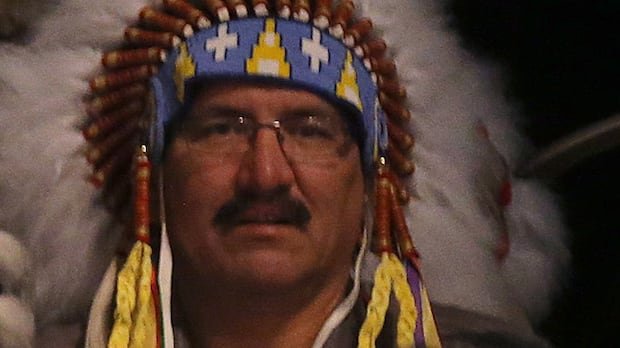


The Canadian Human Rights Tribunal has ruled that a former chief of the Alexander First Nation sexually harassed an employee over a span of nine years.
Kurt Burnstick, who was the chief of the First Nation situated approximately 55 kilometers northwest of Edmonton, had previously been acquitted of criminal charges in 2017 related to his interactions with the complainant.
In a decision made public on July 31, the Canadian Human Rights Tribunal determined that Burnstick had engaged in actions that constituted sexual harassment, which is a form of discrimination.
The former employee had lodged two separate complaints with the Canadian Human Rights Commission in 2016. These complaints were later merged and referred to the tribunal as a single inquiry in September 2018.
One of the complaints was directed against Alexander First Nation, while the other specifically named Burnstick as the individual respondent.
The complaint against Alexander First Nation was resolved with the terms approved by the commission in January 2021. However, the complaint against Burnstick proceeded to a hearing.
As detailed in the decision, the woman alleged that Burnstick, who served as a band councillor and later as chief during the period in question, subjected her to sexual harassment.
The woman had been employed by Alexander First Nation from 2000 to 2016, initially working as a contract staff member conducting research on land claims before transitioning to a permanent role as an assistant to the Treaty Land Entitlement administrator.
Her allegations date back to 2006 when she claimed that Burnstick displayed flirtatious and sexual behavior that she perceived as an attempt to initiate a sexual relationship with her. The alleged conduct included unsolicited physical contact, such as an unwanted kiss at a Calgary pub and multiple instances of Burnstick bumping into her with his belly.
She further described repeated inquiries about her personal life outside of work, including texts during evenings and weekends, as well as unsettling behavior such as Burnstick downplaying his recent marriage as not hindering their potential time together.
The former employee also accused Burnstick of offering financial aid or extra work in situations that could lead to them being alone. She mentioned that he frequently invited her to out-of-town meetings, suggesting they could relax and have fun, with implications that she might not need to reimburse money he had provided if she agreed to travel with him.
According to the decision by the human rights tribunal, the woman also stated that she was required to collect paychecks directly from Burnstick on several occasions, often in private settings.
The decision highlighted that the alleged harassment intensified after Burnstick assumed the role of chief in 2014. The woman estimated that there were between 50 and 100 incidents of unwanted physical contact and “belly bumping” between 2006 and 2015.
The culmination of the alleged harassment, according to the woman, occurred at the First Nation’s office on October 28, 2015. She had taken food to the band office for a meeting that subsequently turned into a management meeting. Burnstick purportedly assisted her in bringing the food inside, after which he requested her presence in his office.
Upon entering the office, the woman claimed that Burnstick asked her to close the door and proceeded to hug her. She alleged that he then sat down, spread his legs, pulled her towards him, and grabbed her buttocks with both hands.
Following the incident, she promptly left the office and reported the matter to her supervisor, asking him not to confront the chief due to concerns about jeopardizing her employment.
Burnstick contested the woman’s version of events, asserting that the encounter was limited to a consensual hug, a claim that the tribunal ultimately dismissed in favor of the woman’s testimony.
Tribunal member Kathryn Raymond emphasized the woman’s credibility as a key factor in the case. She clarified that the decision was based on the balance of probabilities, as opposed to the standard of proof required in criminal cases.
Raymond noted Burnstick’s dismissive demeanor during the hearing regarding the severity of the issues, highlighting instances where he abruptly left without permission. However, she maintained that her assessment of Burnstick’s credibility was based on his account of the events.
Raymond concluded that Burnstick’s explanations for his behavior lacked persuasiveness and internal consistency, with text messages and testimony from other witnesses supporting aspects of the woman’s claims.
The decision determined that Burnstick’s actions were unwelcome, persistent, and of a sexual or gender-based nature, which adversely affected the former employee’s work environment and led to job-related repercussions.
Additionally, the decision highlighted the significant power disparity between Burnstick, a prominent figure within the First Nation, and the woman, whose livelihood and community ties were intertwined with her professional relationship with Burnstick.
Despite finding in favor of the complaint, Raymond did not mandate Burnstick to provide further compensation to the complainant. This decision was based on the Canadian Human Rights Act, which deems acts committed by an employee in the course of employment to be attributed to the employer. As Alexander First Nation had