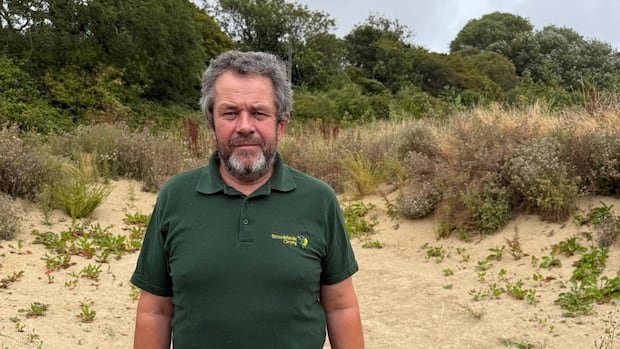


In a field on his farm in southern England, James Baird gestured towards the ground where deep cracks had formed. Baird, a crop farmer in West Sussex known for his environmentally friendly practices, expressed astonishment at the parched conditions. After four decades in farming, he remarked that this summer’s extreme dryness was unprecedented, leading to an early finish of his cereal harvest with a 25% decrease in crop yields at Stroodelande farm.
Contrary to the typical perception of the UK being a rainy place, the past five years have witnessed recurring droughts, indicating emerging patterns according to Baird. The lush greenery and fields that usually define the English countryside by early August have given way to arid landscapes following back-to-back heatwaves and prolonged absence of rainfall.
Official reports show that half of England and the entirety of Wales are now officially in a state of drought due to an exceptionally severe dry spell, with rainfall in July plummeting to a mere seven percent of the monthly average in England and one percent in southern regions. These unprecedented conditions have sparked concerns not only about the immediate impact on agriculture but also about the long-term water security of the country.
The prolonged dry spell has taken a toll on agriculture, with scorched crops, depleted water sources, and increased wildfire incidents. More than 20 million people in England and Wales are currently under hosepipe bans due to the stringent water usage restrictions imposed by authorities.
The severe conditions have led to a surge in wildfires, making July the busiest month on record for firefighters in responding to nearly 400 incidents across England and Wales. The combination of record-breaking heat and prolonged dry spells has created ideal conditions for wildfires, posing a significant threat to farmlands and natural habitats.
Farmers like Eleanor Gilbert and her stepfather have been forced to adapt to the changing climate by implementing measures to conserve moisture in the soil. Similarly, dairy farmer David Christensen has shifted from planting maize to wheat, prioritizing resilience over efficiency in the face of dwindling water resources and extreme weather events.
In addition to the immediate challenges posed by the drought, concerns have been raised about the long-term water management strategies in the UK. The government’s plans to build reservoirs and the proliferation of water-intensive infrastructure projects have sparked debates about the sustainability of water resources in the country.
The impact of the drought extends beyond agriculture, affecting various aspects of life in the UK, including inland waterways and houseboat communities. Low water levels in canals and rivers have forced closures and disruptions, prompting residents to adapt to the changing conditions and uncertainties brought about by the changing climate patterns.