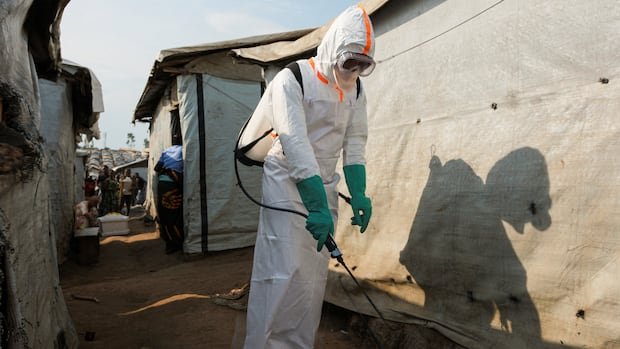


The deadliest Ebola outbreak in the history of the Democratic Republic of Congo has raised global alarm this week as confirmed cases continue to surge. As of August 16, the country has recorded at least 2,378 deaths due to the virus, making it the second-largest Ebola outbreak on record. The World Health Organization’s Director-General, Tedros Adhanom Ghebreyesus, described the outbreak as moving at an unprecedented speed and emphasized that the epidemic is far from being under control.
Ebola is a severe disease associated with orthoebolaviruses. The current outbreak in the D.R.C. involves the Bundibugyo strain, one of four strains that affect humans. The virus spreads through close contact with infected animals or individuals and contaminated objects.
Declared in May, the outbreak is centered in eastern D.R.C., near the borders of South Sudan and Uganda. The first suspected case was reported in April when a health worker in Bunia, Ituri province, displayed symptoms and later died.
The rapid spread of Ebola in this outbreak is a major concern. Over 5,000 cases have been reported in the D.R.C. as of August 16, with a high case fatality rate. The outbreak has affected six provinces, with the majority of cases in Ituri. Factors complicating the response include the absence of a vaccine for the Bundibugyo strain, armed conflicts, internal displacement, and distrust towards health efforts.
Efforts to contain the outbreak require testing, contact tracing, safe burials, and isolation treatment. Deployment of more health workers, community engagement, and increased financial support from countries like Canada are crucial. The WHO is ramping up its response by deploying additional epidemiologists and adding more treatment beds to address the escalating situation in the D.R.C.