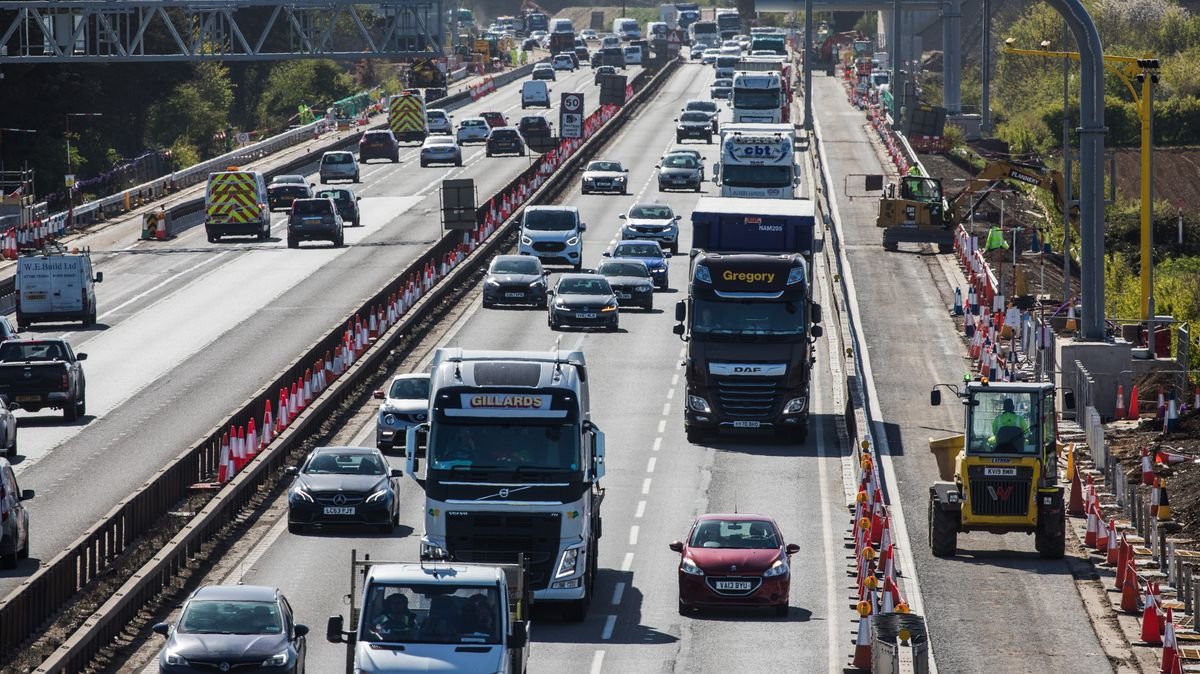


A recent study conducted by the AA has shown that the number of drivers expressing feelings of nervousness or anxiety while navigating “smart” motorways has doubled over the past year. These innovative highways, aimed at improving traffic flow by utilizing the hard shoulder as an additional lane, currently span 396 miles across England.
Despite their intended benefits, critics argue that smart motorways are fundamentally flawed, citing data that highlights at least 79 fatalities on these roads between 2010 and 2024. The analysis also reveals that motorists experiencing breakdowns on smart motorways without a hard shoulder are approximately three times more likely to sustain severe injuries or fatalities compared to those on traditional motorways with a permanent hard shoulder.
A survey conducted among 12,705 AA members unveiled a significant increase in feelings of unease on smart motorways with no hard shoulder, where emergency refuge areas are spaced at intervals of around three-quarters of a mile. The proportion of respondents reporting anxiety in these scenarios rose from 23% to 46% in the past year. Similarly, motorways where the hard shoulder is only operational during peak traffic hours saw a notable uptick in anxiety levels, climbing from 30% to 47% within the same period.
In a shift of policy, the Conservative government announced in April 2023 the cancellation of future smart motorway projects due to concerns about public confidence and financial pressures. Edmund King, President of the AA, emphasized the importance of reinstating hard shoulders in controlled motorway environments to restore driver trust in the system.
The AA emphasizes the necessity for increased transparency and consistency in evaluating and monitoring motorway safety. With the cessation of new smart motorway initiatives, drivers are left uncertain about the ongoing independent safety assessments of existing smart motorways. Urgent publication of performance reports on active smart motorway segments is advocated to provide clarity on the system’s efficacy.
The Department for Transport defended smart motorways as the safest road option in terms of fatalities and serious injuries, stressing ongoing efforts to enhance safety standards. Despite these assertions, calls for improved safety measures persist, underscoring the importance of promptly releasing comprehensive safety reports to address public concerns and ensure transparency in road management practices.