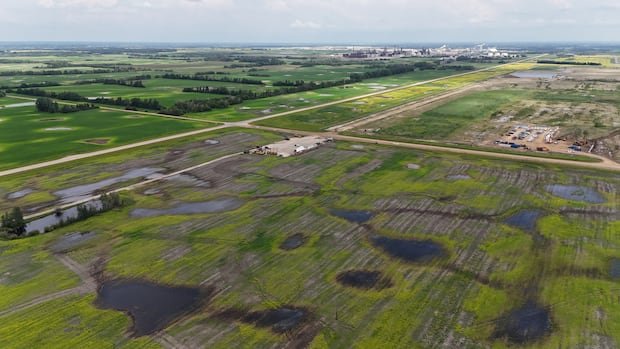


Artificial intelligence data centers are known for their significant electricity consumption, raising concerns about potential impacts on energy costs for Alberta consumers. According to a recent report from the Pembina Institute, the proposed Meta Data Centre in Sturgeon County could lead to an increase of $270 to $460 annually on household power bills once operational.
These data centers, essential for various AI applications, accounted for 4.4% of U.S. electricity demand in 2023 and are projected to reach 12% by 2028. Meta Platforms Inc., the company behind Facebook and Instagram, is set to construct a $13 billion data center complex near Edmonton within the next few years.
The Meta Data Centre will be connected to the Greenlight Electricity Centre, a $4.6 billion power plant generating 932 megawatts initially, with the potential to double. Despite assurances from the provincial government and Meta that electricity costs will not rise for Albertans, experts suggest a temporary increase due to the timeline gap between the data center’s operation and the power plant’s completion.
The impact on electricity prices will be most significant before the Greenlight plant becomes operational, with estimates from 2027 to 2031. Experts warn that without synchronized generation capacity, projects like Meta’s data center could strain the power grid and lead to higher wholesale electricity prices.
The demand for nearly one gigawatt of electricity by Meta’s operations could strain Alberta’s power supply, potentially affecting prices and grid stability. The introduction of more data centers in Alberta could further compound these challenges.
To address these concerns, renewable energy sources, battery storage, and demand management strategies are proposed to mitigate the impact on electricity prices. Despite these potential challenges, Meta and the Alberta government remain committed to responsible data center development and ensuring energy costs are not shifted to consumers.