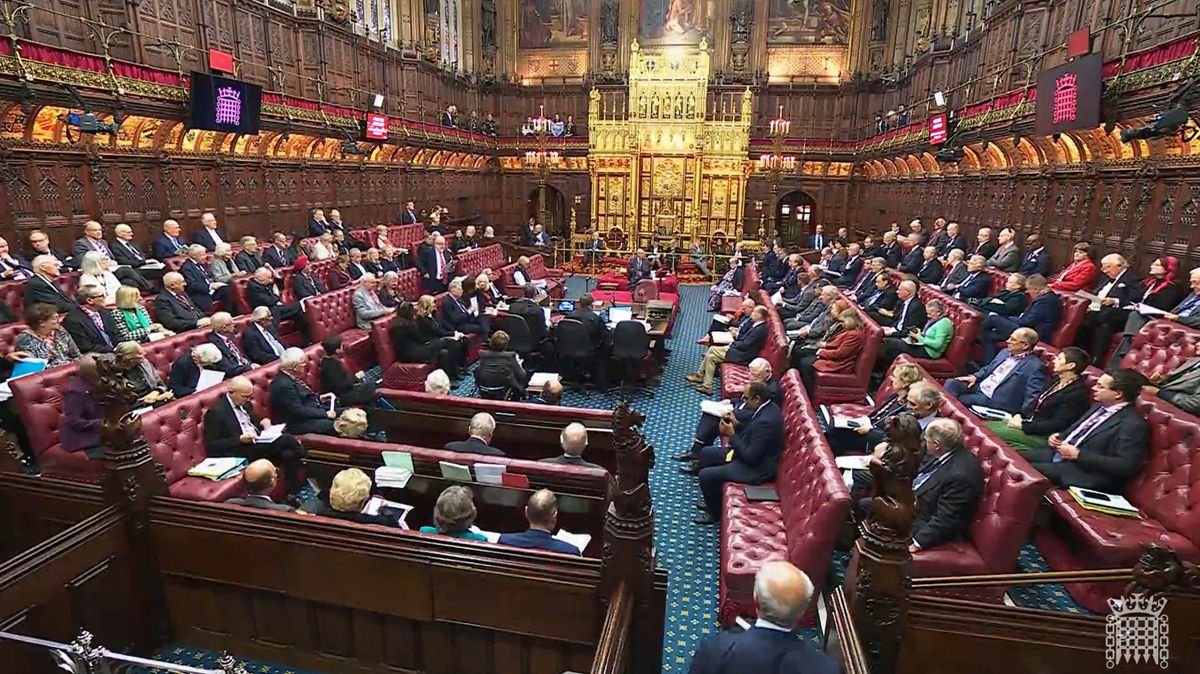


The House of Lords is facing criticism for attempting to transform the assisted dying bill into a legislation favoring the affluent by prohibiting legal aid. Currently, members of the House of Lords are engaged in discussions over a staggering 1,100 amendments to the contentious bill. Some proponents view this as a delaying strategy and argue that the unelected peers should heed the decision of the House of Commons, which endorsed the bill last year.
On the contrary, some assert that they are not intentionally stalling the bill but believe that it is flawed and requires substantial modifications before enactment. Former Conservative MP and current Baroness, Therese Coffey, advocated against the use of state funding for individuals seeking assisted death in court. She emphasized the exclusion of taxpayer funds for such purposes, suggesting that other avenues like charities could provide financial assistance instead.
However, critics, including Louise Shackleton, who accompanied her husband to Dignitas for an assisted death due to motor neurone disease, expressed dismay at the proposed amendments. They argue that the bill is becoming exclusive to the wealthy, with Baroness Coffey’s amendment potentially hindering certain individuals from accessing assisted death.
During the recent debate, a prominent barrister contended that courts should be entrusted with the decision on assisted deaths. The previous iteration of the Bill featured a High Court judge safeguard, which was replaced by a three-member panel comprising social workers, psychiatrists, and legal professionals. The call for additional time to deliberate on the Terminally Ill Adults (End of Life) Bill was supported by peers, with the necessity for both the House of Commons and the Lords to concur on the final draft before the parliamentary session ends in May.
Lord Alexander Carlile of Berriew KC proposed a court-based process, asserting that it would provide a trustworthy judgment in this novel legal domain. The proposed involvement of designated family judges was highlighted as pivotal for making crucial decisions. The debate continues as supporters and opponents clash over the bill’s provisions, emphasizing the need for thorough scrutiny and potential enhancements.