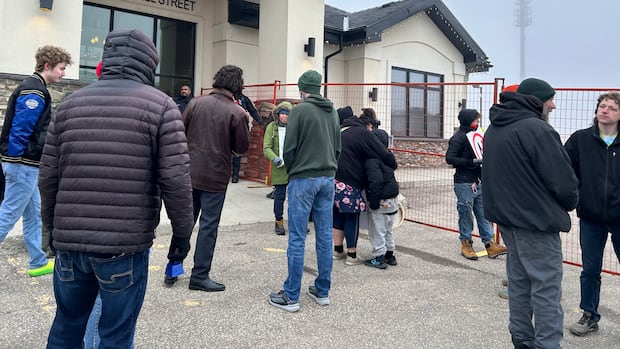


During a council meeting on Thursday, the Rural Municipality of Sherwood approved zoning modifications that will permit Bell Canada to broaden its extensive AI data centre initiative in Saskatchewan, while a small group of demonstrators assembled outside.
Law enforcement and private security personnel were present as well.
The rezoning eliminates a significant regulatory barrier for the telecommunications provider as it plans to develop a 1.2-gigawatt facility near Regina.
Dan Rink, who serves as the president of AI infrastructure and strategy at Bell Canada, was at the meeting and expressed a desire to clarify misunderstandings.
“This data centre is not situated on George Gordon reserve land,” Rink stated, addressing the objections raised by the George Gordon First Nation regarding the project.
“It is located on private land, not adjacent to Crown land, and it has been farmed for the past 150 years continuously,” Rink explained.
He emphasized the employment opportunities that both the company and the province anticipate from this development.
“We are continuing to invest in this project, contributing over $2 billion directly with our clients, with more than $12 billion allocated to the first phase and $50 billion for the expansion, which ranks among the largest initiatives in Canadian history, and there are … well-paid jobs currently available on site,” Rink noted.
He mentioned that Bell will cover all water expenses utilized by the data centre.
“We have a water connection from the City of Regina for our employees’ drinking water and for fire safety. The facility itself operates on a ‘closed loop’ system, meaning it is a fully sealed system that does not discharge water into drainage,” Rink stated.
Rink highlighted that Bell Canada aims to construct its data centres in a manner that is considerate of local communities across the nation.
“We engage acoustical engineers to design every component of our project. We have conducted land studies, examined the equipment, and invested in sound enclosures, sound barriers, and berms along with setbacks,” he said.
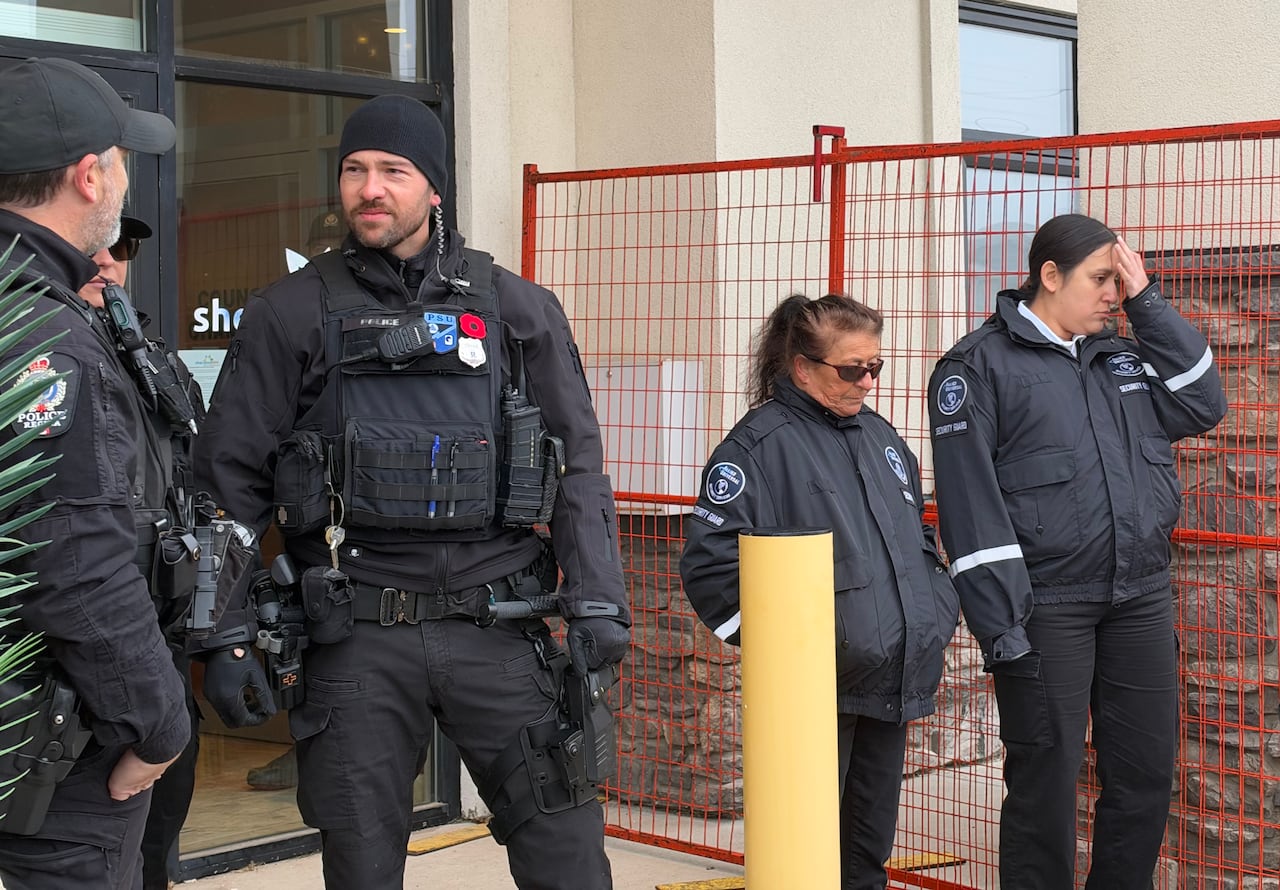
Police and private security officers outside the RM of Sherwood’s office. (Aliyah Marko-Omene/CBC)
Security personnel were stationed at the RM office entrance, informing protesters that only 15 individuals could enter at a time.
Councillor Judy Harwood stated this measure was taken for safety reasons.
“[I] just want to mention we had one meeting here, but the disruption from banging on the windows and the honking horns outside forced us to pause our meeting. So who benefits from that?” she remarked.
Harwood recounted another incident where individuals burst into the council chambers.
“I hold the chambers in high regard, almost as sacred ground. But they entered our chambers, and did we feel threatened? Perhaps, yes. There may have been some intimidation present. If the police intimidate people, we too felt intimidated,” she explained.
-
Majority of the Rural Municipality of Sherwood’s council resigns
-
RM of Sherwood council approves Bell Canada AI data centre near Regina
Four members of the RM council were appointed by the provincial government merely ten days prior to the council’s endorsement of the data centre development earlier this year. They were assigned to replace the reeve and three council members who unexpectedly resigned in March without explanation.
Initially, the centre was planned to be a 300-megawatt facility.
Councillor Mitch Huber, one of the provincially appointed council members, asserted that the appointments were not influenced by the data centre.
“I have never been prompted or suggested that we needed to act in any particular way. I would argue we were appointed based on our experience as municipal leaders over the years,” he stated.
No representatives from the provincial government were available on Thursday to address inquiries regarding the data centre.
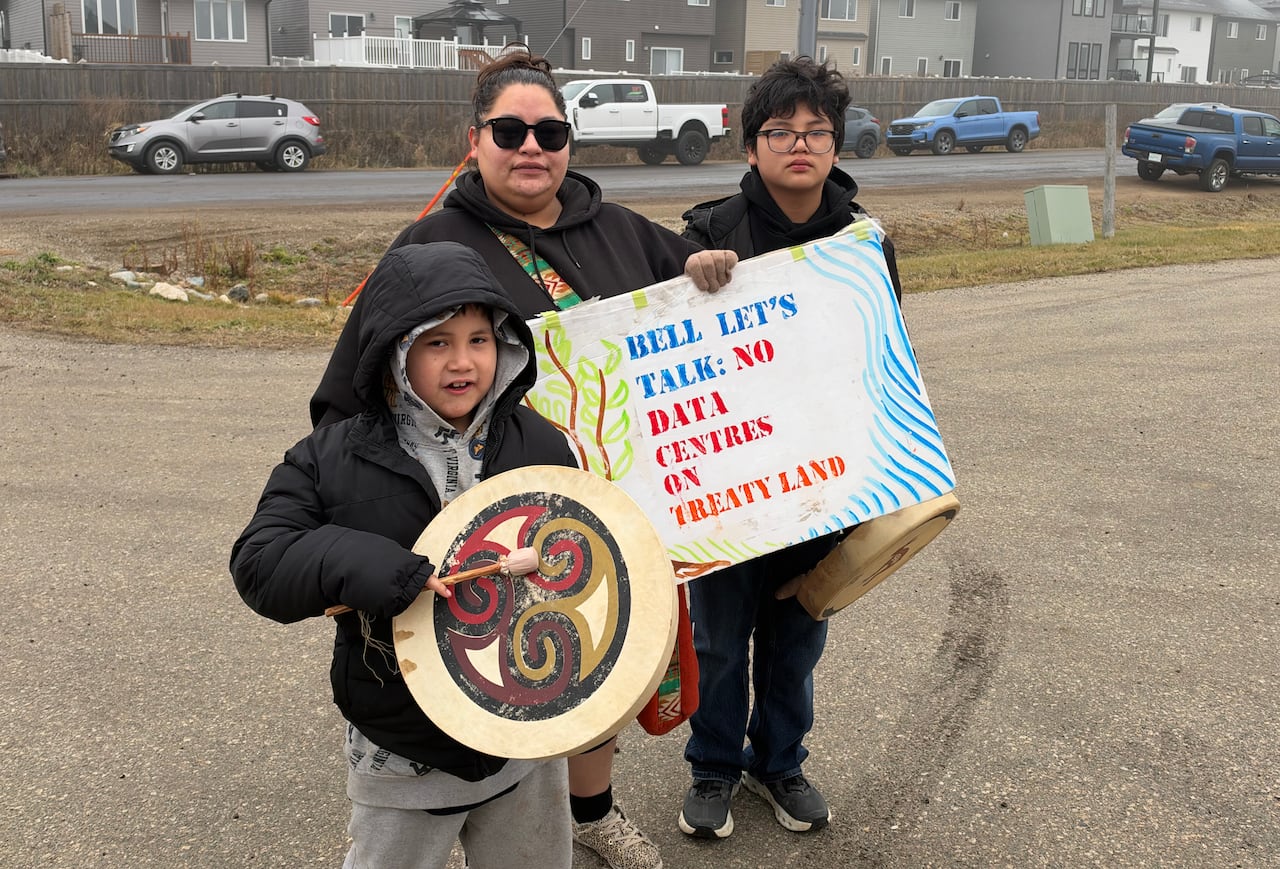
Dilynn Kehler attended the protest with her sons. (Aliyah Marko-Omene/CBC)
Dilynn Kehler, a participant of a group named No Data Centres on Treaty Land, expressed that she and her sons came to the Thursday protest to share their views and respect traditional teachings.
“Indigenous communities need to consider the future for our upcoming generations because that is a fundamental aspect of our culture. We are merely stewards of the land, and our existence is on behalf of our future descendants,” Kehler remarked.
“Therefore, any actions we take now must be evaluated for their potential impact on the people. This principle is at the core of what the treaties were established upon. Our ancestors envisioned our future in this way.”
Kehler, affiliated with the George Gordon First Nation, asserted that Bell Canada has not been forthcoming about the project and has not fully informed the members of George Gordon.
“We have submitted Freedom of Information Act requests that have been heavily redacted. We still lack information regarding the water cooling system, including its source and its destination,” she stated.
Kehler expressed skepticism about trusting “a for-profit corporation to prioritize our best interests, and I simply cannot accept that,” she added.
Bell has committed to making an environmental assessment available during the next expansion phase of the project.
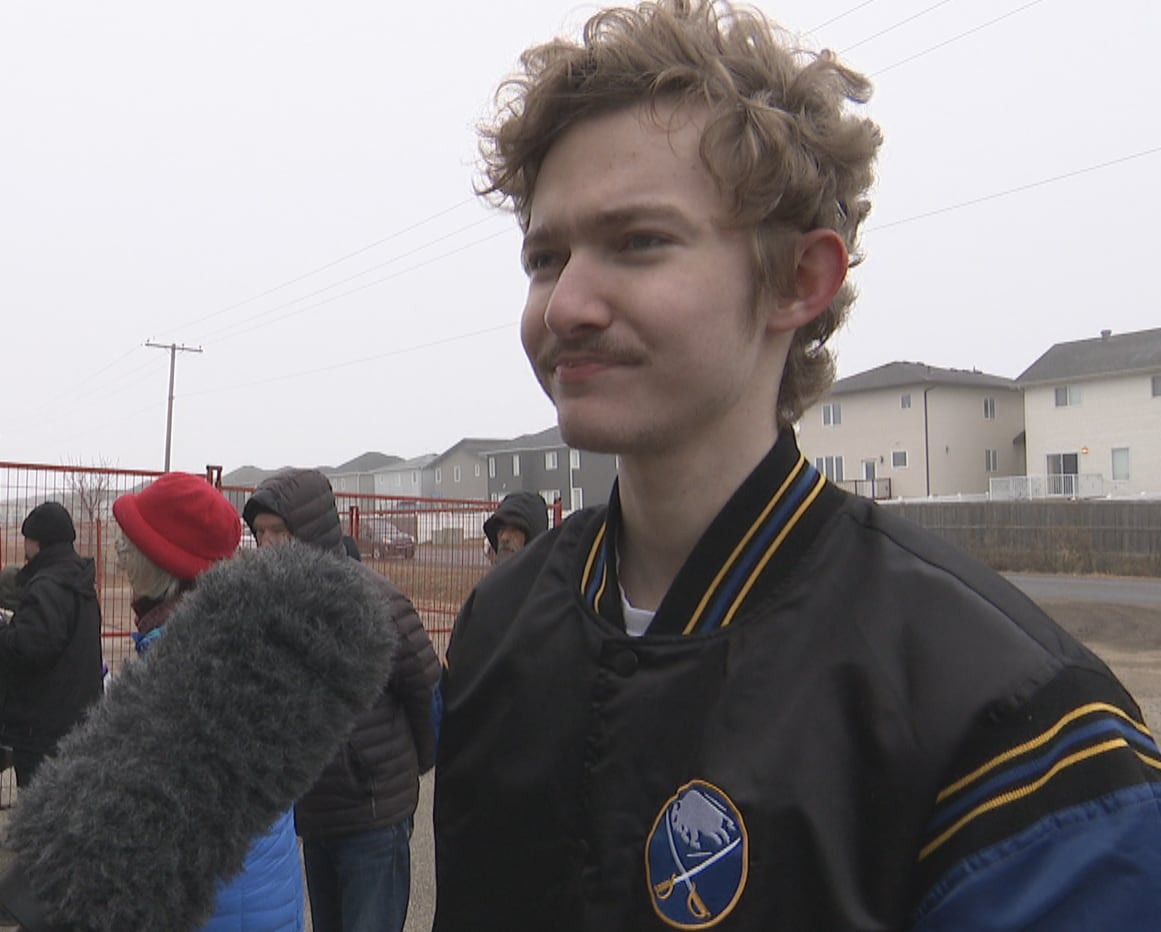
Nicholas Fuzesy stated he believes Bell Canada’s aim is to first construct the AI data centre, then persuade people that it is a beneficial idea. (Richard Agecoutay/CBC)
Protester Nicholas Fuzesy expressed his strong opposition to the project.
“This is all about Bell’s agenda prevailing over the people’s wishes. I believe this is something Bell has always wanted to pursue. It seems they chose a location with minimal regulations and expected limited resistance,” Fuzesy remarked.
“I suspect their strategy was to execute the project first and then attempt to convince the public that it was a wise choice.”
The RM is scheduled to conduct an election for the reeve and council positions on November 9.