

An Alberta resident facing allegations of historical child sexual abuse is contesting an order from the federal justice minister to be extradited to the United Kingdom.
Peter Murray, who is 88 years old and resides in Wetaskiwin, located approximately 70 kilometres south of Edmonton, is wanted by U.K. authorities to face trial for allegedly committing physical and sexual assaults against 17 young students at boarding schools where he taught in Scotland from 1965 to 1972.
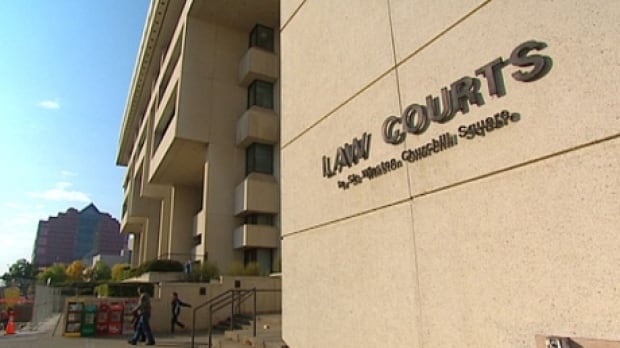
In February, an Alberta Court of King’s Bench justice sanctioned Murray’s extradition; however, the final decision regarding his surrender lies with the federal justice minister.
On July 9, an order for Murray’s surrender was issued, as confirmed by Justice Department spokesperson Kathlyn Moores. The following day, a notice of application for judicial review was submitted to the Alberta Court of Appeal.
According to court documents acquired by CBC News, Murray’s defense attorney, Stacey Purser, contends that Justice Minister Sean Fraser arrived at an “unreasonable conclusion.” The documents assert that Fraser made a mistake by ordering the surrender of a Canadian citizen based on allegations that date back over 60 years and did not conduct an independent investigation to verify whether Murray was “sufficiently identified” as the individual sought for the alleged crimes.
Purser aims to have the surrender order overturned, which would either release Murray or return the case to the federal justice minister for additional examination.
The hearing is scheduled for June 10, 2027.
Purser declined to participate in an interview but mentioned via email that her client is currently out on bail.
Historical allegations
Murray has categorically denied the allegations outlined in the February 18 ruling by Court of King’s Bench Justice T.G. Rothwell, who approved the extradition.
The allegations involve incidents linked to a monk named Brother Peter at two institutions: St. Ninian’s List D School in Gartmore and St. Joseph’s List D School in Tranent, both operated by the De La Salle Order, a Roman Catholic religious organization.
The document details numerous accusations, including one from a nine-year-old boy claiming that Brother Peter inappropriately touched him, another alleging that Brother Peter sexually assaulted a different boy weekly between the ages of 11 and 13, and a further claim that Brother Peter repeatedly punched or slapped another child aged nine to 12.
Murray is alleged to be Brother Peter.
In court filings, Murray stated that he has resided in Canada for over 50 years and, during his tenure as a teacher and vice-principal in Alberta, “has never faced accusations of inappropriate conduct with any child.”
No charges have been filed against him. In Scotland, charges are made public when an accused appears in court.
Process of extradition
As stated on the federal justice department’s website, if the Court of Appeal affirms the decisions of both the extradition judge and the minister, the individual may request permission to appeal one or both rulings to the Supreme Court of Canada.
Alternatively, the website indicates that at any point during the extradition process, the individual has the option to waive their rights under the Extradition Act and be promptly removed to the requesting country, or they may agree to surrender.
In a March interview with CBC News, law professor Rob Currie from Dalhousie University explained that Canada has long-standing extradition agreements with the U.K.
He noted that the obligation for extradition remains consistent regardless of whether the allegations are historical or current.
“The U.K. must provide a summary of the evidence supporting that a crime occurred, and that it is the type of crime that would be prosecuted in Canada if it had occurred here,” Currie stated.
However, he emphasized that Canadian law is “tilted towards extradition.”
“The government and the law have faced criticism for being overly focused on extradition at the expense of balancing the imperative to cooperate with foreign governments with the need to protect the rights of individuals here in Canada,” Currie added.