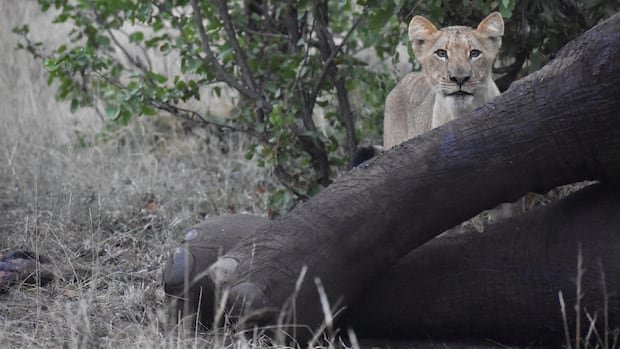


In the vast African savannah, elephants are demonstrating a remarkable phenomenon of post-mortem impact, as revealed by a recent study conducted by an international team of scientists in South Africa’s Kruger National Park.
Known as “ecosystem engineers,” these majestic creatures play a crucial role in shaping their environment while alive, through activities such as excavating waterholes and consuming vast amounts of vegetation. However, the study led by ecologist Courtney Reed aimed to explore whether the influence of elephants persists even after their demise.
Published in the Proceedings of the National Academy of Sciences of the United States of America, the research unveiled that elephant carcasses act as nutrient-rich hubs, releasing significant amounts of carbon, nitrogen, and phosphorus into the soil upon decomposition. This process stimulates soil microbial activity, fostering the growth of nutrient-rich plants that attract herbivores to the site long after the carcass has disappeared.
The study found that the effects of decomposition linger for over seven years, although initially, the high concentration of nutrients can have adverse effects on vegetation, creating barren patches in biodiversity. However, as time progresses, the ecosystem rebounds, with vegetation returning and attracting herbivores that benefit from the nitrogen-rich plants.
Ultimately, the study underscores the intricate balance of ecosystems and the potential long-lasting impacts of elephant carcasses on their surroundings. While in some landscapes, these carcasses can contribute positively to ecosystem sustainability, in areas where human activities have disrupted natural balances, the presence of concentrated elephant carcasses may pose challenges to biodiversity conservation.
Chase LaDue, an expert in elephant ecology, emphasized the delicate equilibrium required in ecosystems and how human interference can either enhance or disrupt the ecological legacy left by elephant carcasses in the African savannah.